No client walks in and says, “I’m about to stop coming.” They just stop. The same is true for services that fall out of favor, slow days that get slower, and months that underperform year over year.
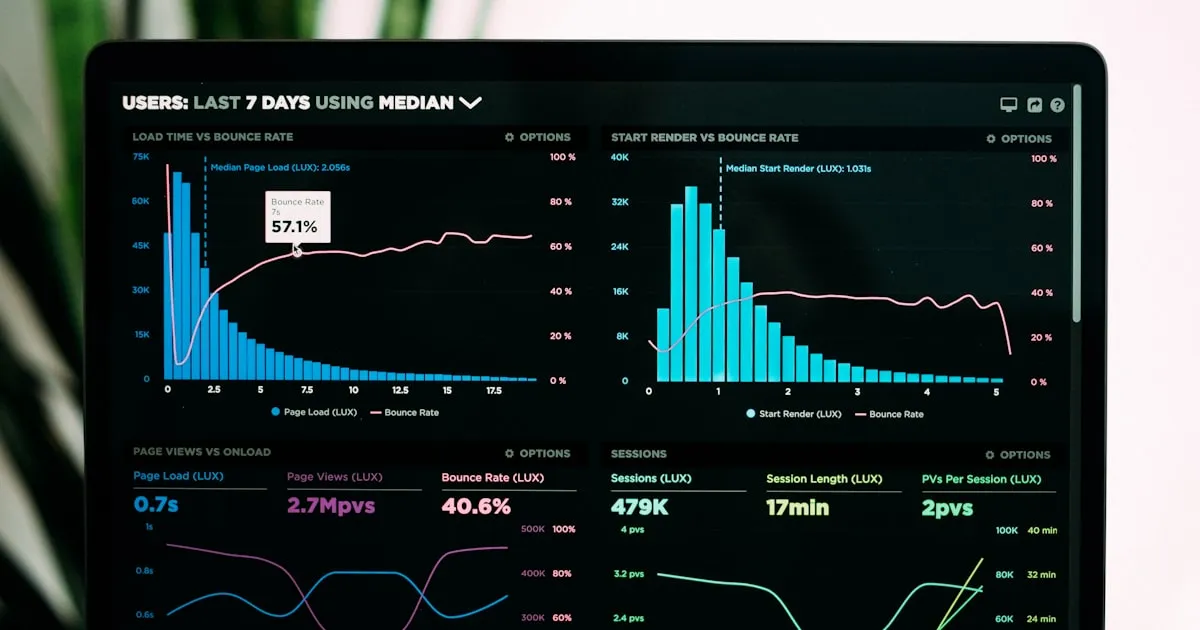
Your revenue line knows all of this before you do. But only if you look at it over time, not just as a snapshot.
Why weekly revenue tracking catches problems early
A single slow week means nothing. Two slow weeks in a row could be coincidence. Three is a trend that needs attention. DINGG’s reporting guide recommends a 15-minute weekly review of revenue, staff performance, and upcoming appointment volume. That small habit catches problems while they are still fixable.
Say your weekly revenue has been steady at $5,200 for two months. Then it drops to $4,700, then $4,500. That is a 13% decline over three weeks. If you only check your monthly total, you will not see it until the month closes. By then you have lost three weeks of reaction time.
How to spot seasonal revenue patterns
Salon revenue is seasonal, and the swings are larger than most owners expect. IBISWorld reports fluctuations of 25 to 30% between peak and off-peak months. Pure Spa Direct identifies October through December as the strongest period, driven by holiday events and end-of-year spending.
Typical monthly revenue index (100 = annual average)
January and February are consistently the weakest months. Wellyx confirms that post-holiday spending fatigue hits salons hard, with many owners seeing their slowest weeks of the year in late January.
If you have been tracking weekly revenue for a year, you already know when your dips arrive. That means you can plan for them: adjust staffing, schedule promotions, or front-load retail pushes before the slow stretch. Understanding your schedule as a dashboard helps you see these patterns day by day, not just month by month.
Service-level trends matter more than totals
Total revenue can stay flat while something important shifts underneath. Maybe blowout bookings doubled this quarter, but color appointments dropped by 15%. The total looks fine. The mix changed.
Tracking revenue by service category, week over week, shows you which services actually make you money and which are fading. A service that loses 5% per month for three months straight is down 14% from where it started. That is a signal to investigate: is it a pricing problem, a staffing problem, or a demand shift?
MioSalon recommends reviewing service category reports monthly at minimum, with weekly checks during busy seasons. The goal is to spot the direction of the line, not just the number.
💡 What Lutily tracks
The revenue trends view in Lutily shows weekly and monthly revenue over time, broken down by service category. Tap any point on the chart to see which services drove the number. A rising line with a falling service category is a warning worth investigating.
Compare this week to the same week last year
Week-over-week comparisons are useful. Same-week-last-year comparisons are better. They filter out seasonal noise and show real growth or contraction.
If you did $4,800 the second week of January last year and $5,100 this year, you grew 6.3%. If you only compared to your December week at $6,200, you would feel like you were failing.
Context changes the story. Revenue trends give you that context. Build the habit of checking once a week. These are among the five numbers that separate your best stylist from your busiest. Fifteen minutes with your numbers will tell you things no client ever will. If no-shows are dragging your revenue line down, our no-show cost calculator shows the exact annual impact.