Say your stylist books a balayage at 10:00 AM, a cut at 1:00 PM, a color retouch at 1:45 PM, and three more services through the afternoon. Zero gaps between them. By 2:30 PM the balayage has run 15 minutes long, the cut started late, and the color retouch client walked in to find her stylist still rinsing someone else. Every appointment from that point forward starts behind.
This happens in salons constantly. And the cost compounds faster than most owners realize.
How schedule overruns cost salons money
A Dingg analysis of U.S. salon scheduling found that scheduling disruptions cost the average salon between $2,000 and $5,000 per month in lost revenue and client dissatisfaction. Most of that damage comes from cascading delays, not from any single appointment running over.
Here is how the math works. A stylist running 10 minutes behind on a $75 service displaces the next client by 10 minutes. That client waits. The one after waits longer. By the fourth or fifth appointment, the delay has stacked to 30 or 40 minutes. Zenoti’s 2024 salon consumer survey found that 45% of salon clients named wait times before service as their number one frustration. A client who waits 30 minutes past their appointment time is not coming back at the same frequency.
The second cost is invisible: the stylist rushing through the last appointments of the day to catch up. Faster services mean less thorough work, fewer upsells, and lower client satisfaction on the bookings that should have been strongest.
Why back-to-back scheduling causes the pileup
Three factors create the problem.
Service durations are estimates. A balayage is booked for 2.5 hours, but thick hair, a tricky tone, or an extra toner round can push it to 2:45 or 3:00. Industry benchmarks suggest service time variance exceeding 15% on core services is a red flag for scheduling accuracy.
Cleanup and prep happen between clients. Station sanitization, mixing color, laying out tools, reviewing the next client’s notes. That takes 5 to 15 minutes depending on the service. If the calendar treats service end as the next service start, those minutes come out of the next client’s slot.
Late arrivals create a ripple. Even a 10-minute late arrival forces a choice: shorten the service, push the schedule back, or turn the client away. Without buffer time, any of those options damages revenue or the client relationship.
How to add buffer time to your salon schedule
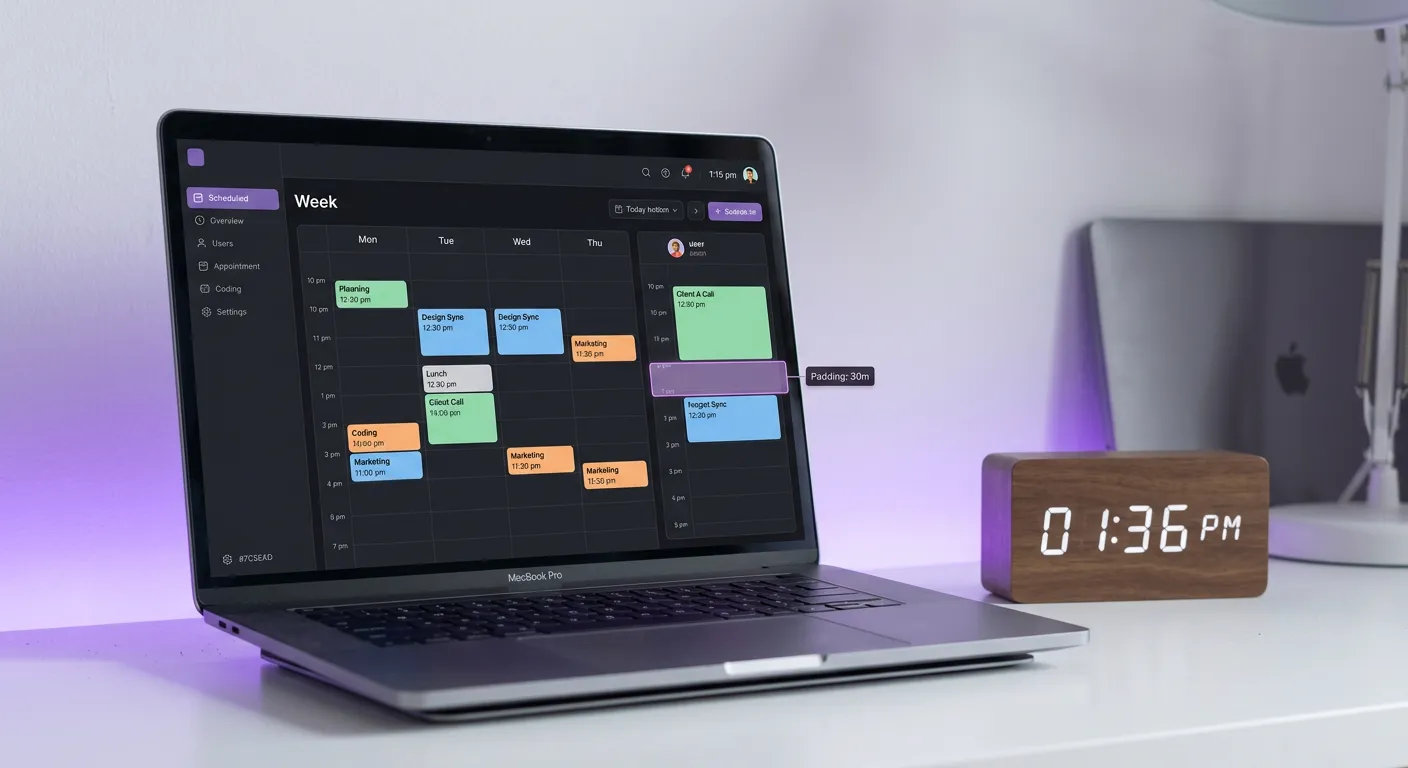
Buffer time is a block of minutes after each appointment that the booking system reserves automatically. Clients never see it. They book into the available slot; the system adds padding after their appointment ends. The next available slot starts after the buffer, not immediately after the service.
The right buffer duration depends on the service. A men’s haircut booked for 30 minutes needs 5 to 10 minutes of buffer. A full highlight booked for 2 hours should have 15 to 20. The goal is enough time to reset and breathe without creating dead space that cuts into your bookable hours.
Some salons pad the service duration itself: booking a 30-minute cut as a 40-minute slot. This works, but it has a drawback. Clients see the longer time estimate and wonder why their haircut takes 40 minutes. Buffer time handled at the system level keeps the service duration accurate for the client while protecting the schedule behind the scenes.
How Lutily handles buffer time between appointments
In Lutily, every service has a buffer after setting in minutes. Set it once per service, and every booking for that service automatically reserves that buffer window after the appointment ends. The availability engine accounts for it: a 2:00 PM slot with a 10-minute buffer means the next available slot starts at 2:40, not 2:30 (for a 30-minute service).
Service created with buffer
Set buffer time per service in your catalog. Example: 15 minutes after every balayage.
Client books online
The booking page shows available slots. Buffer time is invisible to the client.
Buffer blocks the calendar
After the appointment ends, the buffer window is reserved. No other booking can overlap it.
Next client starts on time
The stylist has 15 minutes to clean up, prep, and review notes before the next appointment.
For salons with stylists who work at different speeds, Lutily supports per-staff overrides. If one stylist consistently runs long on color services, you can increase her buffer without changing the default for the rest of the team.
The system enforces buffers during booking and rescheduling. If an admin tries to manually book into the buffer window, the system flags the conflict. This works the same way schedule change blocking prevents accidental cancellations. The friction is intentional.
What changes after buffer time is configured
The schedule stops compressing. Clients notice because they stop waiting. Stylists notice because they stop rushing. The calendar looks slightly less packed, but the revenue per hour often goes up because fewer clients leave frustrated and more services get the full time they need.
Scheduling gaps are still worth watching. Buffer time and dead time are different problems. Buffer is a controlled pause between appointments. A gap is an unbooked slot losing revenue. The goal is to have buffers without gaps.
Set your buffers, monitor for a month, and adjust. Most salons land on 10 minutes for cuts and 15 for color. Start there.