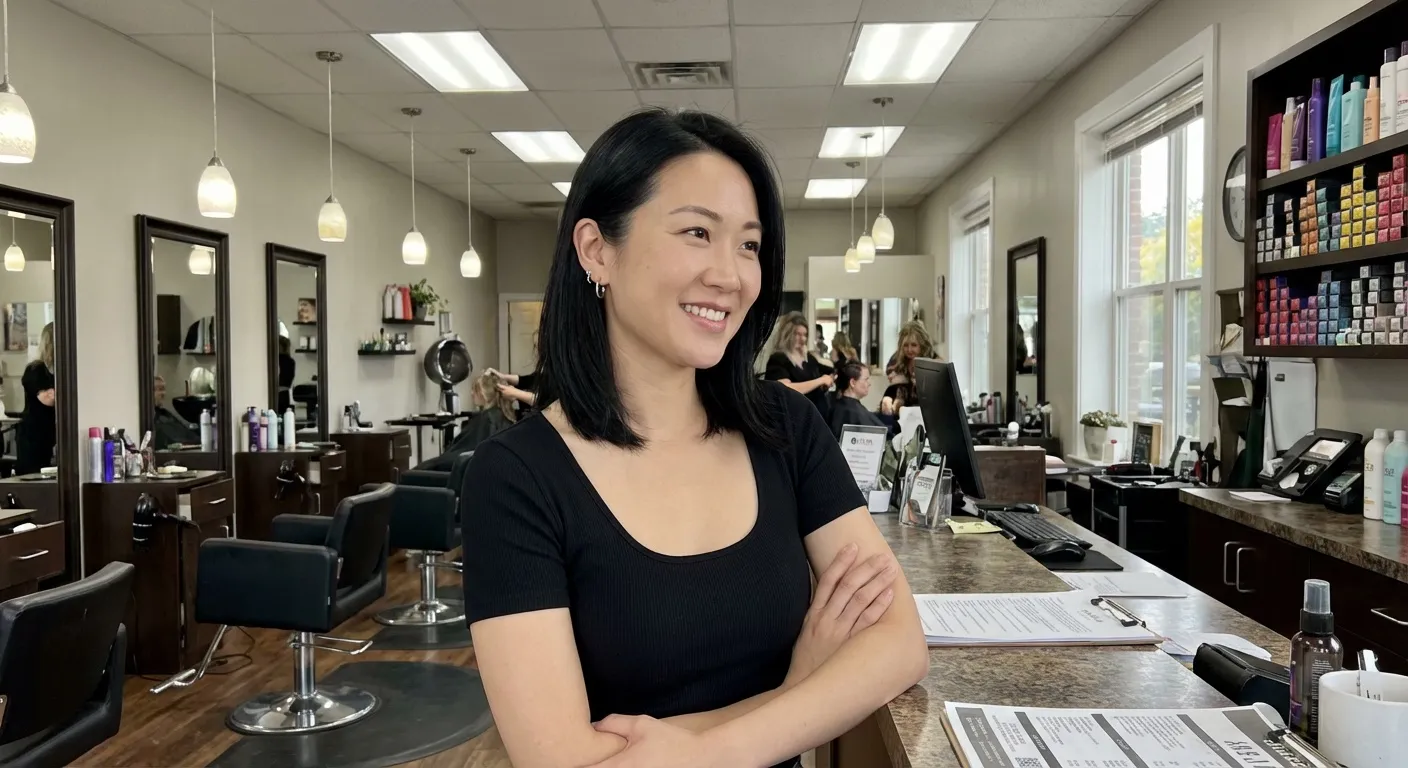
For four years I let the automated reminders do all the confirming. A text 48 hours out, another 24 hours out, an email the morning of. We were set up properly in Lutily, the timings were sensible, the copy was clean. And for most bookings, that system worked. A cut and blow-dry. A gel fill. A brow wax. Those clients showed up fine.
It was the big bookings that kept hurting me. A balayage that no-showed cost me four hours of chair time and around $280 in product and labor I had already committed to. The worst month, I lost two of them in the same week. One was a new client I had spent forty minutes screening on the phone the week before. I was in the chemical room mixing her toner when the reminder text bounced back as undeliverable. She had given me a landline.
That is the booking that made me start the courtesy call.
The old way, and why automated reminders alone broke
I thought the reminder stack was enough because the numbers said it was. Industry research says automated SMS reminders cut no-shows by roughly 35%, and our overall no-show rate sat around 8%, under the industry average of 10-20%. On paper we were doing better than most.
The problem is that an 8% average hides a nasty distribution. For short services the rate was maybe 3%. For anything over three hours, it was closer to 14%. A no-show on a trim costs me $55. A no-show on a full color correction costs me $450 and I cannot fill the slot same-day.
The reason kept being the same, too. It was not that clients forgot. It was that they were second-guessing themselves. They had booked three or four weeks ago, something had shifted, their budget got tight or their weekend got busy or their hair was suddenly behaving. A text is easy to ignore when you are ambivalent. It is not a conversation. It does not make you say the words out loud.
The switch to a courtesy call
Last July I started making a two-minute phone call, two days before every booking that met one of three criteria: booked for three hours or more, first-time visit, or service total over $200. I did not replace the automated reminders. The texts and emails still went out. The call sat on top of the stack, a human layer for the bookings where the cost of getting it wrong was highest.
The script is short. “Hi, it’s Mia from Clove and Comb. I’m just calling to check in about your Thursday balayage with me at 10. Everything still working for you?” Then I shut up. If they answer yes, the call is done in forty seconds. If they hesitate, we talk about it. Sometimes they want to push by a week. Sometimes they want to switch to a gloss instead. Sometimes they admit they were thinking about cancelling and just did not know how to say so.
The honesty that comes out of a voice call is not available in a text thread. A 2024 radiology study found personalised phone call reminders outperformed SMS for missed appointments, especially for patients with more at stake. My clients have more at stake on a 4-hour booking than on a 45-minute one. The method has to match the weight of the appointment.
✅ The point is not to sell them on showing up
If someone tells me they want to cancel, I thank them, ask if they want to rebook for a later date, and note it. A saved slot I can refill is worth more to me than a client I guilted into keeping an appointment she no longer wants.
Old way vs new way
| Step | Old (automated only) | New (automated plus call) |
|---|---|---|
| Booking confirmation | SMS and email at time of booking | Same |
| T-minus 48 hours | Automated SMS reminder | Automated SMS + courtesy call for qualifying bookings |
| T-minus 24 hours | Automated SMS reminder | Same |
| Morning of | Automated email reminder | Same |
| Cancellation path | Client replies to text or email | Reply to text, email, or tells me on the call |
| Time spent per qualifying booking | ~0 minutes | ~2 minutes |
| No-show rate on qualifying bookings | 14% | 4% |
The numbers are from the nine months since I started: 112 qualifying bookings, 4 no-shows, 7 early reschedules that came up on the call itself. The 7 reschedules matter as much as the no-show drop. Those are slots I refilled from the waitlist before the day arrived, not on the morning of the appointment when my options narrowed to “anyone who can get here in an hour.”
Why I did not just raise the deposit
I already have a deposit policy, and it does its own work. But deposits make cancelling feel punitive, and a color client who is wavering will sometimes pay the fee to avoid the conversation. That loses me the slot and the goodwill. A courtesy call gives the wavering client an easier door. She can reschedule without feeling like she got penalized, and I can save the appointment slot for someone who actually wants it.
Deposits reduce financial loss. Calls reduce relational loss. They solve different problems.
What the confirmation call costs me
Three to five calls a week, each about two minutes long. I batch them on Sunday evening and Wednesday afternoon. Some roll to voicemail, and I leave a short message that says the same thing the script does. If they call back, great. If not, the automated reminder still handles the baseline, and at least they heard my voice.
💡 What goes in the voicemail
“Hi, it’s Mia from Clove and Comb. Calling to check in about your Thursday appointment at 10. No need to call back unless something has changed. Looking forward to seeing you.”
I do not call the same client before every visit. Once someone has been a regular for six months and three color services, they get the normal automated stack. The courtesy call is for the high-stakes and the unknown: first visits, long bookings, and clients who have rescheduled twice in the past.
The qualifying list for a courtesy call
That list catches the bookings where a no-show is genuinely expensive and where the extra contact is proportional. It does not catch the bookings where a call would feel weird. Nobody needs a phone call to confirm a bang trim.
What I would tell myself before starting
You will feel awkward on the first five calls. The awkwardness passes. Treat it like a check-in, not a confirmation. Do not use the word “confirm” at all. Say “check in.” That single word change is what made the calls feel like care instead of surveillance.
The goal is not a higher show-up rate. It is knowing what is actually happening two days out, while you still have options. Now when Thursday morning comes, I already know who is coming, who pushed to next week, and who ghosted. The ghosts are rare, and the ones I catch early pay for the calls many times over.
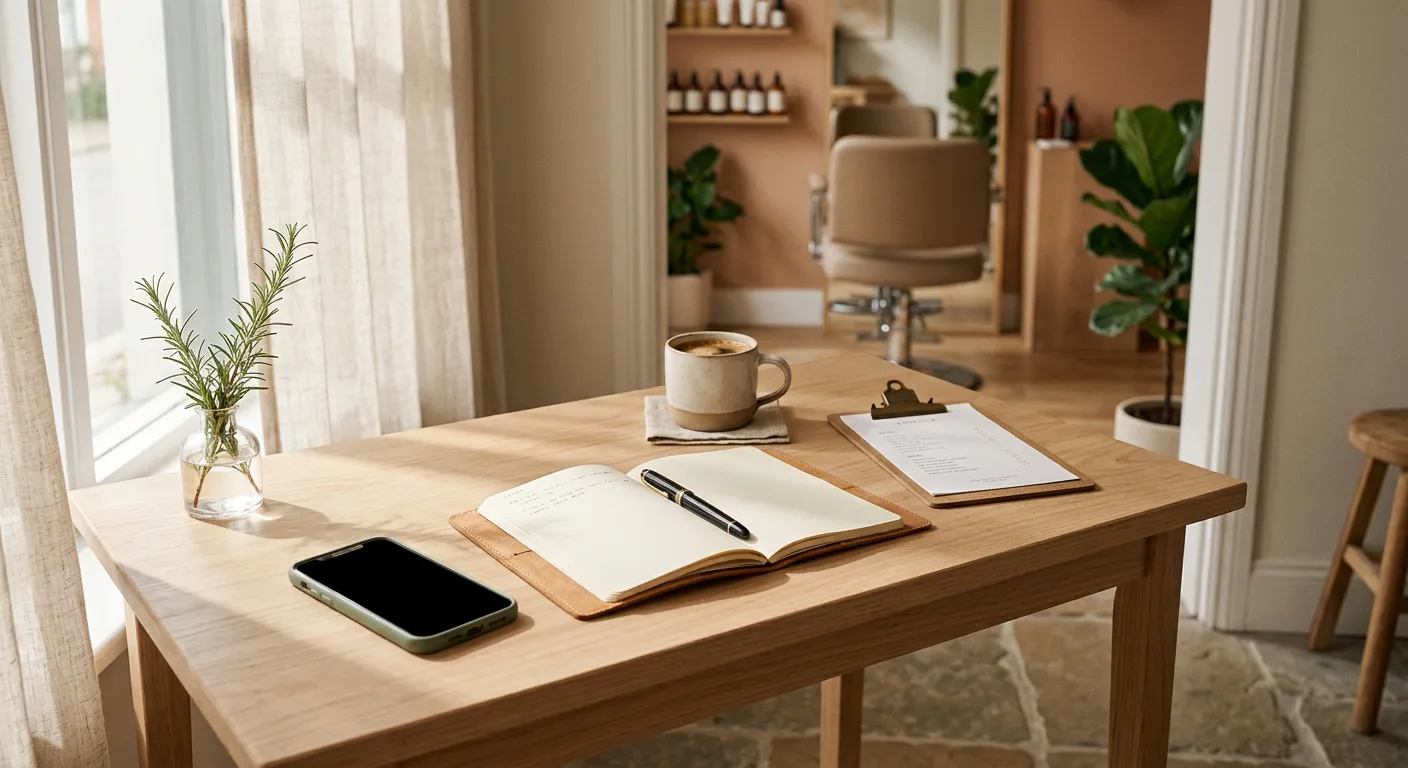
Sunday nights I have my phone, my appointment list for the week ahead, and a cup of coffee. Twelve minutes. That is the whole system.