Have you ever walked past something at your front desk every day for three years and never thought about it as a revenue stream? That was me with gift cards. Or rather, the absence of them.
I had a small stack of generic cards in a drawer that I’d pull out when someone specifically asked. Maybe once a month, usually around the holidays. I treated gift cards like a favor I did for clients, not like a product I sold. That mindset cost me real money for a long time.
Why I finally paid attention
Two things happened in the same week last spring. A regular asked if I sold gift cards for Mother’s Day, and when I pulled one out of the drawer, she said, “Oh, I didn’t know you had those.” She’d been coming to me for two years. The second thing: I read that 90% of people who receive a gift card from a small business they’ve never visited will redeem it and return again. That number stopped me. Gift cards weren’t just a convenience for existing clients. They were a client acquisition tool sitting in my junk drawer.
I started tracking. In the six months before I made any changes, I sold exactly 11 gift cards totaling $520. All of them went to people who already came to my salon. Zero new clients walked in because of a gift card.
What I changed
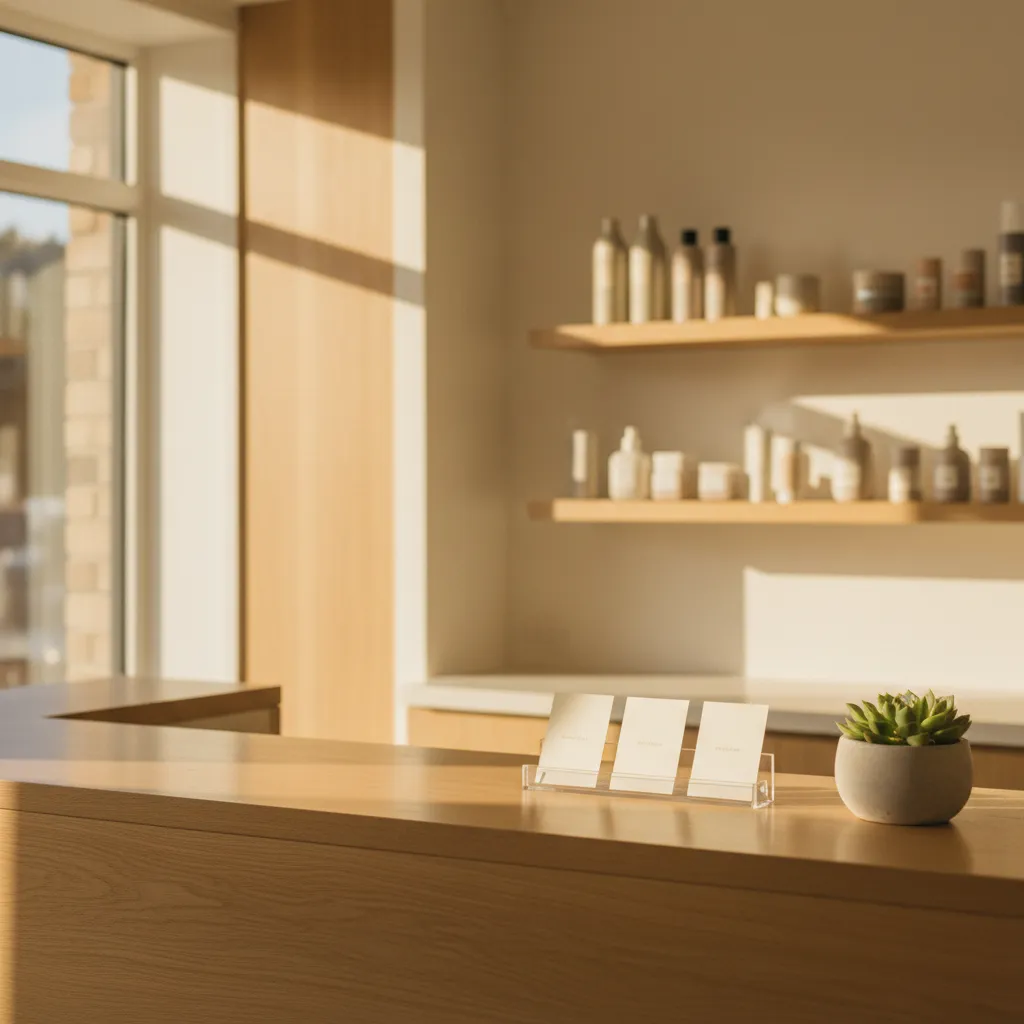
I spent $35 on a clear acrylic card holder and set it on the front desk, right next to the card reader. I ordered simple branded cards through my booking software. I printed a small sign that said “Give the gift of great hair” and propped it behind the display.
That was the entire physical setup. Thirty-five dollars and ten minutes.
The bigger change was behavioral. I started mentioning gift cards during checkout, especially when clients said things like “my friend would love this place” or “I need a last-minute birthday gift.” I wasn’t pushing. I was noticing openings that were already there. Square’s guide to salon upselling puts it well: the suggestion should feel like a natural extension of the conversation, not a sales pitch.
I also turned on online gift card purchasing through my booking system. Zenoti reports that 31% of salon gift card sales now come from online channels. I added the link to my Instagram bio and my email signature. Took five minutes.
| Item | Before (drawer cards) | After (display + online) |
|---|---|---|
| Cards sold per month | ~2 | 8-12 |
| Average card value | $47 | $65 |
| New clients from gift cards | 0 per month | 2-3 per month |
| Online purchases | None available | ~35% of sales |
| Monthly gift card revenue | $87 | $650-$800 |
| Setup cost | $0 | $35 one-time |
The math that surprised me
The gift card revenue itself is nice. An extra $650 to $800 per month in upfront cash flow matters when you’re running a four-chair salon. But the real number is what happens after the card gets redeemed.
Clients who come in with a gift card spend more than the card value. Mangomint’s research on salon gift card programs confirms what I’ve seen firsthand: gift card holders typically spend 20-40% beyond the card amount because the card feels like “free money” and they’re more willing to add a treatment or buy a product. My average overspend has been about $22 per redemption.
And then there’s the retention question. About half the new clients who come in on a gift card rebook. That’s not 100%, but those are people who never would have found me otherwise. DemandSage’s 2026 referral marketing report found that referred customers (and a gift card is essentially a physical referral) have an 18% lower churn rate and 16% higher lifetime value than clients acquired through ads. Two or three new clients per month who stick around compound fast over a year.
✅ Mention it when they're already in a giving mood
The best time to bring up gift cards isn’t at random. It’s when a client is already thinking about someone else. “My sister’s wedding is next month.” “My mom never treats herself.” “My friend keeps saying she needs a cut.” That’s your opening. Not “would you like to buy a gift card?” but “I can put one together for her if you want. Takes two seconds.”
What I got wrong at first
I set all my cards at a flat $50 value. Some clients wanted $25 for a small gesture, others wanted $150 for a full color session. One denomination created friction both ways. Now I offer $25, $50, $75, $100, and a custom option. Sales went up the week I added the range.
I also didn’t ask where new gift card clients came from. Once I started tracking during intake, I found that about 60% of redemptions were people who had never heard of my salon before. That reframed the whole program for me.
The tradeoff, honestly
Gift cards create a liability. You’ve collected money for a service you haven’t performed yet. I keep a buffer in my operating account equal to about 60% of outstanding unredeemed cards, just in case a bunch get redeemed at once.
There’s also breakage. Research compiled by HubiFi shows that 10-19% of gift card balances go unredeemed nationally. Some salon owners see that as free money. I send a reminder email at 90 days if a card hasn’t been used. That cuts my breakage rate, but it also means more of those cards turn into real appointments. I’d rather have the client in my chair.
What I’d tell you if you asked
Start small. Put cards on your desk where people can see them. Turn on online purchasing if your booking system supports it. Mention them when the moment is natural. Don’t overthink the design or the denominations at first.
The thing I got most wrong was assuming gift cards were a passive, seasonal thing. They’re active revenue and a quiet client acquisition channel that works year-round. My $35 display has returned more than anything I’ve spent on Instagram ads, and I don’t have to create content for it.