Every semester I ask my cosmetology students to list the three services clients ask them about most. This spring, hair tinsel appeared on eleven of sixteen lists. That is more than any color technique, any cutting style, any treatment service. The students are not guessing. They work part-time in salons across Brooklyn and Manhattan. They hear the requests firsthand.
I have been running this survey since 2023. Hair tinsel showed up on two lists that first year. Last spring, five. This spring, eleven. The trajectory is steep and consistent.
What Students Are Hearing From Clients
The requests come in two forms. Some clients walk in with TikTok videos showing thin metallic strands catching light through natural movement. Others ask for “fairy hair,” which is the same service under a different name that caught on through festival culture and then stuck year-round.
The #hairtinsel hashtag on TikTok has accumulated billions of views. Celebrity adoption accelerated things further. Katy Perry, Beyonce, and Mikey Madison’s character in the film Anora all brought visibility to the look in 2025. When a trend crosses from TikTok to red carpet to movie screen, the demand signal is broad.
What students tell me is that clients treat tinsel like a low-commitment experiment. The strands last three to six weeks, they wash and heat-style normally, and removal is simple. That profile appeals to clients who want something visible but reversible. It is the opposite of a big color change. Students notice that the clients asking for tinsel are often the same clients who say no to highlights or balayage because they do not want the maintenance.
Why This Matters for Revenue
Hair tinsel works as an add-on service with unusually high margins. The product cost per client is minimal: a spool of professional tinsel runs a few dollars, and a single appointment uses a fraction of that. Application takes 15 to 45 minutes depending on density, with most salon sessions landing around 20 minutes for a standard look.
Salons charge anywhere from $10 to $60 depending on strand count and location. A common structure is $1 to $5 per strand, or a flat rate for bundles. At $30 for a 20-minute application with negligible product cost, the per-minute revenue beats most services on the menu.
Tinsel pricing tiers (typical salon)
That is the math my students understand intuitively. They watch experienced stylists add tinsel onto a blowout or a cut and see the ticket jump by $25 to $40 with almost no extra chair time. For someone building a clientele from zero, that kind of add-on is attractive. It requires less skill development than a new color technique, generates repeat visits every four to six weeks, and gives clients a reason to post on social media, which drives organic referrals.
If you are managing your salon add-on services strategically, tinsel belongs on the list. It pairs naturally with cuts, blowouts, and color services without extending appointment times significantly.
The Technique Is Simple but Not Trivial
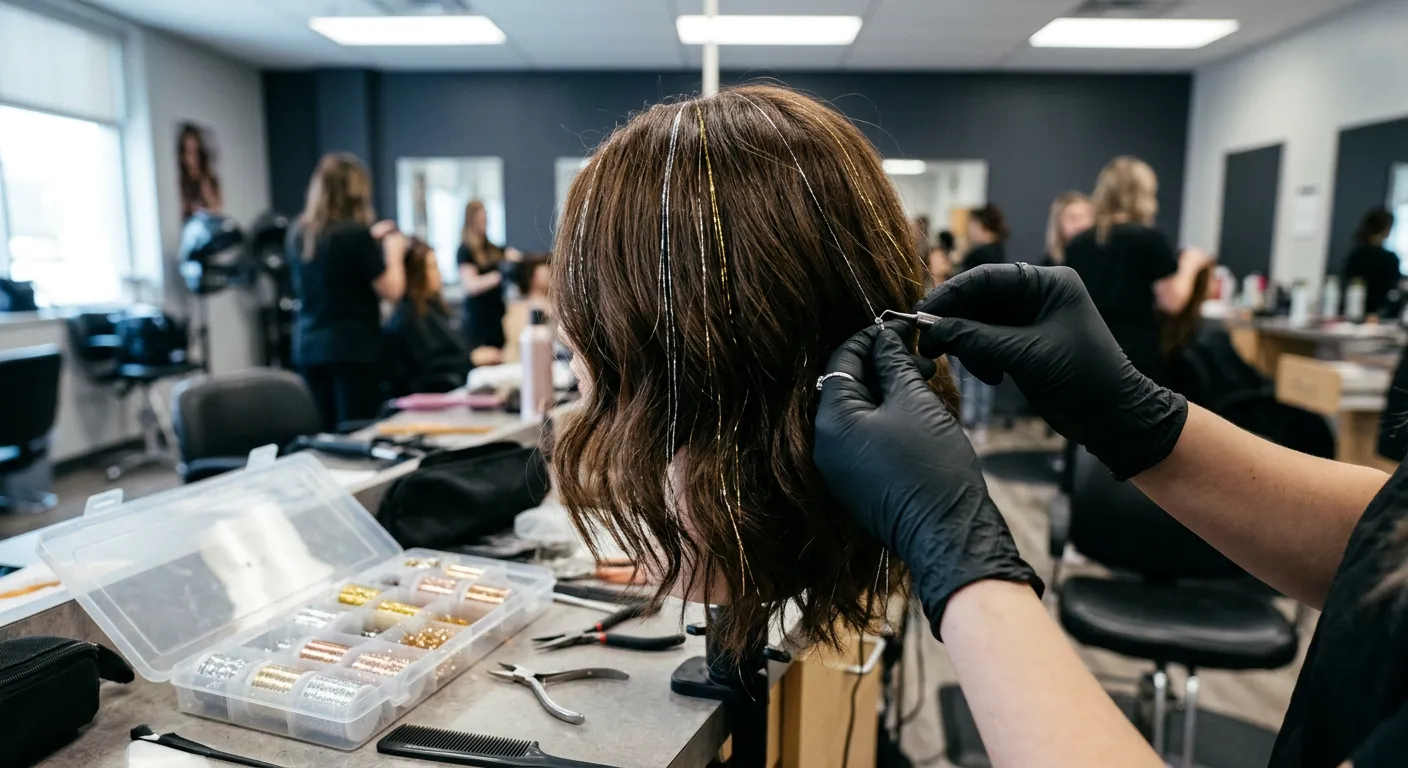
I brought tinsel application into my classroom this semester as a hands-on workshop. The slip-knot method is the standard: isolate a small section of hair near the root, loop the tinsel strand around it, and secure with a micro knot. Some salons use micro-link beads instead.
Students picked up the basic application in about 30 minutes of practice. Placement strategy took longer. Where you position the strands determines whether the result looks intentional or chaotic. The front face-framing sections and the crown catch the most light. Layered hair shows tinsel better than blunt cuts because movement separates the strands.
The main mistakes students make: placing too many strands in one section (creates a clump that catches instead of shimmers), tying the knot too loose (strands slip out in days), and choosing colors that clash with the base hair tone. These are fixable with practice and a few client appointments.
What This Signals for Salons
When cosmetology students prioritize learning a service, it tells you where new-client demand is heading. The students in my classroom will be filling chairs within a year. They will bring what they practiced with them.
Three things worth considering. First, add tinsel to your service menu and booking page if you have not already. Clients search for it by name, and salons that list it capture those searches. Second, the training investment is minimal compared to learning a new color technique. A few hours of practice and a kit that costs under $50 gets a stylist ready. Third, tinsel naturally drives rebooking. When the strands shed after a month, clients come back for a refresh. That cycle is shorter than most color maintenance schedules.
I will survey again in the fall. Based on the rate of increase I have tracked over three years, I would not be surprised if tinsel outpaces every other add-on service on the list. This generation of stylists sees it as a core offering, not a novelty. Salons should take the signal seriously.