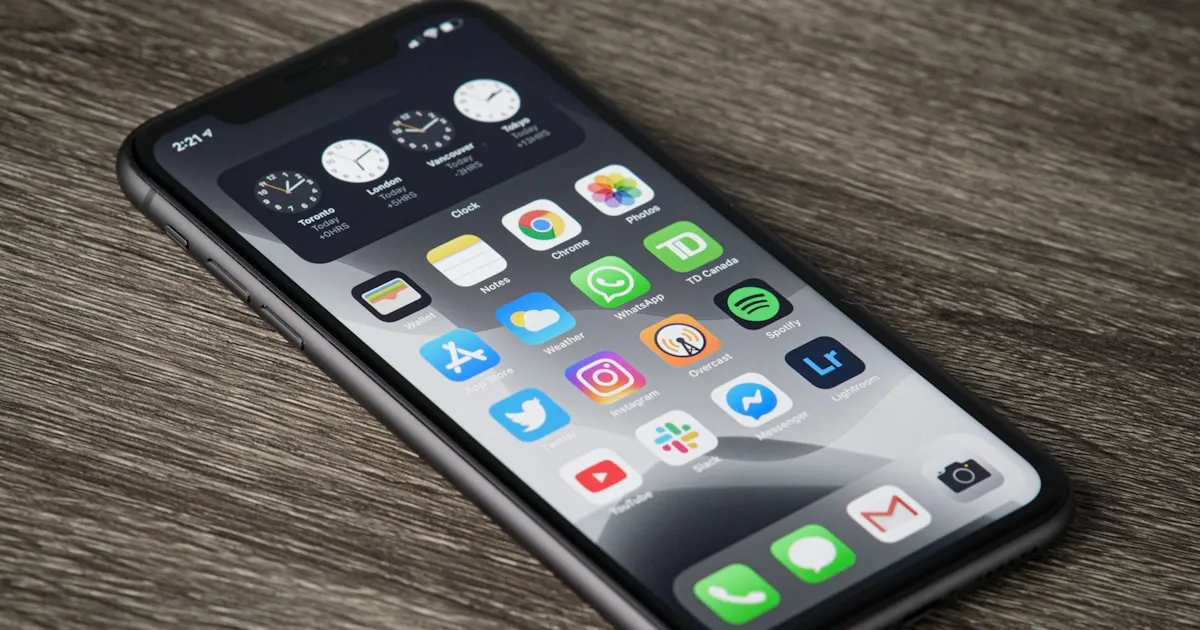
I got a notification from my booking app two Tuesdays ago that I’d never seen before. It flagged a client who had cancelled her last three appointments within two hours of the scheduled time and suggested I require a deposit for her next booking. I hadn’t asked for that analysis. The software surfaced it on its own.
That’s the shift happening across salon scheduling right now. Booking software isn’t just a digital calendar anymore. It’s pattern recognition. The platforms most of us already pay for are quietly adding features that predict no-shows, fill last-minute gaps, and rearrange schedules to minimize dead time. The question isn’t whether the technology exists. It’s whether salon owners are paying attention to what their tools can now do.
How big is the salon booking software market
The salon management software market hit $1.12 billion in 2024, growing at a 10.1% annual rate. Cloud-based solutions account for roughly 71% of the market, meaning the majority of salon software now lives on phones and laptops, not desktop computers in a back office.
Adoption among small and independent professionals is especially strong. Solo operators and small shops accounted for 52% of salon software revenue in 2024, according to Business Research Insights. This isn’t enterprise technology trickling down. It’s tools built for one-chair and three-chair operations from the start.
What “AI-powered” actually means in booking software
The term gets thrown around loosely, so here’s what it looks like in practice for salons.
Smart reminders and no-show prediction. The most widespread AI feature is automated messaging that goes beyond simple reminders. Platforms like Vagaro, Fresha, and GlossGenius now analyze client booking history to identify patterns. A client who cancels frequently gets flagged. A client who always confirms via text but ignores email gets routed accordingly. AI-driven reminder systems have reduced no-shows by 27% on average, according to a 2023 industry analysis. More aggressive implementations, combining reminders with deposit requirements and cancellation fees, push no-show rates from the typical 15 to 30% range down to 3 to 5%.
Gap filling. When a cancellation opens a 90-minute hole in your Tuesday, smart waitlist features can automatically notify clients who’ve expressed interest in that time slot. Some platforms rank the waitlist by likelihood of booking based on past behavior, sending the notification to the client most likely to take the slot first.
Schedule optimization. This is newer and less widely adopted, but growing. Timely introduced AI-powered booking optimization in early 2024 that automatically adjusts available time slots based on demand patterns. If Fridays after 4 PM always fill up but Tuesdays at 10 AM sit empty, the system can suggest pricing adjustments or push availability to match demand.
No-show rates by booking method
The no-show math in real dollars
The financial impact of even modest no-show reduction is significant for a small operation.
A solo stylist doing 30 appointments per week at an average ticket of $90 generates about $2,700 weekly. At a 20% no-show rate (common for phone-only booking), that’s six empty slots per week. Six times $90 is $540 lost every week, or roughly $28,000 per year.
Drop that no-show rate to 5% with smart reminders and deposit requirements. Now you’re losing 1.5 appointments per week instead of six. The difference is $405 per week, which works out to about $21,000 recovered annually. If you want to see the full financial picture of what empty chairs actually cost, the breakdown in every no-show costs more than you think lays it out clearly.
🧮 What one feature is worth
30 appointments/week x $90 avg ticket x 15% no-show reduction = $405 saved weekly. That’s $21,060 per year. Most salon booking platforms cost $25 to $80 per month, or $300 to $960 annually. The return on investment from no-show reduction alone can be 20x or higher.
A Miami salon profiled by Vocaly AI cut no-shows by 29% after adopting AI-powered scheduling and added roughly $5,000 in monthly revenue through better slot utilization. That’s one salon, one feature set, $60,000 per year.
What clients actually want
The demand side of this equation is clear. A 2025 Zenoti consumer survey found that 80% of salon and spa clients prefer mobile booking, and 70% prefer booking online over calling. Among Gen Z clients, 65% want fully self-service booking with no phone interaction at all. That preference is part of a broader pattern in how Gen Z clients are rewriting the rules of the salon experience.
How clients prefer to schedule
The stickiness data is what matters most. Zenoti found that once a client books online for the first time, 80% never go back to calling. The behavior locks in. Clients who book digitally also tend to rebook more consistently, respond to automated reminders more reliably, and spend more per visit because the booking flow can surface add-on services.
AI booking features most salon owners aren’t using
I talk to other nail techs and stylists constantly, and the pattern I see is this: they signed up for a booking platform, set up their services and hours, and stopped exploring. The features that launched in 2022 are the only features they use. Meanwhile, their software has added AI-powered waitlists, predictive no-show flagging, smart schedule optimization, and automated gap-filling. All sitting in settings menus they’ve never opened.
The gap between what the technology can do and what salon owners actually use is wide. Partly that’s a training problem. Platforms add features faster than they explain them. Partly it’s a time problem. A solo pro working 40 clients a week doesn’t have an hour to explore new software settings. If you haven’t looked at what your platform can do lately, the piece on booking features that pay for themselves covers the ones worth turning on first.
✅ A 15-minute audit worth doing
Open your booking software’s settings and look for: automated waitlist notifications, no-show flagging or deposit requirements, smart scheduling or gap detection, and client communication preferences. Most platforms released at least two of these features in 2024. Turning them on takes minutes. The impact compounds over months.
Where the technology is heading
The next wave is conversational booking. AI chatbots that handle booking through text message or Instagram DM, understanding natural language like “Can I get a balayage next Thursday afternoon?” and converting that into a confirmed appointment with the right stylist, the right time block, and an automatic reminder sequence.
The salon booking software market is projected to reach $1.06 billion by 2033, with AI integration listed as the fastest-growing feature category. Platforms are racing to build the version of booking where the client never opens an app. She just texts, and the system handles the rest.
For salon owners, this trajectory means one thing: the booking experience is becoming a competitive differentiator at the same level as the service itself. A client choosing between two equally skilled colorists will pick the one who lets her book at midnight, reminds her the morning of, fills her cancelled slot automatically, and doesn’t make her call anyone. The data on clients booking at midnight shows just how much revenue salons lose when they aren’t available after hours.
I’ve watched my own no-show rate drop from around 18% to under 6% since I started using deposit requirements and automated reminders. That’s not because my clients changed. It’s because the friction around showing up got lower and the cost of not showing up got higher. The software did both. I just had to turn it on.