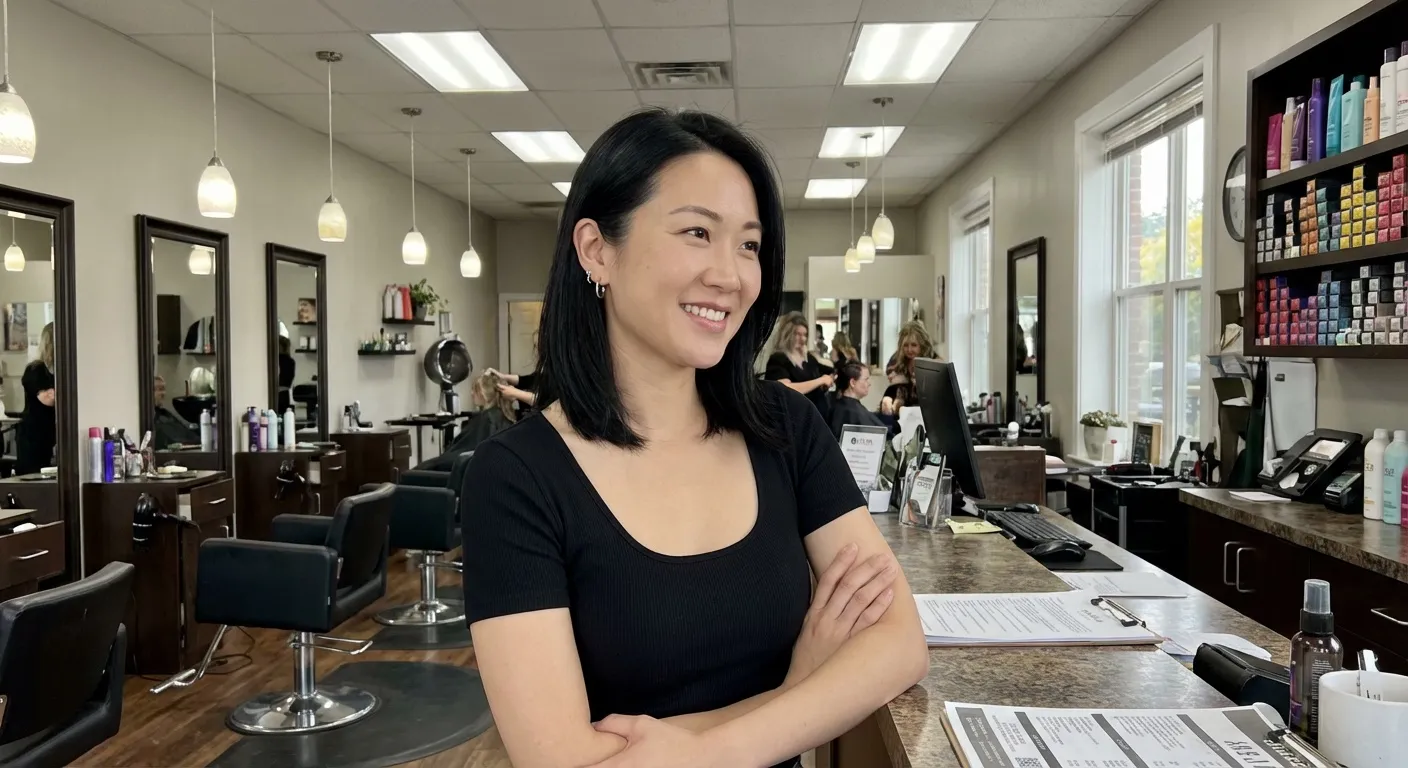
The industry average rebooking rate sits around 40%. That means six out of ten clients walk out your door without a next appointment on the books. I know because my salon was one of them.
Two years ago I pulled my numbers and found my rebook rate was 33%. I was spending money on Instagram ads and running promotions to bring in new clients while the ones I already had were drifting away on no particular schedule. A Boulevard industry report confirmed what I was seeing: most salons lose about 30% of their client base every year just from natural attrition. That’s a hole you have to keep filling. Or you can shrink the hole.
Here’s what I changed, what worked, and the numbers behind it.
Why rebooking matters more than new clients
Acquiring a new client costs five to twenty-five times more than keeping one you already have. And a returning client spends about 31% more per visit than a first-timer, according to Phorest’s retention data.
The math scales fast. Say your average ticket is $85. A client who visits every six weeks for three years is worth roughly $2,210. A client who comes once and never returns is worth $85. Every missed rebook is a potential multi-year relationship walking out the door.
And frequency compounds. Savvy Salon Club’s analysis found that tightening the average gap between visits from nine weeks to seven weeks produces a 29% increase in annual visits per client, without adding a single new person to your book.
The second appointment is the tipping point
Boulevard’s Client Retention Report found that the second appointment is the critical conversion point. Top-performing salons convert 70% of first visits into a second appointment and 57% into a third. Average salons? 45% and 39%.
Once someone books that second visit, they’re dramatically more likely to become a regular. The journey from first visit to loyal regular is where most salons lose clients, and rebooking is the bridge. And regulars are the engine. Kitomba’s industry data shows regular clients make up about 40% of the typical client base but account for 70% of all appointments. A small group of loyal clients runs the whole business.
The better question: how do I make sure the clients I already have keep coming back?
What I changed at checkout
For the first three years I owned my salon, rebooking was something the front desk handled. Clients would finish their service, walk to the register, pay, and the receptionist would say “Would you like to book your next appointment?” Most people said “I’ll check my schedule and call.” They didn’t call.
Here’s what I do now.
The stylist starts the conversation, not the receptionist. This was the single biggest change. While I’m still finishing up, brushing off the cape, showing them the back, I say something like “This is going to look great for about six weeks. Want me to get you on the calendar for early March?” It’s casual. It’s specific. And it comes from the person they just spent an hour with, not a stranger at a desk. A good consultation at the start of the visit makes this moment feel natural rather than transactional.
SalonIQ’s rebooking research confirms this: when the stylist initiates the rebook instead of the front desk, conversion rates climb significantly, because the trust relationship is already built.
I give a specific timeframe, not an open question. “When would you like to come back?” puts the burden on the client to figure out their hair timeline. “Six weeks from now puts you at March 14th, want a Friday morning?” gives them something to say yes to.
I frame it around their hair, not my schedule. “Your color will start showing roots around week five” is a reason to come back. “We have openings next month” is not.
Online booking changes the numbers
One of the most striking findings in Boulevard’s report: clients who book their first appointment online return for a second visit 78% of the time. Walk-ins return at just 39%. That’s a 2x difference. Understanding how to handle walk-ins and convert them into booked clients is key to closing that gap.
And clients who request a specific stylist when booking online spend 30% more per visit than clients who don’t request anyone.
I added online booking about 18 months ago. The impact was immediate. Clients who found us through Google and booked online were already more committed before they walked in. They’d picked a stylist, chosen a time, entered their credit card. By the time they sat down, the relationship had started.
Client retention by booking method
Source: Boulevard Client Retention Report
If you’re still relying on phone calls and walk-ins for new clients, online booking is the fastest lever you can pull for retention.
Text reminders fill the gaps
I used to send email reminders. Open rate was maybe 20%. Switched to texts two years ago. No-shows dropped by a third in the first month.
The data backs this up. SMS open rates hit about 98% compared to email’s 20%, and research published in The Permanente Journal found that text reminders improve appointment attendance by 14%. For a salon running 200 appointments a month, that’s 28 more kept appointments.
But texts do more than prevent no-shows. When a client doesn’t rebook at checkout, an automated text three or four weeks later (“Hi Sarah, it’s been a month since your last cut. Want me to grab your usual Friday spot?”) catches the ones who meant to call but didn’t.
Zenoti’s consumer research found that 81% of salon clients are more likely to rebook when they receive personalized messages. Not blasts. Not promotions. A simple, specific nudge.
What good looks like
The numbers I track now, and what I aim for:
| Metric | Industry average | My target |
|---|---|---|
| Rebooking rate | 40% | 70%+ |
| First-time client retention | 35% | 55%+ |
| Average weeks between visits | 8-9 weeks | 6-7 weeks |
| No-show rate | 15-30% | Under 5% |
Industry averages from Boulevard, Meevo, and SalonIQ
I’m not at 70% yet. I hover around 58% on a good month. But that’s up from 33%. On a four-chair salon averaging $85 per visit, the difference between a 33% and 58% rebook rate is roughly $1,400 a month in revenue that would have otherwise walked out the door.
The simple version
✅ The 15-second rebooking checklist
Have the stylist ask. Give a specific date. Make online booking easy. Send a text when they don’t rebook. Track your numbers monthly.
None of this is complicated. Have the stylist ask. Give a specific date. Make online booking easy. Send a text when they don’t rebook. Track your numbers monthly.
The hard part is consistency. Every client, every time. No skipping it because you’re running behind or the next client is already waiting. The ask takes fifteen seconds. The cost of not asking is a client who disappears for three months, or forever.
My salon isn’t the biggest in Portland. Four chairs, two full-time stylists, two part-time. But our book stays full six weeks out. That didn’t happen because we ran better ads. It happened because we stopped letting people leave without a next appointment.