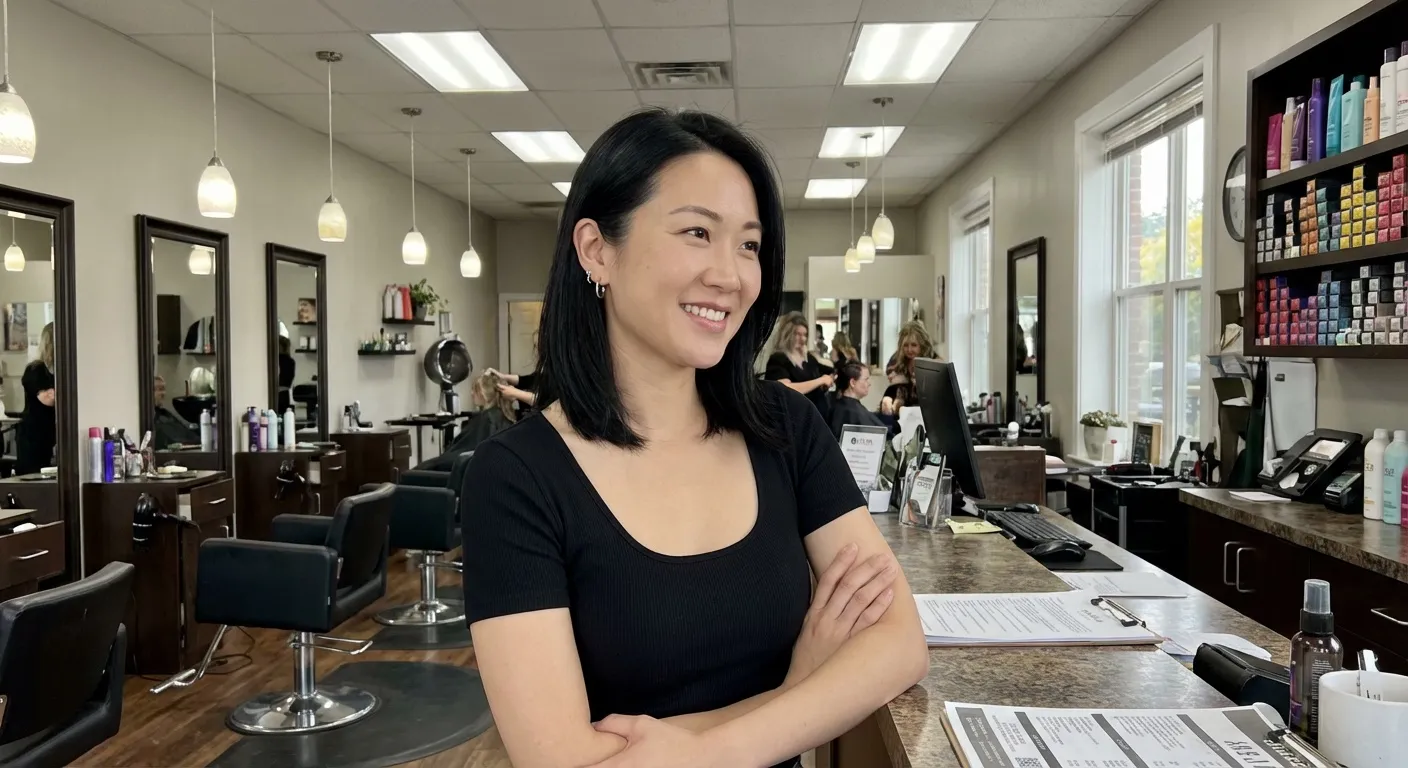
Someone walks through your door without an appointment. They want a cut. Your next booked client is in 40 minutes. Do you take them?
For the first two years I owned my salon, the answer was always yes. I squeezed walk-ins between appointments, ran late on booked clients, and spent most afternoons apologizing to people who’d shown up on time. I thought saying yes to every walk-in meant more money. It did, sometimes. But it also meant stressed stylists, irritated regulars, and a schedule that looked like a game of Tetris played by someone who’d never seen the pieces before.
Walk-ins aren’t the enemy. But they need a system. Here’s what I built, and why the numbers justified every change.
The walk-in math
About 24% of salon clients consistently walk in without an appointment, with another 24% doing it occasionally, according to industry data compiled by Boulevard. That’s nearly half your potential traffic arriving unscheduled.
But here’s the catch. Clients who book their first appointment online return for a second visit 78% of the time. Walk-ins? 39%. By the third visit, the gap widens further: 54% versus 25%.
Client return rate by booking method
Source: Boulevard Client Retention Report, analyzing 11 million+ appointments
Walk-ins fill chairs. But they don’t fill your book long-term at nearly the same rate as scheduled clients. The goal is to accept walk-ins when they make sense, decline them gracefully when they don’t, and convert every one you take into a booked client.
Designate walk-in windows, not an open door
I used to treat walk-ins the same as appointments: first come, first served, whenever they showed up. The problem was predictability. A walk-in at 10 a.m. on a Tuesday is a gift. A walk-in at 2 p.m. on Saturday when you’re already double-booked is a liability.
Now I set specific walk-in windows. Tuesday through Thursday, I keep two 45-minute slots open in the early afternoon. Those are my historically slow hours. I looked at three months of booking data and found that 1 p.m. to 3 p.m. midweek had the most empty chairs. That’s where walk-ins go. This pairs naturally with time blocking your salon schedule, where similar services cluster into dedicated windows.
On Fridays and Saturdays, we don’t take walk-ins at all unless someone cancels and opens a gap. Having a clear cancellation policy reduces those last-minute gaps in the first place. Square’s guide to balancing walk-ins and appointments recommends exactly this approach: use data to identify your slow periods and funnel walk-in traffic there.
The result: walk-ins stopped disrupting my booked clients, and my midweek revenue climbed about $600 a month from filling chairs that were sitting empty anyway.
The 15-minute buffer that saves everything
A salon with four stylists, each running two 15-minute gaps per day, has 10 hours of empty time every week. At an average of $55 per visit (the national average ticket size across U.S. salons), that’s roughly $28,600 a year in lost capacity.
But I got this wrong at first. I tried to eliminate all gaps. I packed chairs back to back. No breathing room. Stylists ran behind, clients waited, and the whole day cascaded into chaos by 3 p.m.
Now I build in 15-minute buffers between appointments on purpose. Not to waste time. To use it. Appointy’s scheduling research found that short buffers between appointments give stylists time to sanitize stations, reset, and start the next client fresh instead of frazzled.
Those 15 minutes also become the space where walk-ins fit. If a walk-in shows up and my next buffer is in 20 minutes, I can say “Give me about 20 minutes and I’ll get you in.” That’s a yes that doesn’t cost me a booked client’s experience.
Offer a limited walk-in menu
Not every service works as a walk-in. A balayage takes three hours. A walk-in balayage is a scheduling disaster.
I keep a short walk-in menu: cuts, blowouts, bang trims, and simple men’s cuts. Quick services with predictable time requirements. If someone walks in wanting a full color, I don’t turn them away. I book them for the next available slot, hand them the QR code for our online booking, and get their phone number for a confirmation text.
GlossGenius reports that salons offering a defined walk-in service menu reduce average wait times and increase walk-in conversion to booked return visits. When clients know you have a system, they trust it. When it feels chaotic, they don’t come back.
Convert every walk-in to a booked client
This is the step most salons skip. A walk-in sits down, gets a cut, pays, leaves. Maybe they come back. Probably they don’t. Remember: walk-ins return at 39% compared to 78% for online bookers.
The fix is simple. Before the walk-in leaves the chair, book them. Same rebooking approach I use with every appointment: “This cut’s going to look sharp for about five weeks. Want me to grab you a spot around mid-March?” Then get them into the online booking system with their email and phone number.
I also started handing walk-ins a card with a QR code that links directly to our booking page. “Next time, you can skip the wait and grab a time that works for you.” It’s not pushy. It’s convenient. And it shifts them from the 39% retention track to the 78% one.
| Walk-in step | What I used to do | What I do now |
|---|---|---|
| Arrival | Take anyone, anytime | Walk-in windows only (Tue-Thu, 1-3 p.m.) |
| Wait time | “It’ll be a bit” | Specific estimate: “About 20 minutes” |
| Services | Full menu | Quick services only (cuts, blowouts, trims) |
| Checkout | Process payment, done | Book next appointment + add to booking system |
| Follow-up | Nothing | Automated text 4 weeks later |
What to say when you can’t take them
Turning away a walk-in used to make me anxious. Felt like leaving money on the floor. But a rushed service that makes a booked client wait 15 minutes costs more in the long run than one declined walk-in.
I trained my front desk to say: “We’re fully booked right now, but I can get you in tomorrow at 2. Want me to hold that for you?” Then they scan the QR code, book on the spot, and leave with a confirmed appointment. We convert about 60% of turned-away walk-ins into booked appointments this way.
The ones who leave without booking get a follow-up text if they gave us their number. “Hey, we were slammed when you stopped by. Here’s our booking link so you can grab a time that works.” About one in five books through that text.
✅ The walk-in conversion formula
Accept walk-ins during your slow hours. Offer quick services only. Book their next visit before they leave the chair. Send a follow-up text to anyone you can’t fit in. Track your walk-in-to-regular conversion rate monthly.
Track it or it doesn’t count
I track three numbers every month:
- Walk-in volume: How many people showed up unscheduled
- Walk-in acceptance rate: How many I was able to serve
- Walk-in conversion rate: How many booked a future appointment
When I started tracking, my conversion rate was around 15%. Most walk-ins came once and vanished. After implementing the system above, that number climbed to 45% over about four months. Still below the 78% retention rate for online bookers, but triple where I started.
The average salon loses about 30% of its client base annually through natural attrition. Every walk-in you convert to a regular is one less client you need to replace. At $55 per visit and an average of 4.88 visits per year per client, a single converted walk-in is worth roughly $268 a year. Convert ten walk-ins a month and you’ve added $32,000 in annual revenue without spending a dollar on advertising.
Walk-ins aren’t interruptions. They’re auditions. If you want to understand why most walk-ins never come back and how to change that, the conversion system above is where it starts. Treat them like a chance to earn a regular, not just a quick $55, and the schedule takes care of itself.