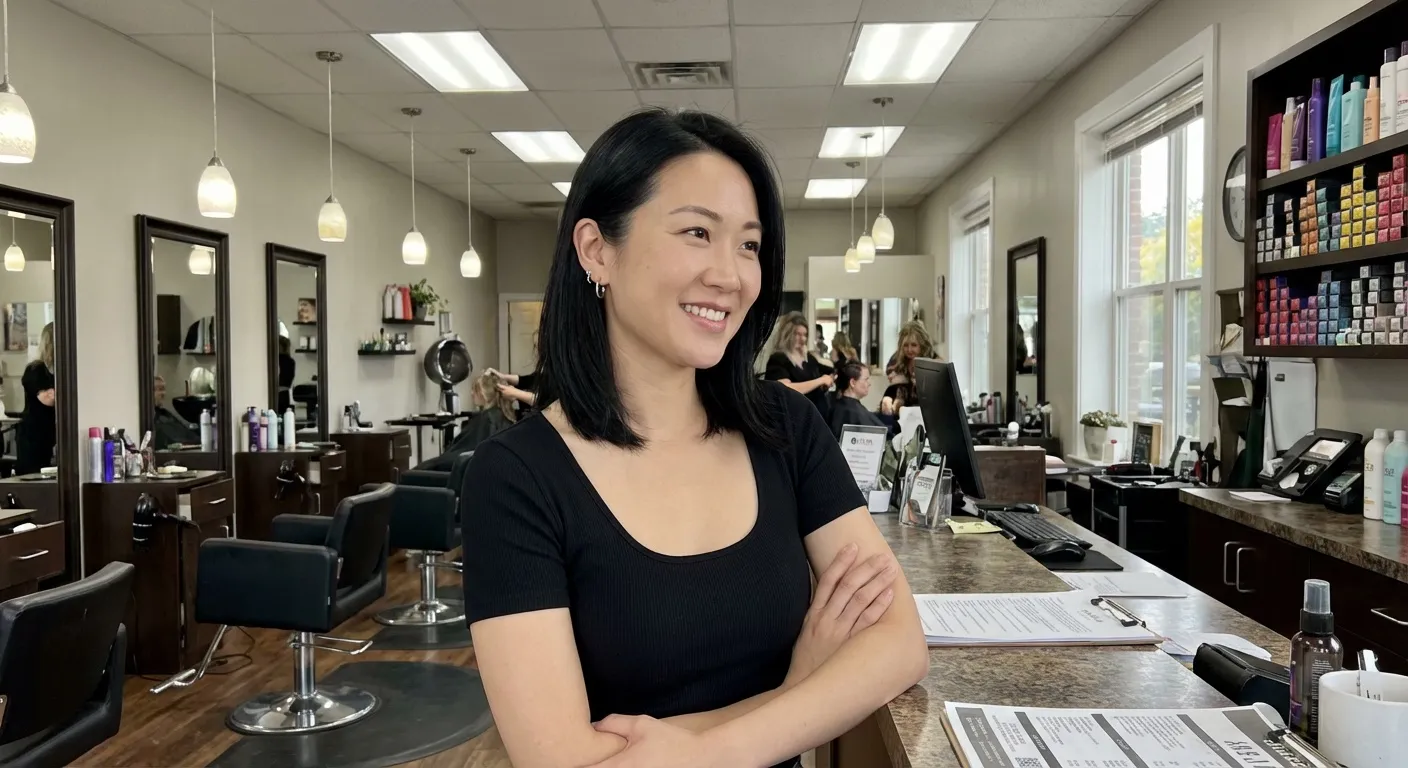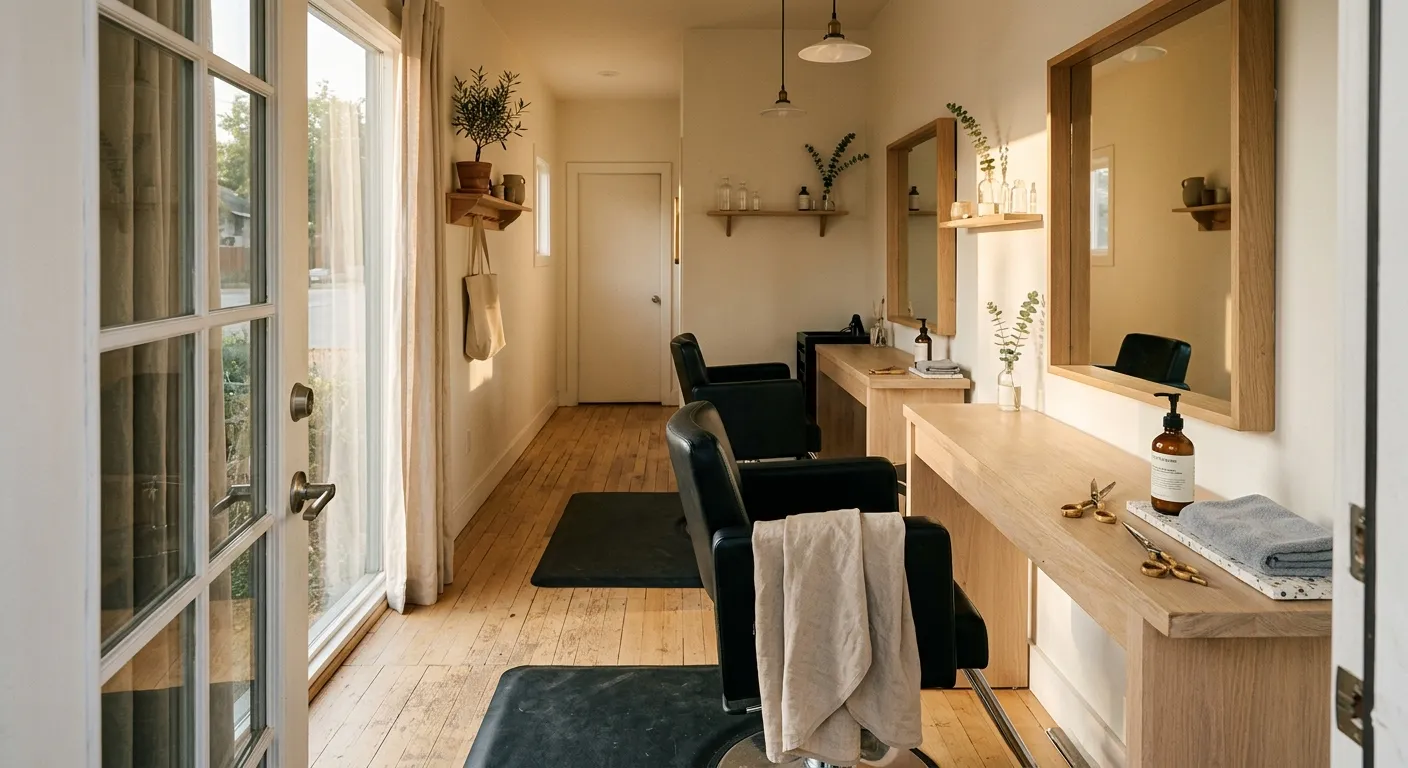
Three years into owning my salon, I woke up on a Tuesday morning and couldn’t turn my head to the left. Not a stiff neck from sleeping wrong. A sharp, electric bolt that shot from my shoulder blade into my jaw every time I tried. I called out of my own salon for the first time since I opened the doors.
My doctor told me I had a compressed nerve between C5 and C6. Common in hairdressers, she said. She asked if I stood with my weight on one leg, and I realized I did. Every single cut, for years. Always the right leg. My body had been keeping a tab, and that Tuesday was payday.
I spent the next month changing how I move behind the chair. Some of the fixes cost nothing. A few cost money. All of them were cheaper than the six appointments I missed while my neck healed.
The numbers no one talks about in beauty school
That number comes from a scoping review published in the Journal of Occupational Medicine and Toxicology that looked at musculoskeletal health across hairdressing populations. Back pain leads, but the full picture is worse. Up to 60% report shoulder pain. Up to 58% report neck pain. Hand and wrist problems affect nearly half of all stylists at some point in their career.
And here is the stat that changed how I think about this: a Danish prospective cohort study found that among hairdressers who left the profession, 42% cited musculoskeletal pain as the primary reason. Not burnout. Not bad clients. Not money. Physical pain.
We talk about setting boundaries with clients and protecting our mental energy. We barely talk about protecting the body that does the actual work.
What’s actually hurting you (and why)
The damage is cumulative. You don’t blow out your shoulder on one blowout. You erode it over thousands. The research points to four main culprits:
Prolonged non-neutral posture. Leaning forward over a client, tilting your head to check a line, reaching across someone’s head instead of repositioning them. Every angle that isn’t neutral is borrowing from your joints.
Repetitive upper-extremity movement. Cutting, blow-drying, foiling. The same muscle groups firing in the same patterns, hour after hour. Research from ScienceDirect found that female hairstylists have higher wrist velocity and force exertion than male barbers, which may explain the higher rate of hand and wrist complaints among women in the profession.
Prolonged standing. Eight to ten hours on your feet, often on hard flooring. Your pelvis tilts backward, the curve in your lower back deepens, and everything from your hips down compensates.
No recovery time between clients. You finish one appointment and start the next without a reset. Your body never gets to come back to neutral.
✅ The 45-minute rule
Research from the California Board of Barbering and Cosmetology recommends a 5-minute active break every 45 minutes of continuous work. “Active” means movement, not scrolling your phone. Walk to the back, stretch your forearms, roll your shoulders. Five minutes is enough to interrupt the cumulative load cycle.
Equipment that actually helps
I tested a lot of products after my neck injury. Some made a real difference. Some were expensive placebos. Here is where my money went.
| Item | Cost | Why |
|---|---|---|
| Anti-fatigue mat (3/4" thick) | $60-$90 | Biggest single change. Reduced my end-of-day leg fatigue noticeably within a week |
| Ergonomic shears (swivel thumb) | $150-$300 | Eliminated the wrist twist on every cut. My forearm pain dropped within a month |
| Saddle stool (adjustable height) | $120-$200 | For color processing, consultations, and any task where I don't need to stand |
| Supportive shoes (arch + wide toe) | $80-$150 | Replaced my cute flats. My feet stopped aching by month two |
| Item | Cost | Why |
|---|---|---|
| Compression gloves | $15-$25 | Helped temporarily but didn't address root cause |
| Wrist brace (worn while working) | $20-$30 | Restricted movement, made cuts less precise |
| Cheap foam mat (under 1/2") | $15-$25 | Too thin to make a difference, moved around on the floor |
| Posture reminder app | $5/mo | Annoying mid-service, stopped using after 3 days |
The anti-fatigue mat made the biggest difference per dollar. I bought a 3’x4’ salon-specific mat with a chair indent for $75. It’s been under my station for two years now and I’ve replaced it once. That is $150 total to stand on something that actually supports my body for 30+ hours a week.
Changes that cost nothing
The best fix I made was repositioning my clients instead of repositioning myself. Before my injury, I would lean and twist to reach the far side of someone’s head. Now I spin the chair. Every time. It takes two seconds and saves my back from hundreds of micro-compromises per day.
Other zero-cost changes:
I stopped propping my weight on one leg. I check in with my feet several times an hour and redistribute. I bend my knees slightly instead of locking them.
I raised my station chair settings. Most of my clients sit too low for me, which forces me to hunch. I bring them up until my elbows sit at roughly 90 degrees. No client has ever complained about being higher.
I started doing 60-second forearm stretches between every appointment. I press my palm flat against the wall, fingers pointing down, and hold for 15 seconds per side. Then I flip it, fingers pointing up, and repeat. The whole thing takes a minute. Sam Villa’s guide on preventing repetitive strain injury recommends similar stretches and notes they take two to three minutes total.
I time-block my schedule with 10-minute buffers between appointments. Those buffers aren’t just for cleanup and prep. They’re physical recovery windows. I sit down, drink water, let my spine decompress for a few minutes.
Wall forearm stretch: palm flat against wall, fingers down, 15 seconds each side. Then fingers up, 15 seconds each side. Shoulder rolls: 5 forward, 5 backward. Neck: gentle tilt ear to shoulder, hold 10 seconds each side. Total: about 60 seconds.
Monday: 20-minute yoga video before work (I use a free YouTube channel). Wednesday: foam roller on upper back and shoulders for 10 minutes after my last client. Friday: epsom salt bath. None of this is heroic. It is maintenance, like cleaning your shears.
Tingling or numbness in your fingers that doesn't go away after a day off. Sharp pain that changes how you hold your tools. Any symptom that shows up during your first appointment and is still there during your last. I waited too long. A sports medicine doctor or physical therapist who understands repetitive strain can catch problems before they become injuries.
The career math
I’m 35. If I want to keep doing hair until I’m 55, that is 20 more years behind the chair. At five days a week, that is roughly 5,000 more working days. Five thousand days of standing, reaching, cutting, drying.
The anti-fatigue mats, the better shears, the stool, the shoes, the stretches, all of it is an investment in making it to day 5,000 without my body forcing me to stop. The total cost of every equipment change I made was under $600. Six hundred dollars to protect a career that generates six figures per year.
If you’re feeling a twinge, an ache, a spot that’s always sore on Sunday night, don’t wait for the Tuesday that takes you off your feet. Start with one change this week. Reposition your client instead of your spine. Stand on something better than tile. Stretch between appointments instead of checking Instagram.
Your hands are your business. Your back holds up everything else. Take care of them like you take care of your tools, because they’re harder to replace.