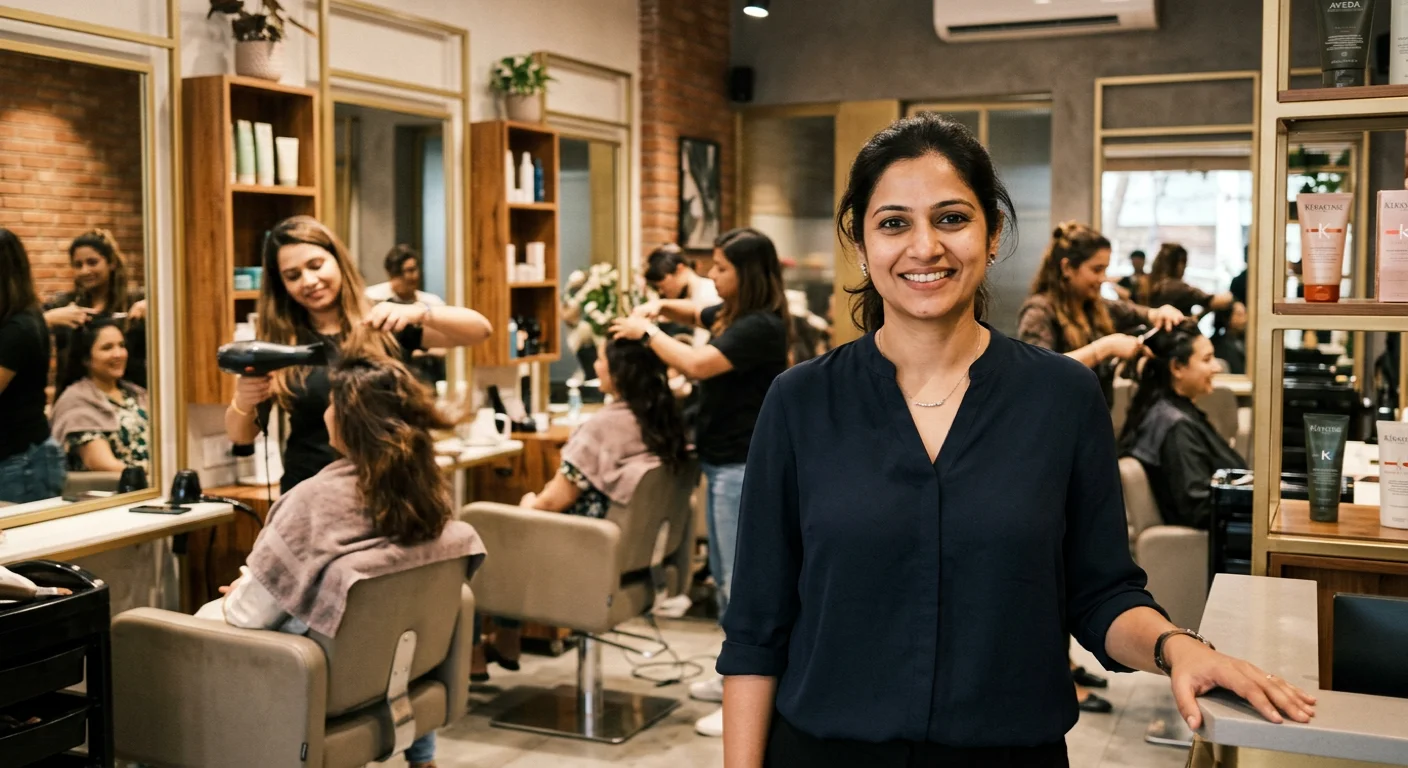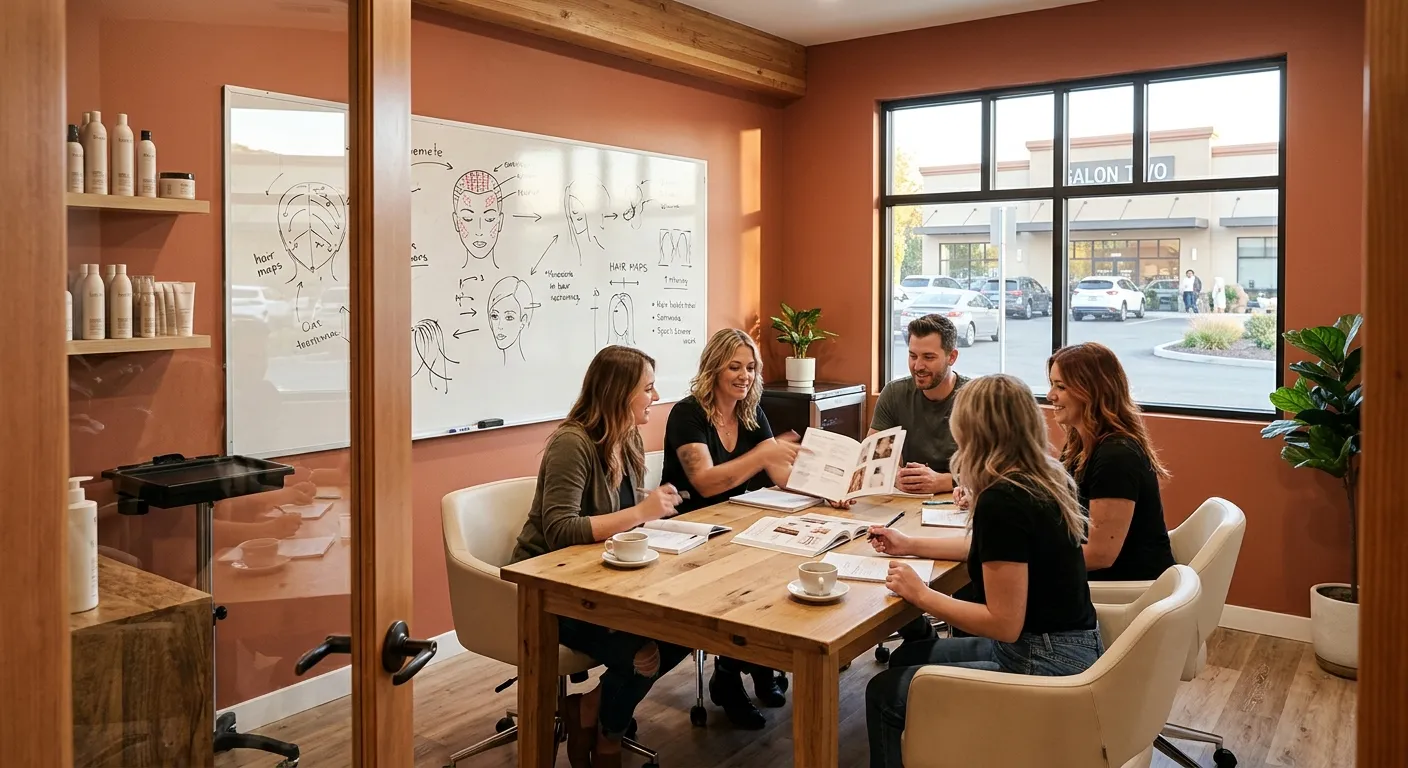
Nobody tells you that opening a third salon means training the same role three different ways. That was my problem by mid-2024: three locations in Dallas-Fort Worth, 22 employees, and zero consistency in how any of them learned the job.
Every new hire at my Uptown location shadowed me. At Oak Cliff, they shadowed my manager Daniela. At Plano, they shadowed whoever was available that week. The result was predictable. Three locations running three slightly different versions of the same business. Different consultation flows, different product recommendations, different ways of closing out the day. Clients who visited two of my salons noticed.
Building a training system forced me to confront something uncomfortable: I had been the system. And systems built on one person being in the room do not survive that person leaving the room.
Why I couldn’t keep training people myself
For my first eight hires, I trained everyone personally. I stood next to them during their first consultations. I watched their first color applications. I corrected technique in real time and debriefed at the end of each day. It worked. Those early hires understood exactly how I wanted the business to run because they learned it from watching me do it.
Then I opened the second location and stopped being available. My ninth hire got three days of my time instead of three weeks. My fourteenth got half a day and a binder I assembled at midnight. By hire number eighteen, the binder was outdated and nobody could find it.
Research from SHRM shows that structured onboarding improves new-hire retention by up to 82%. I believe it. The hires I trained personally stayed an average of 28 months. The ones who got the binder-and-prayer approach lasted nine.
What a salon training system actually contains
The system I use now took four months to build and has been revised six times since. It lives in a shared Google Drive folder that all three managers can access. Nothing in it requires me.
The core is five documents. A welcome guide that covers culture, expectations, dress code, and daily rhythm. A service standards manual with our consultation flow, product protocols, and client communication guidelines. A skills checklist broken into weeks one through twelve, signed off by the location manager as each skill is demonstrated. A scheduling and POS walkthrough with screenshots. And a 90-day review template that my managers run without me.
💡 The document that changed everything
The service standards manual was the hardest to write because it required me to articulate things I’d been doing by instinct for twelve years. How I greet a new client versus a returning one. When I upsell a treatment and when I don’t. The exact words I use when a color doesn’t turn out right. Writing those things down made me realize how much institutional knowledge was trapped in my own head.
The manual runs 14 pages. Every six months, my three managers and I sit down and revise it together. They catch things I miss because they’re on the floor daily and I’m not.
The handoff that made it real
The first time I let a manager run a full onboarding cycle without me was terrifying. Daniela trained a new stylist at Oak Cliff while I stayed away for the entire first two weeks. I checked my phone constantly. I drafted texts I didn’t send. I drove past the salon twice without going in.
When I finally came in for the new hire’s week-three check-in, the stylist knew our consultation flow better than some people I’d trained myself. Daniela had added her own touches: a shadow rotation where the new hire spent a half-day with each stylist to learn different techniques and client styles. I kept that addition. It’s now standard across all three locations.
A Gallup study on manager involvement found that employees whose managers are actively involved in onboarding are 3.4 times more likely to describe the experience as exceptional. My managers are better trainers than I am for one reason: they’re present in a way I can no longer be.
The checklist I give my managers
Every new hire at my salons goes through this sequence. The manager owns the process. I see the completed checklist at the 90-day mark.
The sequence isn’t complicated. The discipline of running it the same way every time, at every location, is where most salon owners fail. I failed at it for years.
What building this cost me
Four months of writing, testing, and rewriting. Roughly 60 hours of my time that could have been spent on revenue-generating work. Several arguments with managers who thought certain steps were unnecessary (they were right about two of them, and I cut those steps).
The harder cost was psychological. Writing a training manual means accepting that your way of doing things needs to exist outside of you. For someone who built a business on personal relationships and being present in every room, that acceptance came slowly.
According to Newployee’s onboarding research, 69% of employees who experience great onboarding stay with their company for at least three years. At my salons, hires who went through the documented system had a 14-month average tenure advantage over those who came before it. Fourteen months of not paying $3,500 to $7,500 to replace them.
Where this stands now
My training system isn’t perfect. My Plano manager runs it differently than my Oak Cliff manager, and both deviate from what I wrote. That used to bother me. It doesn’t anymore. The system gives them a floor. What they build on top of that floor is their own, and their locations are better for it.
I still read every 90-day review. I still sit in on the occasional week-three check-in. But I no longer need to be in the room for a new hire to learn how we run things. That’s the real milestone. Not the document. The fact that the business has a way of teaching itself, and that way doesn’t require my voice or my presence to work.
If you’re running multiple locations and still personally training every new hire, you’re the bottleneck. I was the bottleneck for four years before I admitted it. The training system didn’t just fix onboarding. It gave me back the hours I needed to actually lead instead of repeat myself.