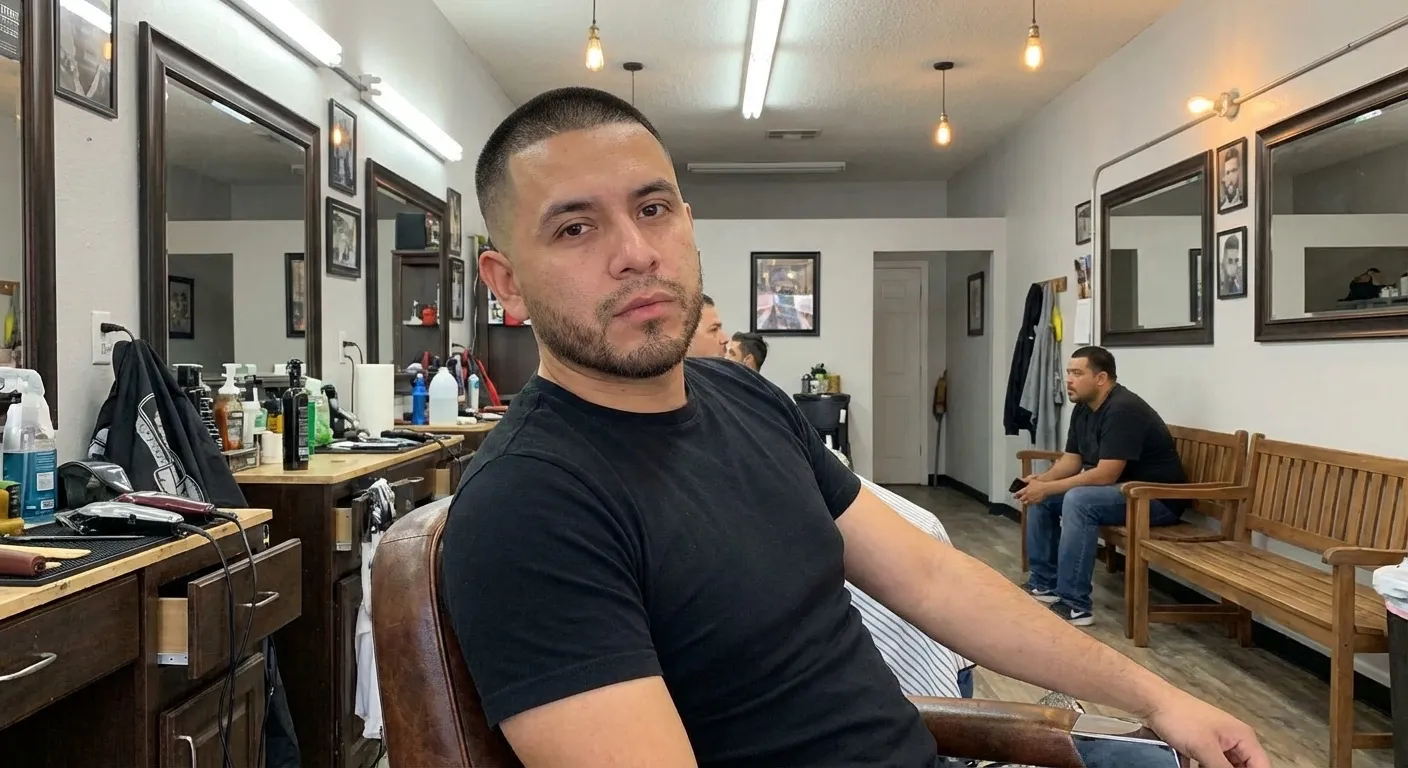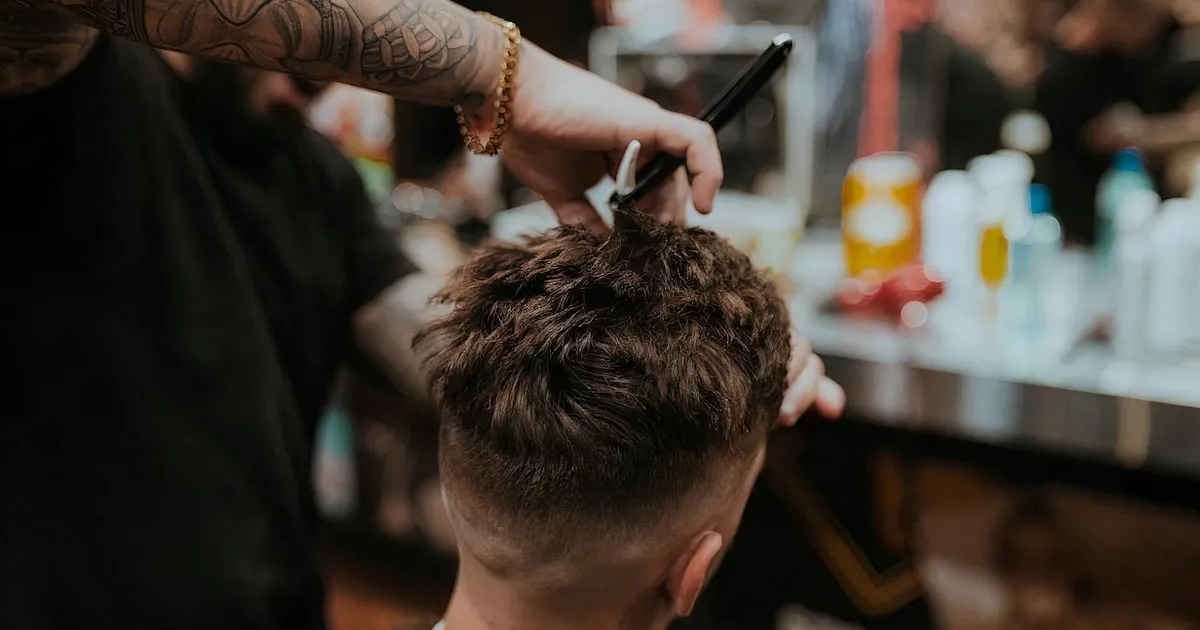
I hit “fully booked” at month fourteen. Six days a week, 10 clients a day, $40 per cut. I was making $2,400 a week before booth rent and supplies. Friends told me I’d made it.
I was also sleeping five hours a night, eating fast food between clients, and getting a sharp pain in my right wrist every time I picked up clippers. By month sixteen I took a forced week off because my body quit before I did.
Being fully booked is not the finish line. For a solo barber, it’s where the real problem starts.
That’s just the ones who feel it constantly. Another 44% experience burnout occasionally. Add those together and 67% of people in this industry are dealing with burnout at some level. And the National Barbers Association reports that most barbers who leave the profession do so within their first three years.
The math that traps you
A solo barber working six days a week, 10 clients a day at $40, grosses $2,400/week. Sounds strong. But run the numbers differently.
That’s 60 clients a week. Each cut takes roughly 30 minutes of chair time, plus setup and cleanup. You’re standing for 8-plus hours a day. You’re the barber, the receptionist, the cleaner, the bookkeeper, and the social media manager.
Where a solo barber's week actually goes
That’s 48 hours of work, six days a week, and you haven’t counted commute or the mental load of running a business alone. Over 70% of small business owners work more than 40 hours per week. For solo operators, 50-60 hour weeks are normal. “Normal” does not mean sustainable.
Physical toll of being a fully booked barber
This industry wrecks you physically if you let it. 71% of hairdressers develop a job-related injury over the course of their career. Hairstyling has nearly five times the incidence of carpal tunnel syndrome compared to the general population.
I ignored my wrist pain for two months. By the time I addressed it, I needed a brace and had to cut my schedule by 30% for six weeks. That forced break cost me around $4,300 in lost revenue. A planned day off per week would have cost me $960.
The math on rest is simple. You either schedule it or your body schedules it for you, and your body is a worse planner.
The revenue ceiling problem
Here’s what nobody tells you about being fully booked: you’ve hit a ceiling. When every slot is taken, the only way to make more money is to work more hours or more days. Both paths lead to the same wall.
78% of solo businesses worldwide make under $50,000 a year. The average solopreneur in the U.S. earns $39,273. Getting to fully booked feels like winning, but the income from a one-person service business has hard limits unless you change the equation.
There are only three levers:
- More hours (unsustainable, and you’re already maxed)
- More services (upsells like beard trims, products)
- Higher prices (the lever most barbers refuse to pull)
Raise your prices, drop a day
This is what I did at month seventeen, after the forced break. I raised my price from $40 to $50. A 25% increase. Then I dropped Mondays entirely.
I expected to lose clients. Industry data from GlossGenius suggests a 10% price increase leads to roughly 10% client loss. I went harder than 10%, so I braced for worse.
I lost about 15% of my clients. The ones who left were mostly price-sensitive walk-ins who weren’t regulars anyway. My core base stayed. Within six weeks, the empty slots filled back up from my waitlist and new bookings.
Here’s the before and after:
| Before | After | |
|---|---|---|
| Days worked | 6 | 5 |
| Clients/day | 10 | 9 |
| Price/cut | $40 | $50 |
| Weekly revenue | $2,400 | $2,250 |
| Monthly revenue | $9,600 | $9,000 |
Weekly revenue vs. days worked
I gave up $150 per week, or about $600 per month. In exchange, I got 52 Mondays back per year. That’s 52 days to sleep in, go to the gym, handle business tasks without rushing, or just not stand on my feet for eight hours.
Six months later I raised prices again to $55. My weekly revenue exceeded my old six-day number. Same five-day schedule.
✅ The price increase formula
If you work 6 days and want to drop to 5, you need a price increase that covers 83% of your current revenue (5/6). A $40 cut needs to become at least $48 to break even. Anything above that is a raise.
Protect your schedule like it’s money
Once I had my five-day week, I built walls around it. No Monday exceptions. No “just one quick cut.” Boundaries only work if they’re absolute.
I also started blocking the last slot of each day for cleanup and admin. No more staying 45 minutes after my last client to sweep, restock, and answer texts. That buffer turned my 9-hour days into 8-hour days with a clean ending.
The American Psychological Association’s 2025 review of four-day workweek research found that companies adopting shorter weeks saw productivity stay the same or improve in 85% of cases. The mechanism is simple: rested people work better. A barber who slept well and stretched that morning gives a better cut than one who’s been grinding for twelve days straight.
Growth doesn’t mean more hours
The barbers I know who burn out all have the same story. They grew their client base, filled every slot, then tried to grow more by adding hours. Saturday evenings. Sunday mornings. Squeezing in one more client at lunch.
Real growth for a solo operator looks different:
Raise prices annually. Haircut prices have risen about 2.76% per year over the past 25 years, and faster recently. If you’re not raising prices, you’re giving yourself a pay cut every year. An annual 5-10% increase, communicated two weeks in advance, is standard. If the idea of raising prices scares you, here’s a guide on how to raise salon prices without losing clients.
Increase your per-client revenue. A $50 cut with a $15 beard trim and a $20 product sale turns a $50 visit into $85. Loyal clients spend 67% more than first-timers. They’re the ones who’ll add services.
Automate what isn’t cutting. Online booking, automated reminders, and text follow-ups handle the receptionist job. I covered exactly how to build systems that run without you — automation gave me back over 11 hours a week. Salons using automated reminders cut no-shows from 15-30% down to 5% and report 20-35% higher client retention. Every no-show you prevent is revenue recovered without adding a single hour.
Fill smarter, not fuller. If you have a Tuesday afternoon that’s consistently slow, that’s not a problem to solve with discounts. It’s a signal that your ideal schedule might be four busy days plus one lighter day, not five packed days and one dead one. Learning to time block your salon schedule is the first step toward working smarter instead of longer.
What a sustainable barber schedule looks like
I work five days now. I see 8-9 clients per day. I charge $55 per cut. My weekly gross is around $2,400, same as my burned-out six-day number, but I have an extra day and I cut fewer heads.
My wrist doesn’t hurt. I go to the gym three mornings a week. I spend Mondays handling business stuff, posting content, and doing nothing.
I’ll be in this industry for decades because I stopped treating my body like it was free. Fully booked is a milestone, not a lifestyle. Build the schedule that lets you keep going.