A color client who books every six weeks at $180 a visit is worth about $1,560 a year. When she stops booking, the first six weeks look normal on your calendar. By week eighteen you are short three visits and roughly $540 of revenue nobody chased, because nothing in your week pointed at her. A full book hides a thinning one. Jay Torres counted every client who ghosted him and found 23 in six months, but only after going name by name through the data.
To win back lost salon clients, the fix is mechanical: define lapsed per service, flag the drift automatically, and run a three-text sequence that makes rebooking the easiest thing that client does all day. One rule, one list, three texts.
Lapsed client rebooking starts with the right interval
The default answer is 90 days, and it is wrong for most of a book. A gel-fill client is lapsed at three weeks. A color client is not lapsed at eight. A blanket rule texts the color client mid-cycle and reaches the gel client long after she found someone else. Lapsed client rebooking works when the window matches the service cadence:
- Cut: last visit + 6 weeks
- Color or roots: last visit + 8 weeks
- Gel fills and refills: last visit + 3 weeks
- Lash fills: last visit + 3 weeks
2026 spa and salon retention benchmarks support the split: hair color clients retain at 75-85% annually while massage clients sit at 40-50%. Services with a fixed regrowth rhythm hold their clients. Services that are easy to postpone drift first, and one threshold for both paints the wrong picture. Simple Salon’s retention guide makes the same point from the reporting side, setting target rebook periods of 6-8 weeks for color and 4-6 for cuts, with anyone outside their window counted as drifting rather than gone.
Flag inactive clients automatically
The flag is one comparison, and both inputs already exist: the client’s last visit date and the service they had. When today minus last visit crosses that service’s interval and no future appointment sits on the calendar, the client is lapsed. Add them to the list.
💡 Where the data lives
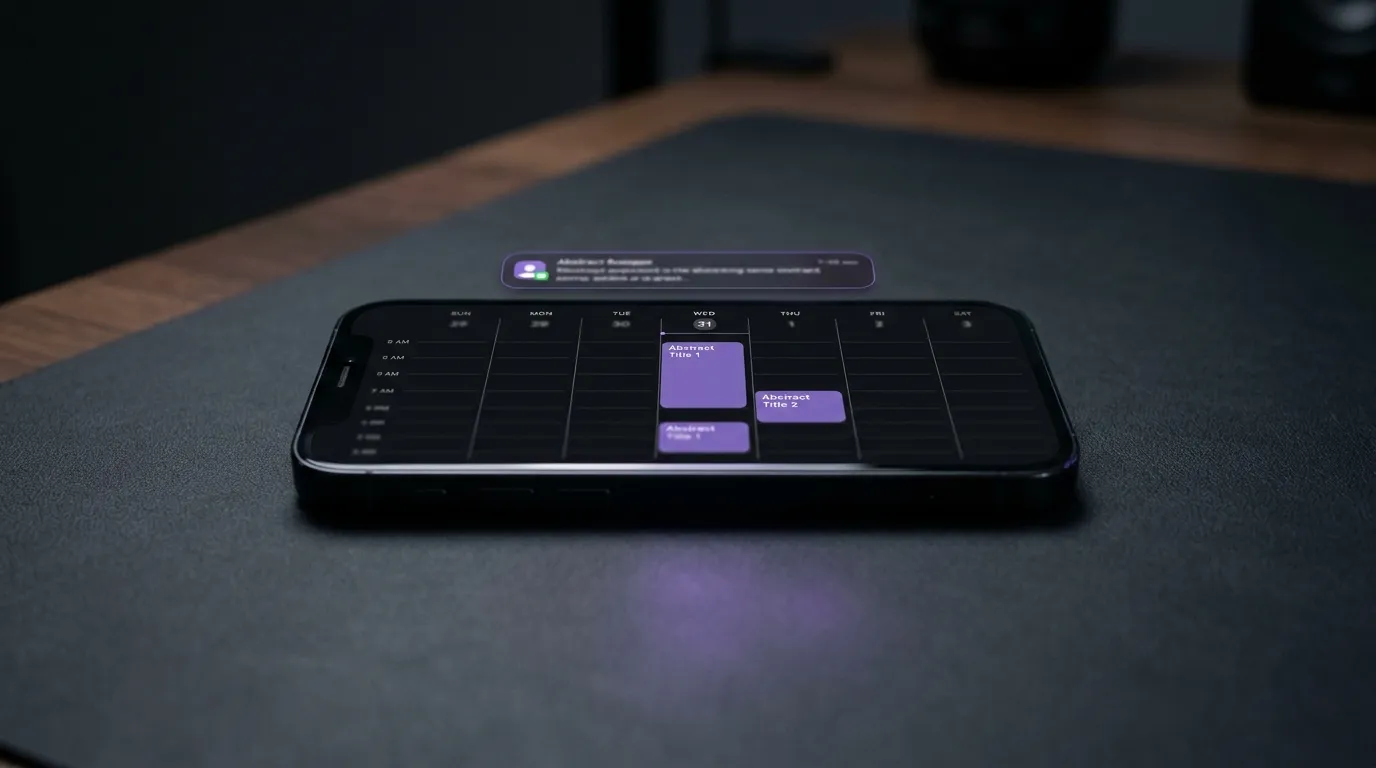
A calendar that already fires automated reminders and birthday texts holds everything the flag needs: booking history, service, and last visit date on the client profile. If your system does not build the lapsed list for you, export last-visit dates by service once a month and sort. Forty names is a Tuesday-morning task. A thousand-client book worked from memory is guesswork.
Two exclusions keep the list honest. Anyone with a future booking is not lapsed. And first-timers who never returned belong to a different campaign, because the leak there is the second visit.
The win back text template salon owners keep asking for
Every touch runs on the same skeleton: their name, one reason, one link, your name. The first text carries no offer. A Shopify win-back analysis is direct about why: reserve the incentive for people further along, because a discount for someone who would have rebooked anyway is margin you burned. Automation also beats manual effort. SMS automations draw 18% of orders from 9% of sends, and Omnisend’s 2025 dataset shows automated texts click 147% more than manual campaigns.
✅ Text 1, day 7 after the interval lapses: the soft nudge
Hi [Name], it’s [Your name] at [Salon]. Your [service] is usually due around now, so I saved a couple of next-week slots. Want one? [booking link]
✅ Text 2, day 14: the reason to return
[Name], still due for your [service]. If you book this month, [small add-on] is on us. Good through [date]: [booking link]
✅ Text 3, day 21: the last call
Last one from me, [Name]. I’m releasing the slots I held back on Friday, so the calendar opens to everyone after that. If you want one: [booking link] Either way, hope you’re well.
The add-on beats a percent-off for a reason. The same retention benchmarks rank a service upgrade or free add-on as the most effective win-back offer, ahead of discounts. Color clients rebook when roots make the decision for them; the add-on removes the last excuse to postpone the booking.
A salon win back campaign lives or dies on guardrails
Three texts is the ceiling. The guardrails keep the sequence useful instead of needy:
Edge cases worth deciding before the first send:
Log the date and stop. A no is data; silence is nothing. A GoReminders reactivation guide puts the next attempt three to four months out with a different opening, not a week later with the same one.
Clients who booked, confirmed, or replied to your texts before have an established messaging relationship. Keep the list to those numbers, identify your salon in the first message, and honor STOP immediately. Never add numbers collected somewhere else.
Response rates fall with time. Warm clients at 3 to 6 months reply 25 to 40% of the time; past 18 months it is 3 to 8%. After two unanswered sequences, stop texting and let the once-a-year birthday message carry the relationship.
Reconnect with inactive salon clients and count the recovery
Run the math on your own book. Say 300 active clients, 40 flagged each quarter, a $90 average ticket, and a 25% reply rate in the warm band, with most replies turning into bookings. That is ten rebooked clients and about $900 of recovered revenue per quarter, $3,600 a year, from people already in your database. Acquisition cost: zero.
Before this system, a lapse becomes visible only when someone counts by hand. After: the list rebuilds itself every Monday, three texts go out without anyone remembering to send them, and the number that changed is the quiet one. A salon win back campaign works above a bad quarter, as an alarm on the $3,600 sitting dormant in your client list.