My first-visit rebook rate went from 48% to 79% in four months. I didn’t change my cuts. I didn’t change my prices. I built a 2-minute consultation and ran it the same way every time.
That’s the whole playbook. Same four questions. Same phone check. Same read-back. Every new client, every time.
Why the barber consultation matters more than the cut
The industry average for first-visit retention sits around 35%, according to Boulevard’s salon report. Two out of three new clients never come back. Top-performing shops hit 70%. The gap isn’t talent. It’s the first five minutes.
A 2025 study on barbershop service quality found that rapport formation was the single biggest predictor of a client coming back. Rapport doesn’t happen during the cut. Your clippers are too loud. It happens in the two minutes before the cape goes on.
I used to skip this. I’d cape the guy, ask “what are we doing?” and start cutting. Half the time the cut landed fine. Half the time I guessed wrong on the fade height or the top length and I could feel it when he paid. Polite “thanks.” No rebook. Gone. I also stopped getting before-and-after photos worth posting because the cuts weren’t dialed in enough to be proud of.
The script, in order
Here’s what I do now. Start to finish, it takes about 90 seconds to 2 minutes. I do it before the cape goes on, while the client is still sitting forward in the chair.
1. “When was your last cut, and what did they do?”
This is the first question every time. Not “what are you doing today.” That question assumes the guy knows. Most new clients don’t, because the last barber never asked them either.
“When was your last cut” tells me his growth cycle. Three weeks versus eight weeks changes everything about what I’m working with. “What did they do” tells me his baseline vocabulary. If he says “a 2 on the sides and scissor on top,” I know he’s had a good barber. If he says “just a trim, you know,” I know I need to do more asking.
2. “What did you like about it, and what did you want different?”
Two questions in one. I ask them together because the answers flow into each other.
GlossGenius’s consultation guide recommends open-ended questions like “what do you like about your current style.” That’s right, but incomplete. The second half, what he wanted different, is where the gold is. Most clients never get asked. They’ll tell you their last guy cut the sideburns uneven, or left the fade too high, or shaved the neckline too straight when they wanted it natural. That’s the info that wins the rebook.
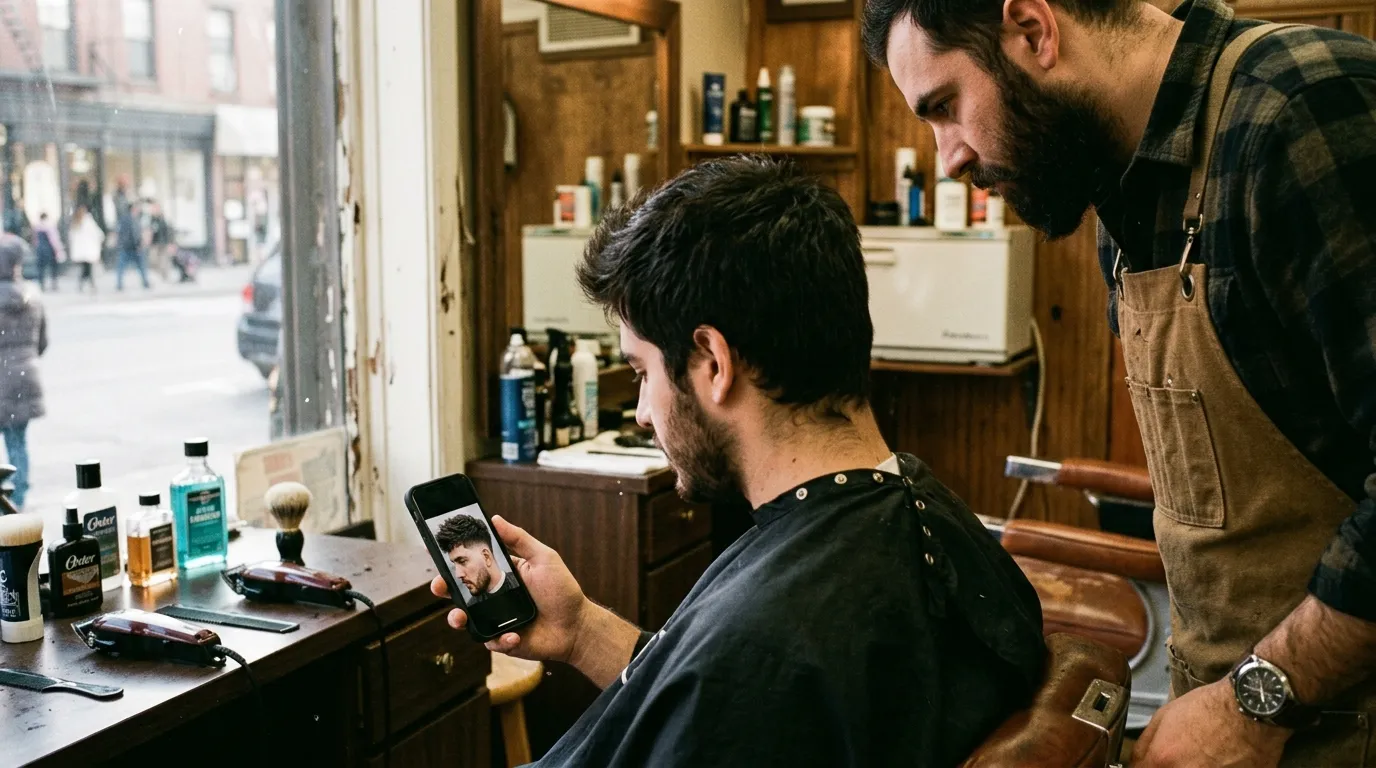
3. “Do you have a photo?”
Every time. Even if he describes it well. A reference photo kills ambiguity in one second.
Salt City Barbershop put it plainly: terms like “low fade” or “undercut” mean different things to different people. My version of a low fade and his version of a low fade can be two inches apart on the skull. A photo ends the argument before it starts.
If he doesn’t have one, I pull up my own portfolio on Instagram and we scroll until he points at something. Thirty seconds. No ego. The point is clarity, not quiz the client.
✅ The photo rule
Look at the photo for the hair, not the face. The guy in the picture has different bone structure, different hair density, different texture. Tell your client what will translate and what won’t. Honesty here builds more trust than a perfect fade.
4. “How do you style it at home?”
This is the one most barbers skip and it’s the one that saves the rebook.
If he says “I just towel it and go,” I’m not leaving him with a cut that needs pomade and a blow-dryer. If he says “I use a matte clay and brush it back,” I know I can give him something with more length and direction. His morning routine is the spec sheet for the cut. Ignore it and you give him a haircut he can’t replicate on Monday morning.
5. Read it back
This is the step that took my rebook rate from 60s to 79%. I say it out loud.
“Okay so, 1.5 taper on the sides fading to a 2 on the top of the ears, scissor on top with some length kept in the front for the sweep, natural neckline, skip the eyebrows. Sound right?”
He’ll either nod or correct me. Either way, we just agreed. No surprises. No “wait this is shorter than I wanted” at the end. The Barber School calls this step the meeting of the minds. I call it insurance.
The checklist I keep taped to my mirror
I had this printed on an index card for three months until I’d memorized it. No shame in a cheat sheet. Most barbers I’ve met wing the consult and wonder why their first-time retention is mid.
What changed in my numbers
Four months in, I tracked it. My first-visit-to-regular conversion moved from 48% to 79%. My average first-visit tip climbed about four points. I stopped getting the “thanks” that means “I’m not coming back.”
The other thing I noticed: the consult shortened my actual cuts. When I know exactly what he wants, I’m not second-guessing the first pass. I’m not stopping to check the mirror with him mid-fade. I move through the cut cleaner because the decisions were made before I picked up the clippers.
What I’d tell a newer barber about first-time clients
Don’t skip it because you’re busy. A 2-minute consult on the front end saves you 5 minutes of redoing the fade or hedging on the length. It also saves you the $40 cut you’ll never see again because the guy walked out not-quite-happy and booked somewhere else next time.
Run the same script on every new client. Same questions. Same order. Same read-back. Boring is the point. After a month you’ll stop thinking about it and your first-visit retention will have already climbed. See why first-visit conversion is the whole game if you want the longer math on why the second appointment is the tipping point.
The cut is what you’re selling. The consult is what gets you the rebook.