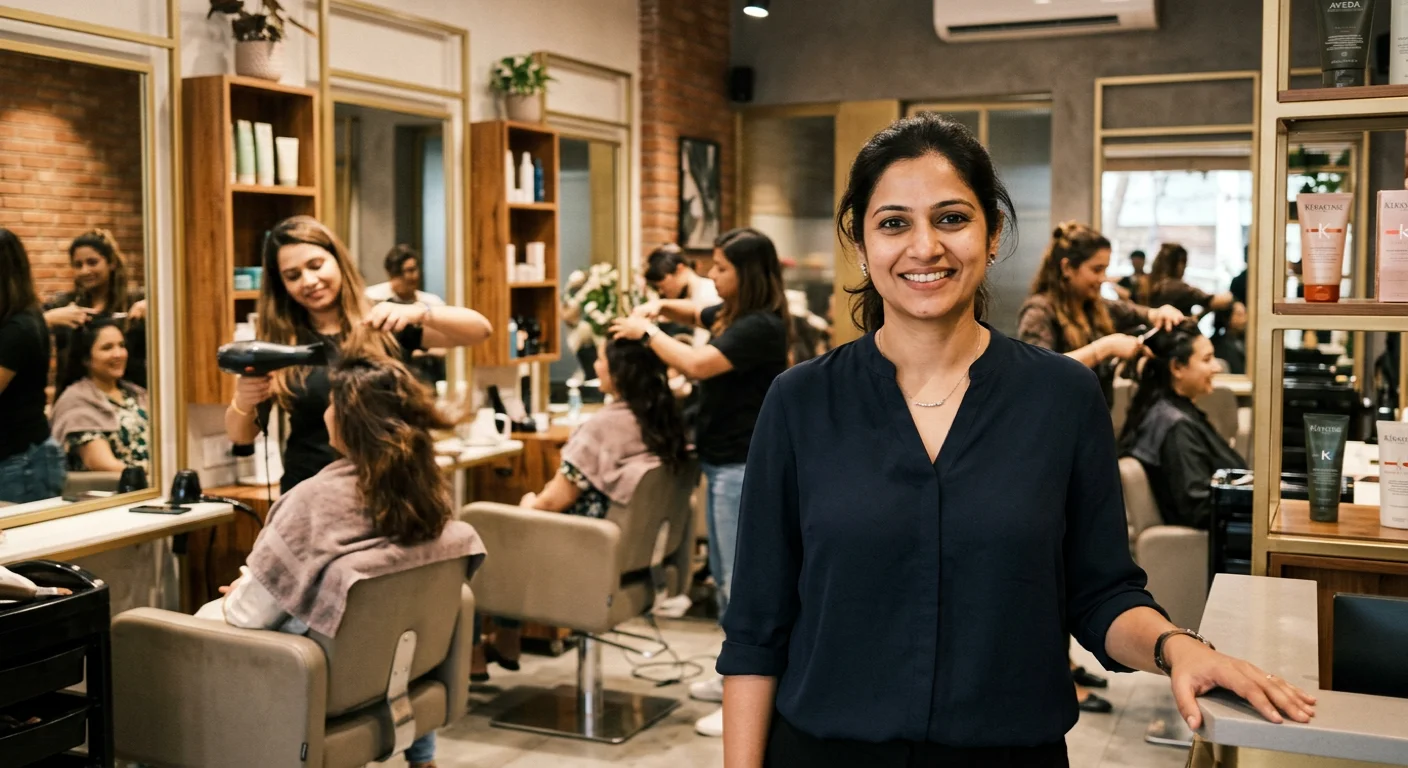
My seventh hire was the one that nearly made me quit hiring altogether.
She was technically strong. Great portfolio. Interviewed well. Said all the things I wanted to hear about teamwork and growth. Two months in, she had already alienated half the team at my second location, lost three regular clients because of attitude, and quit over text on a Sunday night. I spent the next week rearranging the entire schedule by hand to cover her chair.
That was hire number seven. I’ve now made 22. Some brilliant, some disastrous, most somewhere in the middle. And the patterns I missed early on seem obvious in hindsight.
The real cost of a bad salon hire
The industry talks about turnover like it’s weather. Just something that happens. Salon Spa Connection’s survey of 10,000 beauty professionals found the average salon turns over 37-40% of its staff every year. For a five-person team, that means replacing two people annually.
Those numbers include the job posting, the interview hours, the training weeks where your new hire produces at half capacity, and the clients who quietly leave during the transition. At three locations with 22 employees, I’ve felt every dollar of that math.
But the financial cost is only part of it. A bad hire poisons a team. The stylist who gossips. The one who shows up five minutes late to every shift and acts confused when you mention it. The one who treats the front desk like a personal assistant. The remaining team watches how you handle it, and if you handle it slowly, they start updating their own resumes.
What the resume never told me
I used to screen for two things: technical skill and experience. A strong portfolio and three years behind the chair got you an interview. I was wrong about what mattered.
| Factor | Weight | Why |
|---|---|---|
| Portfolio quality | High | Visual proof of skill |
| Years of experience | High | Assumed reliability |
| Personality in interview | Medium | Gut feeling |
| References | Low | Rarely called them |
| Factor | Weight | Why |
|---|---|---|
| How they talk about past teams | High | Reveals pattern of blame or ownership |
| Trial day performance | High | Shows real behavior under real conditions |
| Questions they ask me | High | Tells me what they actually care about |
| Portfolio quality | Medium | Still matters, but less than I thought |
The shift happened around hire 12. I started noticing that the stylists who lasted and thrived were not always the most technically polished. They were the ones who asked about the team dynamic, wanted to know how we handle conflict, and showed curiosity about our systems. The hires who asked only about commission structure and schedule flexibility tended to leave within six months.
One question changed my interview process permanently: “Tell me about the last time something went wrong with a client, and what you did.” The answer reveals everything. People who blame the client, the product, or the previous salon are telling you who they’ll be on your floor.
The trial day is non-negotiable
After hire number nine left within three weeks, I implemented a paid trial day for every candidate. Full shift. Real clients (with their consent). Real pace.
A Phorest interview framework study confirms what I learned the hard way: structured evaluations during a working day predict retention better than any sit-down interview. You see how someone handles a running-late client, a tricky color correction, a coworker who needs the backwash station.
Since adding the trial day, my first-year retention went from roughly 50% to over 80%. That single change is worth more than every interview question I’ve ever asked combined.
Three things I watch for on trial days:
- How they interact with the front desk. If they treat support staff like furniture, they’ll do it every day once they’re comfortable.
- What they do during downtime. Do they stand around, or do they clean, organize, ask questions? Initiative shows up in the gaps.
- How they recover from a mistake. Everyone messes something up during a trial day. The response matters more than the mistake.
Your team is your best recruiting channel
I stopped relying on job boards after location two. Industry data shows employee referrals consistently produce hires who stay longer and ramp up faster. My numbers back that up completely.
Of my 22 hires, nine came through team referrals. Seven of those nine are still with me. Of the 13 who came through job postings or cold applications, only four remain.
I pay a $500 referral bonus, split in two: $250 when the new hire starts, $250 after 90 days. It costs me far less than a job posting cycle, and my team only refers people they’d actually want to work beside. That filter is more reliable than any screening process I could build.
The other thing that happened when I leaned into referrals: my team started caring about culture. When you know you’re the reason someone got hired, you invest in their success. You mentor. You cover. You want them to stay because their staying reflects on you.
Retention starts before day one
MioSalon’s 2026 hiring report found that 61% of salon employees leave within their first year, and most of those departures happen in the first 90 days. That tracks with what I’ve lived. The employees I lost always showed signs early. I just didn’t act on them.
Now I think of the first 90 days as a second interview, running both directions. I’m evaluating them and they’re evaluating me. That means the onboarding process has to be specific, structured, and honest about expectations. No “we’ll figure it out as we go.”
The weekly check-in during those first 90 days is where I catch problems. Not a formal review. Ten minutes. “How’s the schedule working? Anything frustrating? What do you need?” The stylists who eventually left almost always signaled it in these conversations weeks before they quit. I just didn’t always listen well enough.
What I know now that I didn’t at hire number one
Hiring for a salon is not like hiring for most businesses. You’re asking someone to join a small room of people who spend eight hours a day together, share physical space, and interact with the same clients. That closeness means the wrong personality fit costs you more than a skill gap ever will.
Skills can be taught. I’ve watched junior stylists with average technique become stars because they were coachable and kind. And I’ve watched technically brilliant stylists destroy a team’s morale in weeks.
My staff meetings now include a standing agenda item where the team can raise concerns early. That didn’t exist for my first two years as a multi-location owner, and the silence cost me three good stylists who left because problems festered.
After 22 hires across three salons, my hit rate sits around 60%. That means four out of every ten hires don’t work out long-term. I used to think that number meant I was failing. Now I know it means I’m running a business with humans in it. The goal is not to never make a bad hire. The goal is to spot it in 30 days instead of six months, and to build a team strong enough that one departure doesn’t break anything.
That’s the real job. Not finding perfect people. Building a place where good people want to stay.