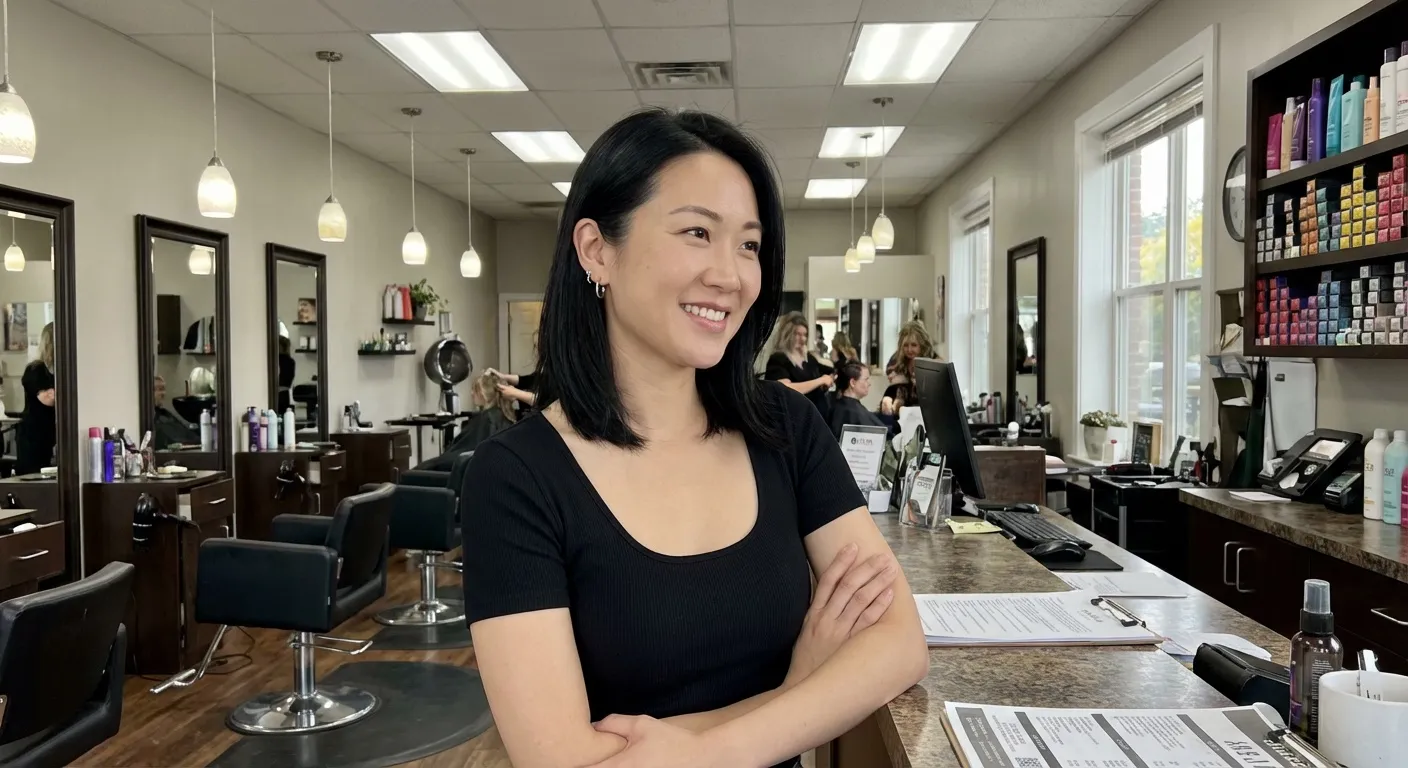
For the first three years of running my salon, I didn’t hold regular staff meetings. We’d huddle in the back when something went wrong. A no-show spike. A product order that got botched. A client complaint. Every meeting was reactive. Every meeting felt like a fire drill.
Then I started weekly meetings. The first few were worse than no meetings at all. An hour long, unfocused, half the team checked out by minute twenty. I was doing exactly what Atlassian’s workplace research warns about: 72% of meetings fail to accomplish their goals, and professionals waste an average of 31 hours per month in unproductive meetings.
It took me about two months to find a format that works. Now my Tuesday morning meetings run 30 minutes, sometimes less. They’re the most productive half-hour of the week.
Why salons skip meetings (and why that costs money)
Salon owners avoid meetings for practical reasons. Chairs don’t generate revenue when stylists are sitting in a circle talking. A 60-minute meeting with four stylists at an average billing rate of $60 per hour represents $240 in lost chair time. Do that weekly, and you’re looking at over $12,000 a year in opportunity cost.
So the instinct to skip meetings makes sense on a spreadsheet. But communication gaps cost more. The stylist who doesn’t know you raised the price on balayage quotes the old rate. The front desk person who wasn’t told about a schedule change double-books a Saturday. The new hire who doesn’t realize you’re pushing a retail promotion lets product sit on the shelf.
Gallup’s engagement research spanning 1.8 million employees found that teams in the top quartile for engagement achieve 21% higher profitability. Regular, focused communication is one of the strongest drivers of that engagement. A salon with four stylists doing $300,000 in annual revenue stands to gain $63,000 in profitability by moving from bottom-quartile to top-quartile engagement. Your 30-minute meeting is buying a piece of that.
The 30-minute format
Here’s exactly what my Tuesday meetings look like. We meet at 9:00 a.m., thirty minutes before the first appointments. Everyone stands. No chairs, no couches. Standing meetings run shorter. That’s not my opinion. Research published by the Washington University in St. Louis found standing meetings are 34% shorter than seated ones with no loss in quality.
Minutes 1-5: Numbers review. I share one or two metrics from the previous week. Last week’s rebooking rate. Retail per client. Cancellation count. Just the highlights. Everyone sees where we are. No lectures, no blame.
Minutes 5-15: One topic, discussed. This is the core of the meeting. One subject. Not three. Not five. One. Last week it was how we’re handling consultation time for new clients. The week before, it was our Valentine’s Day promotion plan. Keeping it to one topic forces clarity and prevents the meeting from spiraling.
Minutes 15-25: Round robin. Each stylist has two minutes to share one thing. Could be a client win, a challenge they need help with, a product observation, or a scheduling request. This is where the team actually talks to each other instead of just listening to me. Zolmi’s guide to salon meetings recommends this format specifically because it gives every team member a voice without letting anyone dominate.
Minutes 25-30: Action items. We name specific tasks with specific owners. “Sarah will update the balayage consultation checklist by Friday.” “I’ll adjust the Saturday staffing for next month.” If it doesn’t have a name and a deadline, it doesn’t happen.
Meeting time allocation
What to actually talk about
The single-topic approach only works if you pick good topics. I keep a running list on my phone. Any time something comes up during the week, I add it. On Monday night, I pick the one that matters most.
Here are topics that have generated real results for my team:
Rebooking language. We spent one meeting practicing how to ask clients to rebook at checkout. Within a month, our rebooking rate went from 54% to 63%. At roughly 90 appointments per month, that’s 8 more prebooked clients, each worth an average of $85. About $680 per month from a single meeting topic.
Handling price questions. After raising prices in September, we spent a meeting rehearsing how to explain the increase. Nobody winged it. Nobody apologized for it. We had two client complaints total. (I wrote about how to raise prices without losing clients separately.)
Product knowledge. We did a meeting where one stylist presented a product line she’d been using heavily. Explained what it does, who it works for, how to bring it up. Retail attachment for that product doubled the following month.
Schedule gaps. We looked at our booking data together and identified that Wednesdays between 2-5 p.m. were consistently dead. The team brainstormed solutions. We started offering a midweek color special. Wednesday utilization went from 55% to 74% within six weeks.
✅ Rotate the facilitator
Once a month, I let a senior stylist run the meeting. They pick the topic, they lead the discussion. It builds leadership skills and gives me a different perspective on what the team thinks is important. My senior stylist flagged a consultation bottleneck during her meeting that I’d completely missed.
The meetings that kill morale
Not all meetings are equal. Some formats actively damage team cohesion. I’ve made these mistakes so you don’t have to.
The lecture. You talk for 40 minutes. Everyone nods. Nothing changes. If you’re the only one speaking, send an email instead.
The call-out session. Publicly addressing one person’s performance issue in a group setting. This happened exactly once in my salon, and I still regret it. Individual performance conversations happen behind closed doors. Always.
The marathon. Anything over 45 minutes with a salon team loses people. Atlassian’s research found that 73% of professionals do other work during meetings when they drag on. If your meeting runs past 30 minutes regularly, your agenda is too big. Split it.
The no-agenda drift. “Does anyone have anything they want to discuss?” is how you get 25 minutes about parking and 5 minutes about actual salon operations. Always have a plan, even if it’s loose.
When to meet (and when to skip)
I meet weekly because my salon has four stylists and things change fast. If you’re a solo operator with one or two employees, biweekly or monthly might be enough. DaySmart’s salon management guide suggests matching meeting frequency to team size and the pace of change in your shop.
Skip the meeting when there’s genuinely nothing to discuss. Meetings that exist for their own sake train people to tune out. I cancel about one meeting per month. Nobody complains.
And never hold a meeting during peak hours. You lose the chair revenue, sure. But you also build resentment from stylists who had to reschedule clients to sit in a circle and hear about inventory.
💡 Write it down
After every meeting, I send a three-line text to the group chat: what we discussed, what we decided, and who’s doing what. Takes two minutes. Eliminates the “I didn’t hear that” excuse and gives anyone who missed the meeting a way to catch up.
The real return
I tracked my salon’s metrics for six months before and after implementing structured weekly meetings. The numbers don’t prove causation, but they’re hard to ignore.
| Metric | Before meetings | After 6 months |
|---|---|---|
| Rebooking rate | 54% | 66% |
| Retail per client | $8.20 | $12.50 |
| Wednesday utilization | 55% | 74% |
| Staff turnover (annualized) | 1 departure | 0 departures |
The combined revenue impact of those improvements was roughly $2,400 per month. The meetings cost about $120 per week in chair time. That’s a 5:1 return on the most boring-sounding investment in your salon.
Thirty minutes. One topic. Every person speaks. Clear next steps. That’s it. Your team wants to feel informed and heard. Your schedule wants the consistency that comes from everyone rowing the same direction. Combine regular meetings with a real training investment and you’ll build a team that grows together instead of drifting apart. Both things happen in the same half-hour.