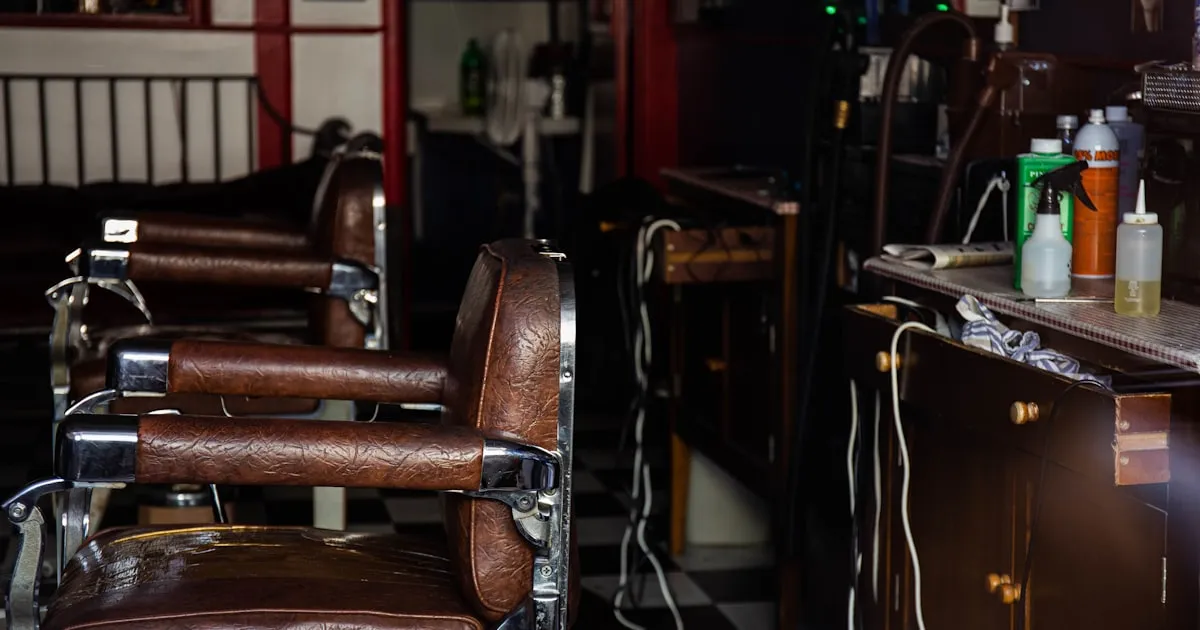
One no-show on a Tuesday afternoon feels like a minor annoyance. A gap in the schedule. Maybe time to catch up on inventory or scroll through Instagram.
But one missed appointment per day, six days a week, at an average ticket of $100 adds up to $600 a week. Over a year, that is $31,200 in lost revenue. For a salon with an 8% net profit margin, recovering that lost revenue would require generating an additional $390,000 in total sales. The math is not hypothetical. The empty chair still costs rent, utilities, and insurance whether someone is sitting in it or not.
What is the average salon no-show rate
The beauty industry’s average no-show rate falls between 10% and 20%, according to Shortcuts Software and Vocaly AI’s scheduling research. That means for every ten appointments on the book, one or two will not show up.
A three-chair salon running 30 appointments per day with a 15% no-show rate loses 4 to 5 appointments daily. At an $85 average ticket, that is roughly $375 per day, $2,250 per week, $9,750 per month.
Annualized: $117,000 in lost revenue. For a salon doing $350,000 a year in gross revenue, no-shows are consuming a third of what the business could be earning.
Annual revenue lost by no-show rate ($85 avg ticket, 30 appts/day)
Hidden costs of salon no-shows beyond lost revenue
Lost ticket revenue is the visible number. The full cost is worse.
Overhead does not pause. A no-show at 2 PM does not reduce that hour’s share of rent, utilities, insurance, or software subscriptions. If the salon’s fixed costs run $10 per chair per hour (a conservative estimate for most metro areas), every no-show carries a $10 to $20 overhead penalty on top of the lost revenue.
Product waste. Color mixed for a no-show appointment gets thrown away. SalonScale estimates that a standard color mix runs $4 to $8 in product. Multiply that by the no-shows that were color appointments, and the waste adds hundreds per month.
Commission gaps. Commission-based stylists still occupy a scheduled slot during a no-show. Some salons pay an hourly guarantee that kicks in when commission falls below minimum wage. Either way, the stylist’s time is consumed without productive output.
Opportunity cost. The slot that went empty could have been filled by a waitlist client, a walk-in, or a rebooking. Salon scheduling research from DINGG notes that a waitlist that fills cancelled slots can recover 60 to 70% of last-minute cancellations. But only if the cancellation happens early enough to fill the slot. No-shows give zero notice.
True cost of a $100 no-show appointment
How appointment reminders reduce salon no-shows
Automated text reminders are the lowest-effort intervention with the most evidence behind them.
A study published in BMC Health Services Research found that SMS reminders reduce no-show rates by an average of 34%. A separate study from Imperial College London put the reduction at 38%. Mayo Clinic’s Jacksonville facility reported a nearly 50% drop in no-shows after implementing text reminders sent two days before the appointment.
The timing matters. A single reminder 24 hours before the appointment is standard. A two-touch sequence (48 hours and 24 hours before) performs better in practice because it gives clients time to cancel and free the slot for someone else. Our guide to automated messages every salon should send covers the full sequence, including confirmation and follow-up texts.
For a salon losing $9,750 a month to no-shows, a 38% reduction recovers $3,705 monthly. That is $44,460 a year from a feature that costs between $0 and $50 per month on most booking platforms.
🧮 Reminder ROI
$9,750/month lost to no-shows x 38% reduction = $3,705 recovered per month. Annual recovery: $44,460. Cost of automated reminders: $0-$50/month. The return is not close.
Should your salon require deposits for appointments
Deposits are more effective than reminders but harder to implement. The tradeoff is worth understanding in dollar terms.
Salons that require deposits see no-show reductions of 29% to 70%, according to Shortcuts Software. GlossGenius reports that businesses using deposits see a 32% increase in successful appointments on average, translating to nearly $1,000 in additional monthly revenue per stylist.
The most common deposit structures:
| Approach | Amount | When charged | Best for |
|---|---|---|---|
| Flat deposit | $25-$50 | At booking | Services under $100 |
| Percentage deposit | 20-50% of service | At booking | High-ticket services ($150+) |
| Card on file | Full charge if no-show | Charged only on no-show | Established clients |
| Full prepayment | 100% | At booking | New clients, peak hours |
The industry standard cancellation window is 24 to 48 hours advance notice. Cancellations outside that window forfeit the deposit. No-shows forfeit it entirely.
The objection most salon owners raise: “I’ll lose clients if I charge deposits.”
The data suggests the opposite. Clients who refuse to leave a card on file or pay a deposit are statistically more likely to no-show. The clients who leave are disproportionately the ones who would have cost the salon money anyway. The ones who stay are the ones who value the appointment enough to commit to it.
Cancellation fees vs. deposits
Deposits and cancellation fees solve the same problem from different directions. Both reduce no-shows. They differ in cash flow and client perception.
Deposits collect money upfront and apply it to the service. The client sees it as a down payment. If they show up, it simply reduces what they owe at checkout. The salon has cash in hand before the appointment happens.
Cancellation fees charge after a no-show or late cancellation. The client sees it as a penalty. Collecting is harder because the client is not present. Disputed charges create friction and chargeback risk.
For most salons, deposits outperform cancellation fees on both compliance and collections. The money is already in the account. There is no awkward phone call. No chasing.
Building a no-show policy that works
A policy that lives in a binder behind the front desk does nothing. Effectiveness requires visibility, consistency, and enforcement.
State the policy at booking. Not buried in terms and conditions. On the booking confirmation screen, in the confirmation text, and in the reminder message. Three touches before the appointment. No one can claim they did not know.
Apply it evenly. The policy covers every client. The moment a salon waives the fee for a “good client,” the policy loses credibility with staff and with every other client who paid it.
Track enforcement. Log every no-show, every deposit collected, every fee waived. Review monthly. A salon that enforces its policy 50% of the time has a suggestion, not a policy.
Grandfather carefully. When rolling out a deposit requirement for the first time, announce it two to four weeks before enforcement begins. Send existing clients a message explaining the change. Most will understand immediately. A salon that loses 5% of clients to a deposit requirement and cuts no-shows by 40% is ahead within the first month.
✅ Script for introducing deposits
“Starting [date], we’re asking all clients to hold appointments with a card on file. If you show up, nothing changes. If something comes up, just let us know 24 hours ahead and there’s no charge. This helps us keep our schedule full and make sure everyone gets the time they booked.”
How reducing no-shows compounds salon revenue
Reducing no-shows does more than recover lost revenue. It triggers a chain of secondary benefits.
Higher utilization. Fewer empty slots means more productive hours per stylist. The benchmark for healthy utilization is 75% or above. A salon running at 65% utilization with a 15% no-show rate jumps to 72 to 75% just by cutting no-shows in half.
Better staff morale. Stylists who sit through no-shows lose momentum and income. Commission-based stylists feel every empty slot directly. Reducing no-shows protects their earnings without the salon spending an extra dollar.
Tighter scheduling. With fewer gaps, the salon can book more precisely, offer shorter wait times, and improve the client experience for everyone who does show up.
How to calculate and reduce your salon no-show rate
Pull the no-show report from the booking system. Divide missed appointments by total appointments for the last 90 days. Multiply the no-show count by the average ticket price. That is the baseline loss.
Then stack the interventions. Automated reminders first (low friction, high return). Deposits second (higher friction, higher return). A waitlist system third to recover the slots that still open up.
A salon that moves from a 15% no-show rate to 5% on $350,000 in annual revenue recovers roughly $35,000 per year. That is a new stylist’s salary. A full renovation of the waiting area. A year’s worth of salon lease cost increases absorbed. All from appointments that were already on the book.
Use our no-show cost calculator to see exactly how much missed appointments are costing your salon each year. The empty chair is the most expensive thing in the salon. Fill it.