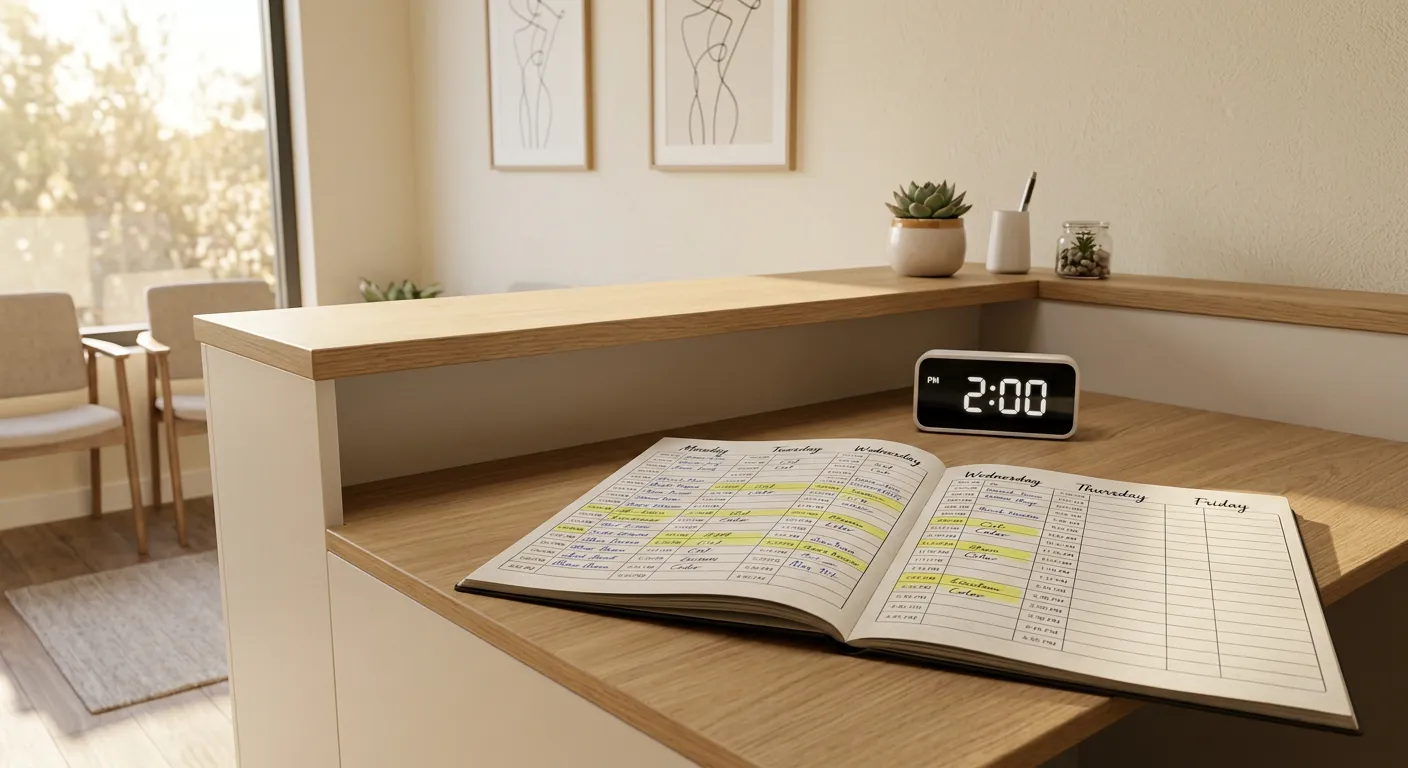
Rachel ran a four-chair hair salon in Charlotte. Saturdays were slammed. Tuesdays were empty. She made roughly the same amount per cut regardless of when the client sat down, which meant she was leaving money on the table every weekend and burning fixed costs every slow afternoon.
She knew her numbers. Her break-even client count was 18 per week. She was hitting 26. But her profit margin sat at 7%, barely above the industry average of 8%. The schedule looked full. The bank account said otherwise.
The problem was simple: Saturday demand outstripped supply, and Tuesday supply outstripped demand. Same price for both.
What Peak Pricing Looks Like in a Salon
Peak pricing means charging more during high-demand windows and less during slow ones. Hotels have done this for decades. Airlines built entire revenue models around it. Salons are just now catching up.
The concept borrows from yield management, a strategy used across hospitality to maximize revenue from fixed capacity. A salon chair is fixed capacity. There are only so many hours in a Saturday. Pricing every hour the same ignores what each hour is actually worth.
Rachel’s version was straightforward. She identified three tiers:
- Peak: Saturday all day, Friday after 3 PM
- Standard: Wednesday through Friday before 3 PM
- Off-peak: Monday and Tuesday
She added a $10 surcharge to peak appointments and offered a 15% discount on off-peak bookings. Standard pricing stayed the same.
The Diagnosis: Where the Money Was Leaking
Before making any changes, Rachel pulled eight weeks of booking data. The numbers told a clear story.
| Day | Avg. bookings | Revenue/day |
|---|---|---|
| Saturday | 14 | $1,190 |
| Friday | 10 | $850 |
| Wed/Thu | 8 | $680 |
| Tuesday | 4 | $340 |
| Monday | 3 | $255 |
| Day | Avg. bookings | Revenue/day |
|---|---|---|
| Saturday | 13 | $1,235 |
| Friday | 11 | $935 |
| Wed/Thu | 9 | $765 |
| Tuesday | 7 | $510 |
| Monday | 5 | $363 |
Saturday lost one booking after the surcharge. One. That single lost appointment was offset by the $10 premium on the remaining thirteen. Friday grew because some Saturday clients shifted forward to avoid the surcharge, and the Friday afternoon premium still applied.
The real win was Tuesday and Monday. The off-peak discount pulled seven clients per week from “I’ll wait until Saturday” into empty midweek chairs. Those chairs were going to be empty anyway. Every dollar earned in them was nearly pure margin, since the fixed costs (rent, utilities, insurance) were already covered.
The Results After 90 Days
Weekly revenue went from $3,315 to $3,908. Monthly, that was an extra $2,372. Annualized: $28,464 in additional revenue with zero new clients and zero additional working hours.
Her cost per service hour stayed flat because she was filling time that already existed. Profit margin climbed from 7% to just over 12%.
The less obvious benefit: staff morale improved. Stylists who used to sit idle on Tuesdays were now seeing three or four clients. Saturdays felt less frantic with one or two fewer bookings. The schedule balanced itself.
How to Set Your Own Peak and Off-Peak Prices
The surcharge and discount amounts depend on the gap between your busiest and slowest days. Rachel’s $10 surcharge on a $85 average ticket was roughly 12%. Her 15% off-peak discount brought that same $85 service down to about $72.
🧮 Finding your surcharge
Pull your booking data for the last 8-12 weeks. Count the average bookings per day of the week. If your peak day runs at 90%+ capacity and your slowest day sits below 50%, a surcharge of 10-15% on peak and a discount of 10-15% on off-peak is a reasonable starting range.
If the gap is smaller, start with 5-8% on each side.
Three guidelines that kept Rachel out of trouble:
1. Raise the peak before you discount the valley. A Zenoti analysis of salon and spa pricing found that most clients accept a weekend surcharge more readily than they notice a weekday discount. Lead with the premium. The off-peak discount is secondary.
2. Frame it as a convenience fee, not a penalty. Rachel’s booking page said “Weekend appointments include a $10 convenience fee. Prefer a lower rate? Book Monday or Tuesday for 15% off.” Clients chose. Nobody complained.
3. Grandfather existing regulars for 60 days. Anyone already on the books kept their current rate for two months. This gave loyal clients time to adjust or shift their preferred day voluntarily.
When Peak Pricing Backfires
This works for salons where the demand gap between days is real and consistent. If your Saturdays are only slightly busier than Wednesdays, a surcharge will irritate clients without meaningfully shifting behavior.
It also requires transparent communication. A survey by Zenoti found that top-earning salons achieve 84% staff utilization. If utilization is already high across the week, peak pricing has nowhere to push demand. The strategy only works when there are empty chairs to fill.
Salons with a heavy walk-in mix should be careful too. Walk-ins do not plan their visits around pricing tiers. If more than 40% of your traffic is walk-in, the off-peak discount will not shift enough volume to justify the complexity.
One Lever, Measurable Results
Rachel changed one variable: price by day of week. She did not add services, hire staff, or run ads. The average salon profit margin of 8% exists partly because most salons treat every hour as identical. They are not. A Saturday at 2 PM is worth more than a Tuesday at 2 PM, and pricing should reflect that.
The $28,464 Rachel found was already in her schedule. She just stopped charging the same rate for every seat in the house.