A regular client of mine, Danielle, sat in my chair on a Tuesday afternoon telling me about her weekend in Milwaukee. Boutique hotel, rooftop bar. She mentioned ordering a pot of jasmine tea from room service. Eighteen dollars. She laughed about it, but not in a way that meant she was upset. She said it came on a little wooden tray with a cloth napkin and a shortbread cookie, and the view from her window made the whole moment feel like something from a movie.
Twenty minutes later, I suggested our deep conditioning treatment. Fifteen dollars. She hesitated. “Maybe next time,” she said.
I finished her blowout and spent the rest of the afternoon turning that moment over in my head.
The frame matters more than the number
I spent five years in hotel management before beauty school, and the one thing that changed how I think about pricing is this: people do not evaluate a price. They evaluate the context surrounding it.
That hotel did not sell Danielle a pot of tea. It sold her a tray, a window, a napkin, a moment. By the time she saw the number on the bill, the experience had already justified it. The price felt right because everything around it said “this is worth it.”
In my salon, I had offered the conditioning treatment the way most of us do. I quoted the price while her hair was wet. No tray. No moment. Just a number hanging in the air.
Perceived value is not about the service
Clients don’t weigh the price against what the service does. They weigh it against how the whole experience makes them feel. The context around the offer shapes the answer more than the offer itself.
Researchers call this perceived value, and it explains why the same person will spend freely in one setting and freeze in another. According to PwC, 86% of buyers will pay more for a better experience, and customers spend up to 16% more when the experience feels premium. The price did not change. The frame did.
What I changed in my salon
I started paying attention to the frames around my prices. Not the prices themselves. The frames.
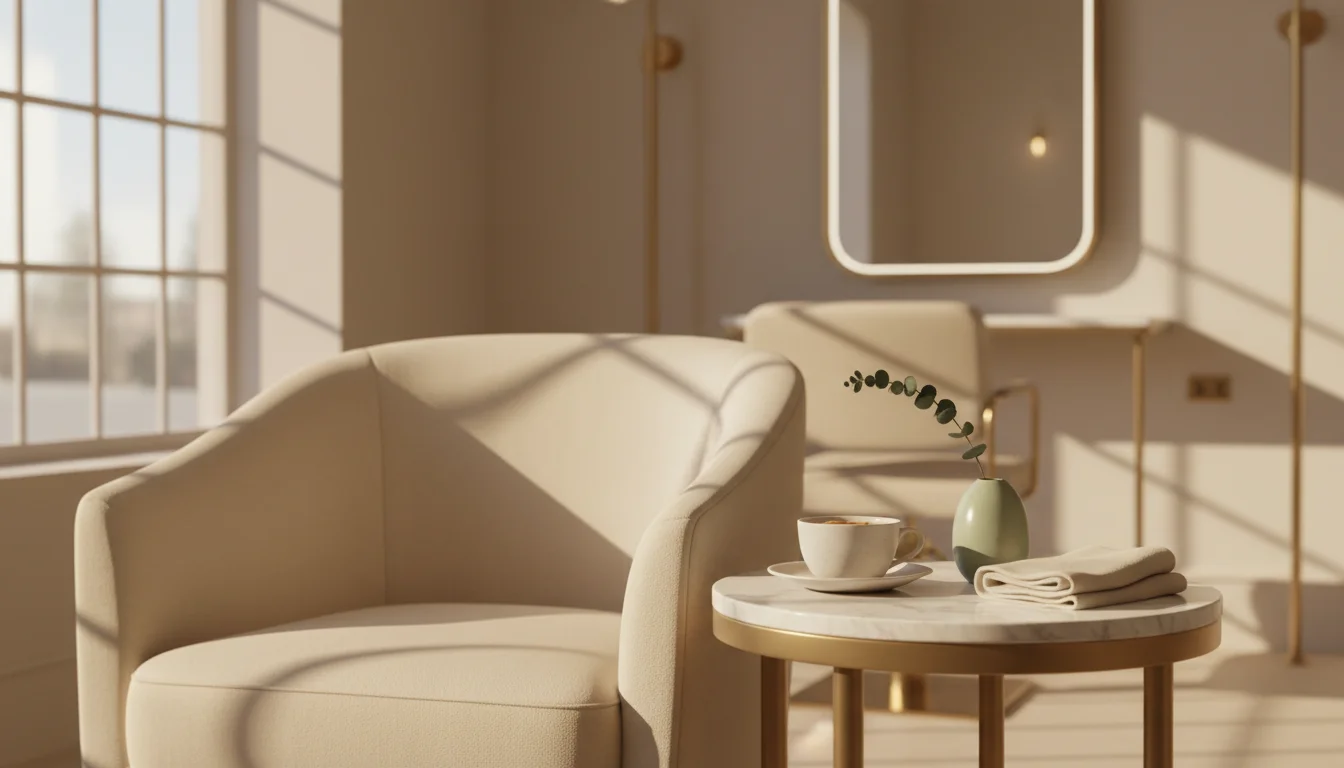
The first thing I adjusted was when and where we offer add-on treatments. We stopped quoting them at the shampoo bowl. Now, during the consultation, I walk clients past a small table near our window. There is a tray with our three signature treatments in amber glass bottles, a card describing each one, and a candle. I pick up the bottle, put a drop on the back of the client’s hand, and tell her what it does. Then I say, “This would be perfect for your hair today.”
No price yet. The experience comes first.
The second change was language. I stopped saying “Do you want to add a conditioning treatment for fifteen dollars?” and started saying “I have a treatment that would give you three extra days of softness.” Transaction became outcome.
Salon Today reports that value, reputation, and the ability to provide a high-end experience are the top three things clients look for after price. Forty percent say price is their first filter, but once they walk through your door, the experience takes over.
Perceived value shows up everywhere once you see it
This is not a salon-specific pattern. A restaurant charges $14 for a dessert and nobody blinks because the lighting is low, the plate is beautiful, and the server described it like poetry. A coffee shop charges $7 for a latte because the cup is ceramic and the barista remembered your order.
The price only feels high when the experience around it feels ordinary.
I think about this constantly now. When a client walks into my salon, what do they see in the first ten seconds? What do they smell? Is the reception area saying “you are about to be taken care of” or is it saying “take a seat, we’re running behind”?
Every one of those signals either builds the frame or breaks it.
The real question
You do not need to lower your prices. You need to raise the frame around them. If a client hesitates, the problem is rarely the number. It is what the number is sitting inside of.
What I would tell Danielle now
Danielle still comes in every five weeks. She says yes to the conditioning treatment now. I never changed the price. What changed is that by the time I mention it, she has already sat in a comfortable chair, been offered a beverage, smelled the product on her hand, and heard me describe what it will do for her hair specifically.
The same fifteen dollars. A completely different frame.
If your add-on services are not landing, or if you have been wrestling with pricing guilt, look past the numbers for a week. Watch your clients when you offer something. Watch where they are, what they are holding, what they just experienced. The hesitation might not be about your price. It might be about everything surrounding it.
Next time you check into a hotel or order dessert at a nice restaurant, do not just enjoy it. Notice the frame. Then walk into your salon the next morning and ask yourself: what frame am I giving my clients?