The Shark SilkiPro Straight is the first wet-to-dry hair straightener cheap enough that my students are actually buying it, and the first one I’ve used on enough classroom heads to have a real opinion. My verdict is narrower than the marketing: this is a useful second-chair finishing tool for a specific kind of service, not a blowout replacement.
SharkNinja launched the SilkiPro Straight in February 2026 at $249.99, roughly half the price of the Dyson Airstrait at $549.99, according to SharkNinja’s own investor release. That price gap is the reason this matters for working stylists. The category existed, but until now it was a luxury item that only one manufacturer really owned. Two competitors at different price points means stylists can actually evaluate the tool on its merits instead of on brand loyalty.
What a wet-to-dry hair straightener actually does
Both tools use directional airflow instead of heated plates to dry and smooth hair in a single pass. The Dyson Airstrait tops out around 140°C according to Dyson’s own specs, well below the 175 to 215°C range that dermatology research cited by Newswise identifies as the damage threshold for most hair. The SilkiPro Straight uses what Shark calls HeatSense Ceramic plates with a sensor reading temperature 1,000 times per second, per Tom’s Guide coverage of the launch.
That is the honest sell: lower heat, fewer passes, less cuticle damage than a conventional flat iron on wet or even damp hair. A Marie Claire review of the SilkiPro noted wet-to-styled times under nine minutes on medium-length wavy hair. That matches what I’ve seen in class.
Where it actually works in a salon kit
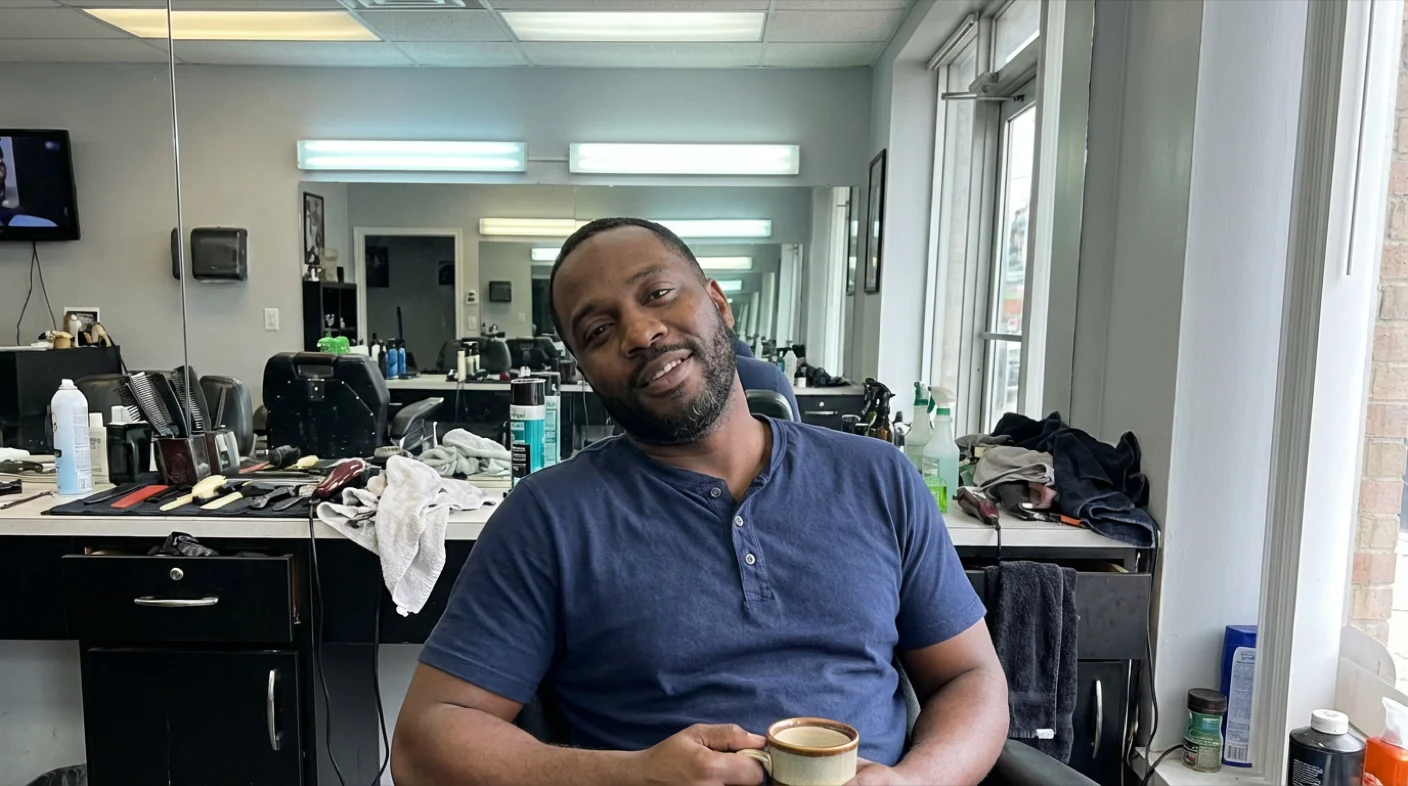
I tested the SilkiPro over three weeks on students’ heads and on clients at my Brooklyn chair. The tool earns its place in two specific scenarios. Neither is “replace the blow dryer.”
The first is the finishing pass on a client who came in with damp hair from home or from the shampoo bowl. You lose fifteen minutes drying and another ten smoothing with a flat iron. The SilkiPro compresses that into a single pass at lower heat. On straight-to-wavy hair types, the finish is genuinely competitive with a blowout and flat-iron combo.
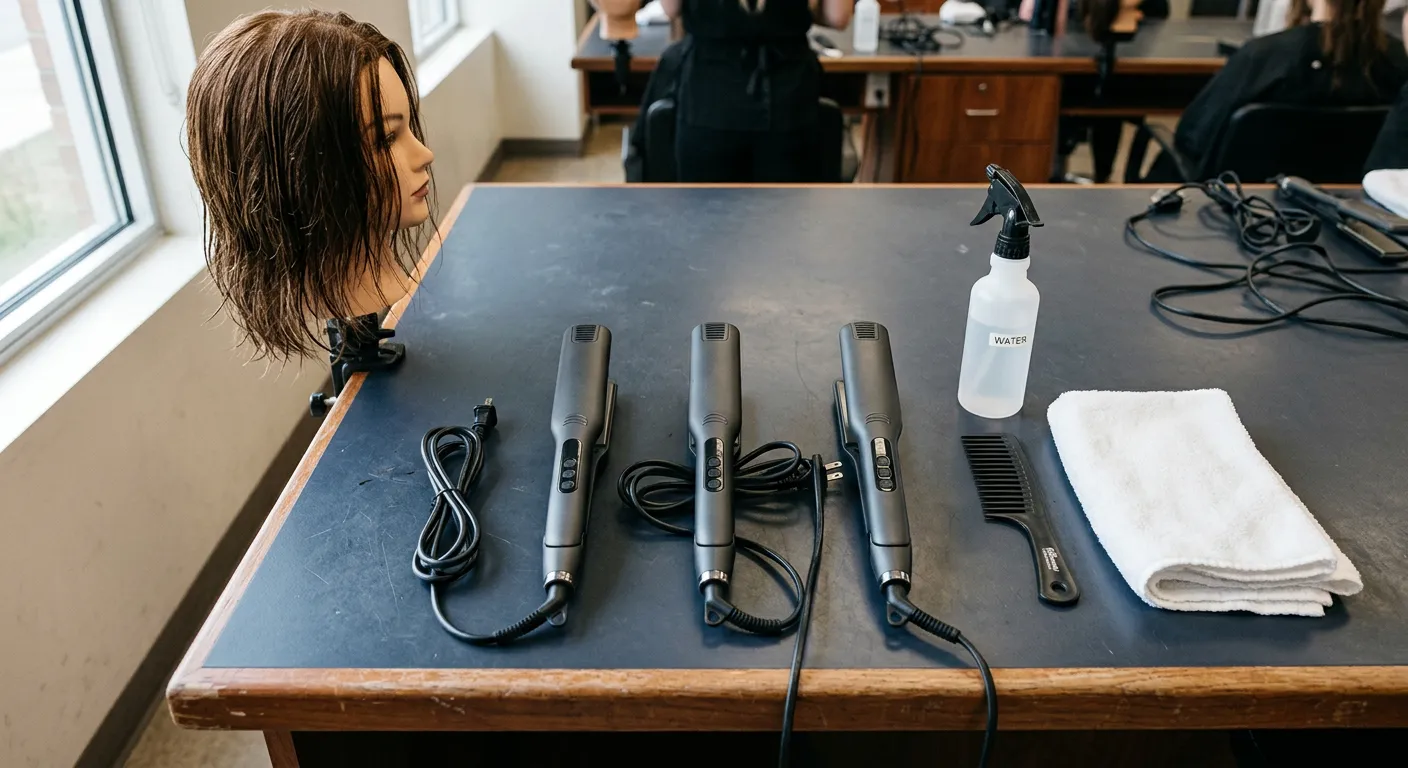
The second is teaching. In a classroom with eighteen students, a wet-to-dry tool lets students practice sectioning and tension on damp hair without the coordination cost of juggling a dryer and a brush. Skill transfer is faster because the airflow is doing part of the work. That matters for first-year students who still can’t control a round brush and a dryer simultaneously.
Where the tool falls short is also clear. On dense, coarse, or tightly curled hair, the airflow alone does not generate enough tension for a smooth finish. You still need a conventional flat iron pass for a pin-straight result, which Dyson itself acknowledges in its own messaging when it describes the Airstrait as a smoothing tool rather than a straightening tool. For textured hair services, this is a prep tool at best.
How the category compares on paper
| Criterion | Shark SilkiPro | Dyson Airstrait | Traditional Flat Iron |
|---|---|---|---|
| Price (USD) | $249.99 | $549.99 | $80–$250 |
| Max heat | ~150°C (sensor-regulated) | ~140°C | Up to 230°C |
| Works on wet hair | Yes | Yes | No |
| Time, wet to styled | ~9 min (medium hair) | ~10 min (medium hair) | 20+ min with dryer |
| Pin-straight finish | Partial | Partial | Yes |
| Criterion | Shark SilkiPro | Dyson Airstrait | Traditional Flat Iron |
|---|---|---|---|
| Fine to medium straight hair | Strong fit | Strong fit | Overkill on heat |
| Wavy hair, smoothing | Strong fit | Strong fit | Works but damages |
| Dense coarse or curly hair | Prep tool only | Prep tool only | Still needed |
| Classroom teaching | Best value | Good but expensive | Still essential |
| Blowout-style volume | Limited | Limited | Not the right tool |
The table is the same tool evaluated from two angles: the spec sheet and the actual chair. Spec parity does not mean service parity.
What they replace and what they don’t
The marketing from both Dyson and Shark implies these tools can replace a dryer-and-iron workflow. In a salon setting, that overstates the case. They replace the combo for a narrow band of hair types and service outcomes. Outside that band, they are an additional tool, not a substitute.
Industry coverage has been careful about this. The Who What Wear roundup of wet-to-dry straighteners explicitly notes that achieving “pin-straight” results “remains elusive” with air-based tools. Editors testing the SilkiPro and Airstrait side by side at T3 and Woman & Home reached similar conclusions. The category has legitimate performance. The replacement claims do not hold up.
If you build a service around this tool, price it as a smoothing finish, not a blowout. Clients who book a blowout are paying for volume and polish. Wet-to-dry tools deliver a clean, flat smoothing result. Different service, different price, different client expectation.
What I’m recommending, and to whom
For a working stylist with a mostly fine-to-medium-straight clientele who wants a faster turnaround on express services, the SilkiPro at $249 is worth adding to the kit. It is not a replacement for your dryer or your flat iron. It is a third tool that compresses one specific workflow.
For a salon that runs heavy textured hair or curly specialty services, there is no case yet. Air tension alone is not enough on coarser density, and you will still reach for a conventional iron. We covered this gap in textured hair education last month and the tool category has not closed it.
For educators, the classroom case is strongest. At half the Dyson price, the SilkiPro is the first wet-to-dry tool that a cosmetology program can realistically put in students’ hands at scale. I’m budgeting for four units next semester. Teaching sectioning and tension on a lower-stakes heat profile produces better retention than jumping straight to flat irons.
The broader signal: the wet-to-dry category is no longer a single-brand novelty. It’s a recognized segment of a hair tool market projected to reach $39.8 billion in 2026 according to Global Market Insights. With two manufacturers competing at different price points, the category will keep maturing. The next generation of these tools will almost certainly push harder at the coarse-hair performance gap. That’s the version worth a second look.
For now, the honest answer is narrow. If you charge your clients’ time by the minute and the economics of your color or finishing services hinge on turnaround, a wet-to-dry straightener can earn its keep. If you’re buying one because the marketing implies it replaces everything, skip it. I’ll be watching whether the coarse-hair performance gap closes in the next release cycle. Until it does, the verdict holds.