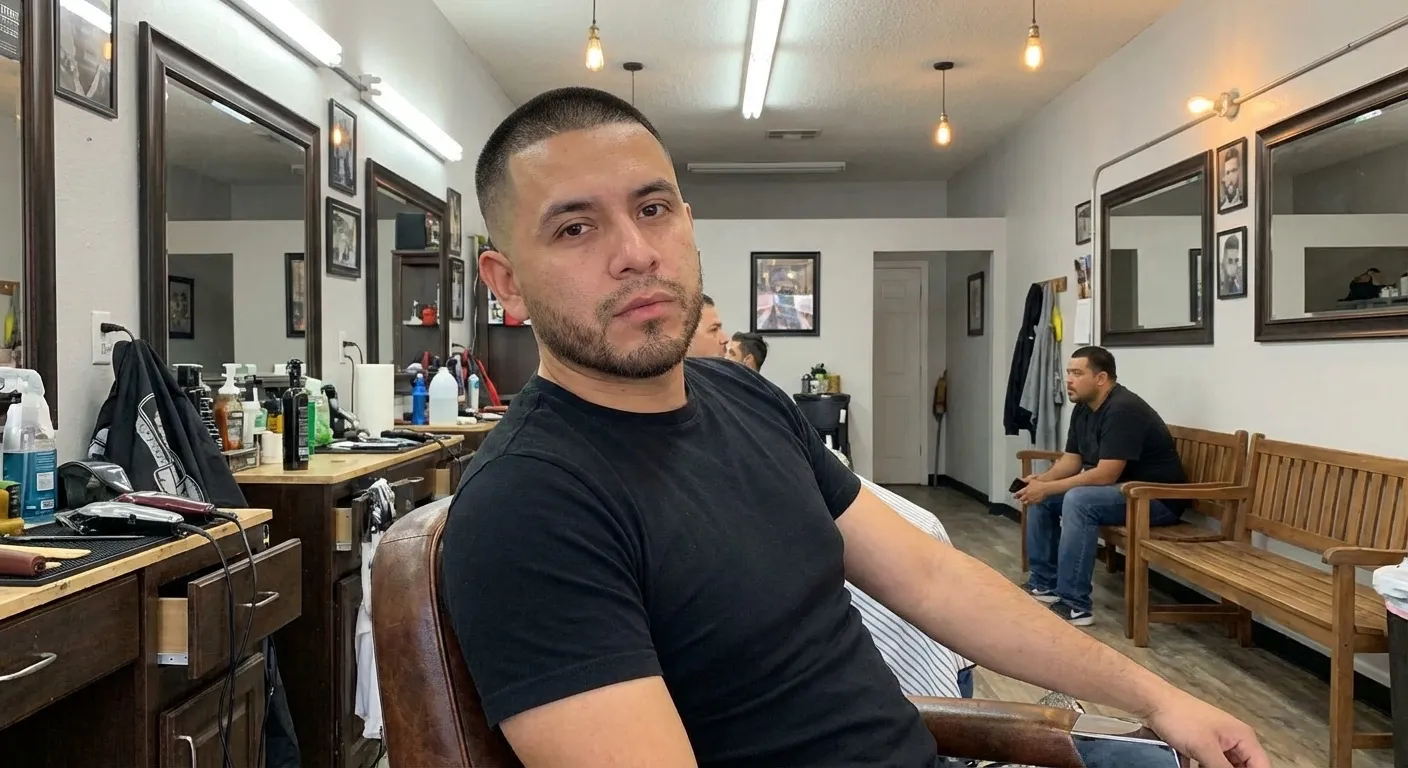
My first month solo I had 11 clients. I counted them on one hand plus six fingers. I was cutting my roommate’s hair on Tuesdays and Fridays just to keep my hands moving. Rent was $1,800. Revenue was maybe $400.
Eighteen months later I was turning people away. Not because I’m some prodigy with clippers. Because I figured out three channels that actually move the needle when you’re starting from nothing, and I worked them every single day.
Here’s what those channels were, what I did inside each one, and the real numbers.
Channel one: post every cut on Instagram
I know. Everyone says this. But most barbers post their best fade once a week and wonder why nothing happens.
I posted every cut. The clean ones, the average ones, the “this guy wouldn’t sit still” ones. Why? Because 80% of barbers are on Instagram now. The ones who win aren’t the most talented. They’re the most visible.
The format that changed everything for me was Reels. I broke down the full Reels strategy that brings in new clients in a separate post. According to Loopex Digital’s 2026 analysis, 55% of Reels views come from non-followers. That means more than half the people who see your Reel don’t already know you exist. No other format on the platform does that.
Reels also get roughly 3x the reach of a standard photo post. I was getting 200 views on static photos. My first Reel of a skin fade with trending audio hit 6,000. Same cut. Different format.
Here’s my posting schedule that worked:
| Day | Content type | Time |
|---|---|---|
| Monday | Before/after Reel of best weekend cut | 6 PM |
| Wednesday | Quick tutorial or product tip (15 sec) | 12 PM |
| Friday | Client reaction or “chair view” Reel | 6 PM |
| Saturday | Story polls, Q&A while cutting | Throughout the day |
Three Reels a week. That was it. I didn’t need a content strategy deck. I needed my phone on a $12 tripod from Amazon.
The key stat that kept me going: 83% of Instagram users say they discover new products and services on the platform. Your next client is scrolling right now. The question is whether they’ll see your work or someone else’s.
By month four, Instagram was bringing in about 8 new clients a week.
Channel two: own your Google Business Profile
This is the one most solo barbers skip entirely. Big mistake.
76% of people who search “barber near me” visit a business within 24 hours. That’s not browsing. That’s intent. And 326,000 people search “salon near me” every month in the U.S. alone, per Zenoti’s local search data.
I set up my Google Business Profile in month two. Added photos of the shop, my hours, a booking link. Then I started asking every client to leave a review. Not in a weird way. Just: “If you liked the cut, a Google review helps me out more than you’d think.”
The data backs this up. Wiser Review’s 2026 report found that businesses gain a 2.8% increase in conversion rate for every 10 new reviews. And the top three results in Google local search have 21% more reviews on average than positions four through ten.
I went from zero reviews to 47 in six months. I’ve written a full breakdown of the Google reviews system that got me there. That put me in the top three results for “barber” in my zip code. Free traffic. Every week, 3 to 5 clients told me they found me on Google Maps.
The profile also does something Instagram can’t: it catches people who are ready to book right now. Instagram builds awareness. Google catches demand that already exists. You need both.
Channel three: make referrals worth talking about
Word of mouth built barbering for a hundred years before Instagram existed. It still works. 82% of small businesses say referrals are their primary source of new clients. And referred clients stick around 37% longer with 16% higher lifetime value than clients who come in from ads.
But “do good work and they’ll tell their friends” is passive. I wanted something active.
I set up a simple referral deal: bring a friend, you both get $10 off your next cut. Nothing complicated. No app required. I wrote it on a card and handed it to clients at checkout. The full referral card strategy is worth reading if you want to get this right from day one.
Mindbody’s referral research confirms that dual-sided programs (where both the referrer and the new client get a reward) drive the highest participation. And keeping an expiration date of 30 to 90 days creates urgency.
My average cut is $40. A $10 discount costs me 25% on one service. But a referred client who comes back even five times is worth $200 in revenue. That’s a 20:1 return.
🧮 Referral ROI
$10 discount per referral. A referred client who returns 5 times = $200 in revenue. That’s a 20:1 return on every referral card you hand out.
By month eight, referrals were my biggest channel. About 40% of new clients were coming from existing ones.
The retention piece nobody talks about
Getting 100 clients means nothing if 60 of them never come back.
The industry average for first-time client retention is 35%, according to Boulevard’s retention report. Top-performing shops hit 70%. The difference is the second appointment.
I started booking the next appointment before the client left the chair. Not at checkout. In the chair. “You’re going to want a cleanup in about three weeks. I’ve got a Thursday at 2 and a Saturday at 11. Which works?”
That one change took my rebook rate from around 30% to over 60%.
Here’s a breakdown of what happened to my client base over the first year:
| Month | New clients | Retained from prior months | Total active clients |
|---|---|---|---|
| 1 | 11 | 0 | 11 |
| 3 | 28 | 9 | 37 |
| 6 | 35 | 31 | 66 |
| 9 | 22 | 54 | 76 |
| 12 | 15 | 87 | 102 |
Client growth over 12 months
Notice the shift. Early on, I was grinding for new clients. By month nine, the base was doing most of the work. New client numbers actually dropped because I didn’t need as many. The retained base kept growing. Retention became the real game — I wrote about closing the gap between visit two and visit ten because that’s where the compounding happens.
The math that makes it real
Say your average service is $40 and you see each regular client every four weeks. One hundred active clients, rotating through your chair, means roughly 25 clients a week. That’s five a day on a five-day schedule.
25 clients x $40 = $1,000/week. $4,000/month.
That was my month-twelve number. Not life-changing money, but enough to cover rent, supplies, and still put some away. And the curve was still climbing.
The barbers I know who stall out can usually cut. Their problem is visibility. They just don’t show up where people are looking.
Post your work. Claim your Google profile. Hand out that referral card. These aren’t growth hacks. They’re the basics, done consistently, with the numbers tracked so you know what’s working.
One hundred clients took me twelve months. Your timeline will be different. The channels won’t be.