Cosmoprof Bologna named hair longevity one of its top five trend categories this March. Not a product line. Not a technique. A category, with its own keynote panel and exhibition floor section. When a trade show that draws 250,000 attendees reorganizes its floor plan around a concept, the concept has moved past early conversation.
I have been watching this develop from two seats. Behind the chair in Brooklyn, where client questions have shifted. And at the front of a Manhattan cosmetology classroom, where the questions my students ask tell me what is coming before the industry press picks it up.
What Hair Longevity Means in Practice
The term borrows from longevity medicine, where the goal is extending healthy function rather than treating disease after it appears. Applied to hair, the idea is straightforward: maintain follicle density, strand elasticity, and growth cycle health over time, instead of waiting for thinning or damage and then trying to reverse it.
MDhair describes the shift as moving from “quick regrowth” to “long-term hair healthspan.” That framing is useful because it separates the new thinking from the old. Anti-aging hair care was reactive: you noticed thinning, you bought a thickening serum. Hair longevity is proactive: you start protective protocols before the visible decline begins.
How This Shift Developed
2020-2022: Skincare language enters hair care
Products start using skincare ingredients like hyaluronic acid, niacinamide, and ceramides for scalp and strand health. The term 'skinification of hair' gains traction in trade media.
2023-2024: Scalp care goes mainstream
Google searches for 'scalp care products' surge 504% year-over-year. Brands launch scalp-specific lines. Head spa services emerge in major US cities. Consumers begin treating scalp health as foundational rather than cosmetic.
2025: Diagnostic tools reach salon floors
Kérastase rolls out K-Scan, an AI-powered camera analyzing scalp and hair across 12,000+ training images. Malibu C introduces the Digital Scope. Salons begin offering data-driven consultations for the first time.
2026: Longevity framing takes hold
Cosmoprof Bologna names hair longevity a top-five trend. Peptide-based and growth-factor formulations represent 44% of new R&D pipelines. The market shifts from repair to prevention.
The pattern follows the same path skincare took a decade ago: first the ingredients crossed over, then the diagnostic tools, then the entire clinical mindset. Hair care is roughly five years behind skincare in this progression, which means the infrastructure is still forming.
Three Forces Driving the Change
Consumer education reached critical mass. Clients no longer walk in asking for “something for thinning.” They walk in naming ingredients. I have had three clients this quarter ask about peptide serums by brand name. BeautyMatter reports that the haircare category posted 8% growth in 2025, reaching $3.5 billion, with scalp and preventive products leading that expansion. When consumers educate themselves faster than their stylist, the dynamic in the chair inverts.
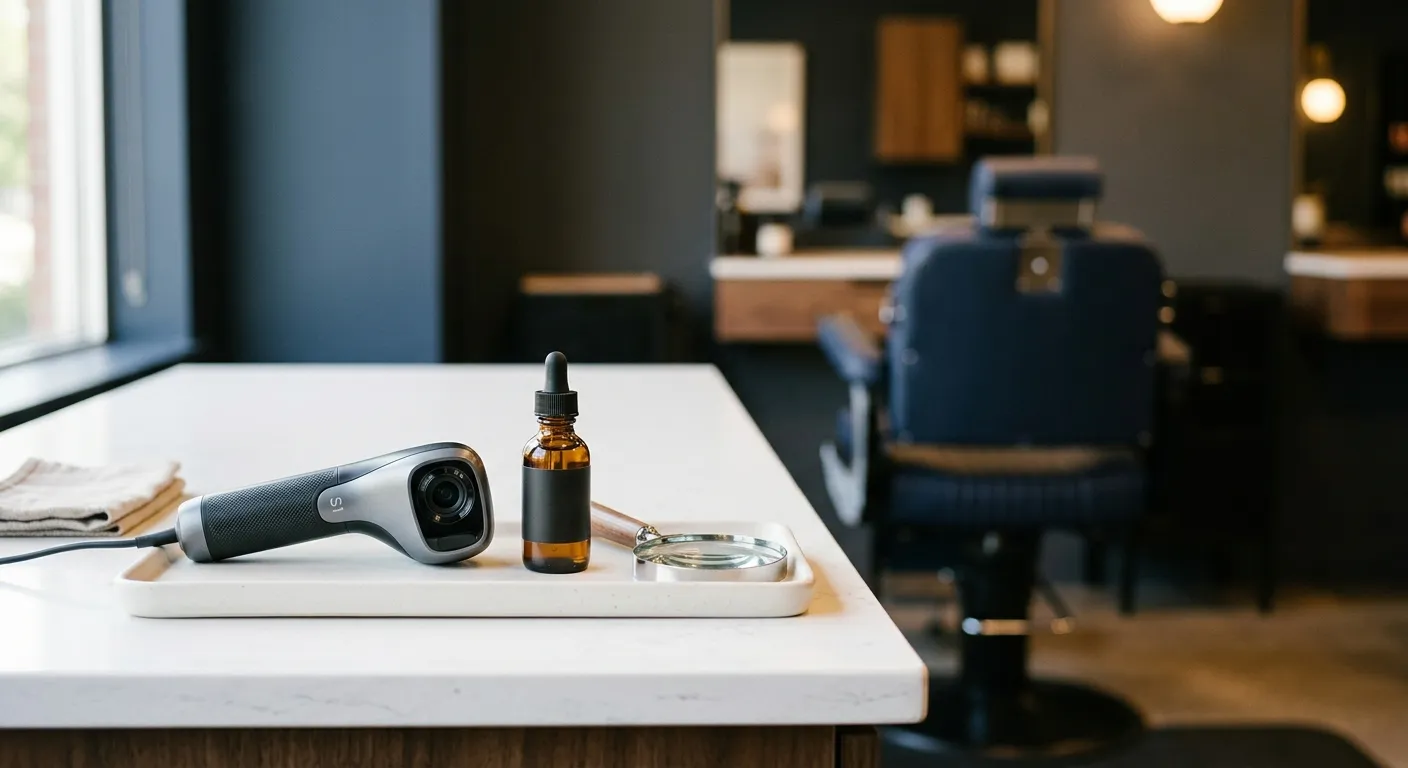
Diagnostic tools made the invisible visible. The Kérastase K-Scan uses three light modes (UV, cross-polarized, and white) at 4K resolution to show clients their scalp at a level of detail they have never seen. A stylist can now point at a magnified image and say “this is subclinical inflammation” rather than guessing from visible symptoms. That shifts the conversation from opinion to evidence, and it gives preventive recommendations a foundation the client trusts. The AI hair care advisor market hit $572 million in 2025 and is projected to reach $1.4 billion by 2032.
The broader longevity market validated the economics. Preventive wellness overall is forecast to grow from $784 billion in 2024 to $1.8 trillion by 2034. When an entire consumer category shifts toward prevention, adjacent categories follow. Hair care is adjacent to skincare, which is adjacent to wellness. The money flows along that adjacency.
What This Means at the Chair
Three things I have changed in my own practice this year.
Consultation now starts with the scalp. Before I touch scissors, I look at the scalp under magnification. Not every salon has K-Scan, but a basic USB microscope camera costs under $50 and plugs into a tablet. The visual alone changes the conversation. Clients who came in for “just a cut” have left with a scalp treatment add-on after seeing what their scalp actually looks like at 50x magnification.
Product recommendations are preventive, not corrective. I used to recommend products based on current symptoms. Now I recommend based on trajectory. A 28-year-old client with a family history of thinning does not need a thickening shampoo. They need a scalp serum with peptides, a gentle exfoliant, and a follow-up cadence. Research shows that 44% of new product development pipelines now focus on peptide-based or growth-factor formulations. The products exist. Stylists need to know about them and recommend them early.
I teach it in class differently now. My spring curriculum added a unit on scalp physiology that did not exist two years ago. Students need to understand the scalp as skin with a barrier, a microbiome, and an aging process. The ones who graduate with that knowledge will consult at a level that separates them from stylists trained purely in cut and color. Every semester I track what topics generate the most questions, and this year scalp health outpaced balayage for the first time.
Where This Is Heading
The hair loss and growth treatment market is projected to grow from $4 billion in 2026 to $6.6 billion by 2035. That money will flow to the professionals who position themselves as preventive care partners, not just stylists who fix damage after the fact.
This is similar to a pattern I tracked with textured hair education: when the training materials change and the diagnostic tools arrive simultaneously, the skill becomes table stakes within a few years. Stylists who add scalp analysis to their consultation now are building a competency that will be expected later.
The clients sitting in my chair today are not asking how to fix their hair. They are asking how to keep it. That is a different question, and it requires a different kind of stylist to answer it.