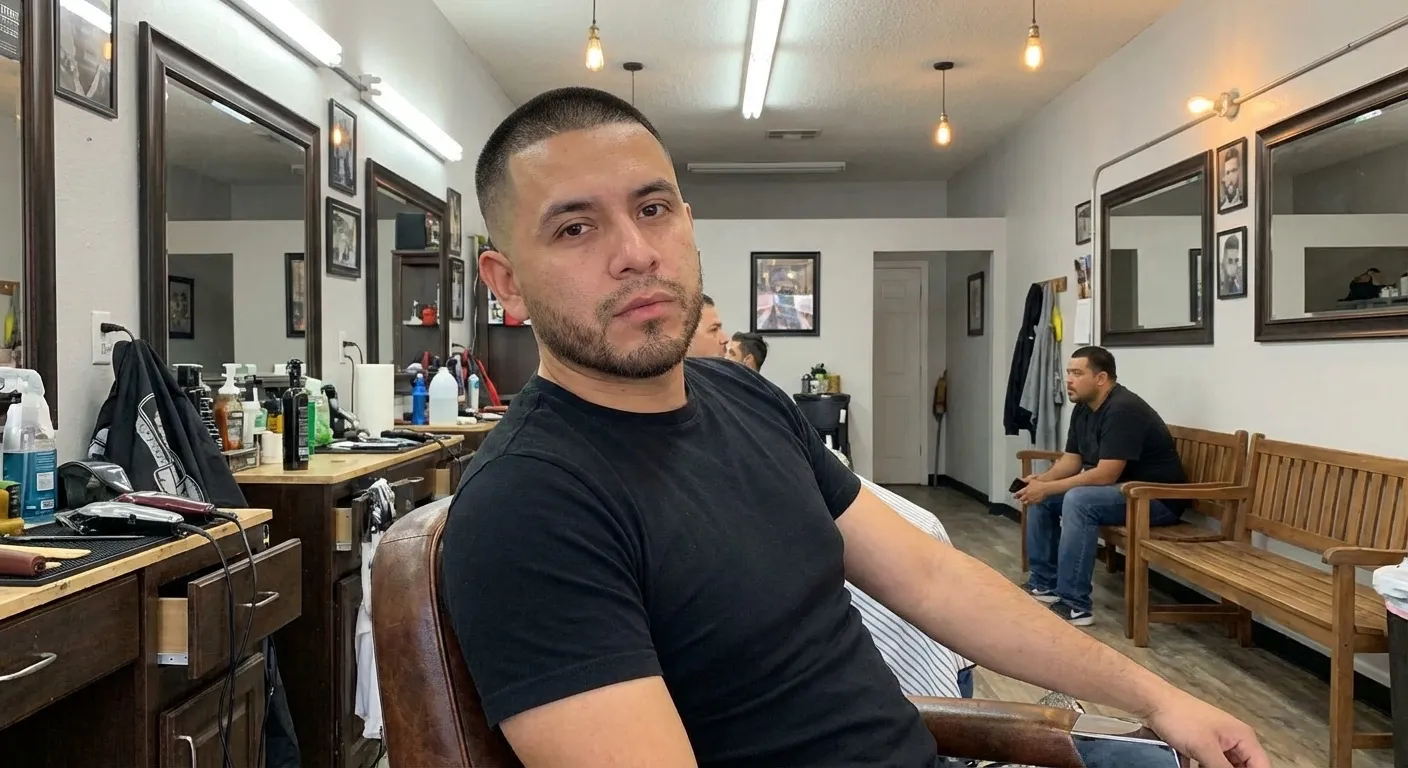
A walk-in sits in your chair, gets a solid cut, pays, and leaves. You never see them again.
This happens constantly. And most barbers blame the cut. “Maybe they didn’t like the fade.” “Maybe the price was too high.” Usually the cut was fine. The problem is what happened after it.
That’s the number. Boulevard analyzed 11 million appointments across 30,000 businesses and found that walk-in clients come back for a second appointment 39% of the time. Clients who book their first visit online? 78%. Twice the rate. Same service, same barber, same shop.
The gap gets worse over time. By the third appointment, walk-ins are at 25% retention. Online bookings are at 54%.
Why walk-in clients don’t return to salons
A walk-in didn’t choose you specifically. They chose convenience. They were in the area, saw the sign, walked in. There’s no commitment, no research, no investment in the relationship. They picked you the way you’d pick a gas station on a road trip.
That’s not a knock on walk-ins. I love walk-ins. My first month solo, walk-ins were 70% of my clients. But I learned fast that the walk-in, left to their own habits, will walk into whoever’s closest next time. The real challenge is closing the gap between their second visit and their tenth, which is where most clients quietly disappear.
Strategies Coaching puts the industry failure rate at 7 out of 10 first-time clients not returning. The top reason isn’t bad service. It’s that nothing pulled them back.
Why the second salon visit determines lifetime value
The second visit is the tipping point. Boulevard’s data shows that once a client makes it to a third appointment, they become a regular. The hard part is getting them from one to two.
A single walk-in who pays $40 and never returns is worth $40. A walk-in who becomes a monthly regular for three years is worth over $1,400 in haircuts alone, not counting product recommendations or referrals. Industry data from Lockhart Meyer puts the average salon client lifetime value at over $3,000 across ten years.
🧮 The real cost of a lost walk-in
One walk-in lost = $40 earned. One walk-in converted to a monthly regular = $1,440 over three years. Every walk-in who doesn’t come back costs you roughly $1,400 in future revenue.
So the question isn’t how to get more walk-ins. It’s how to keep the ones you already have.
Step one: capture their information before they leave the chair
This is where most barbers fail. The walk-in pays cash, you say thanks, they leave. You have no name, no number, no way to reach them.
I started asking every single walk-in for their phone number during the cut. Not at checkout. During. “What’s a good number for you? I’ll text you a link so you can book online next time instead of waiting.”
That framing matters. You’re offering them value (skip the wait), not asking for a favor (give me your number so I can market to you). Once you have the number, automated appointment reminders do the retention work for you.
I captured numbers from about 8 out of 10 walk-ins once I started asking this way.
Step two: send a follow-up text within 48 hours
Within two days of their visit, I sent a short text. Something like: “Good meeting you yesterday. Here’s my booking link if you want to lock in your next cut: [link]. I usually book out a week ahead on weekends.”
That last line creates urgency without being pushy. It tells them availability is limited, which is true.
SMS follow-up data from Sakari shows that service appointment follow-up texts convert about 17% of recipients into bookings. One salon in their case study saw second-visit rates jump from 43% to 68% over four months just by adding post-appointment texts.
Step three: pre-book before they leave
The strongest move is booking the next appointment while the client is still in the chair. I covered this in my rebooking piece, but it applies double for walk-ins because their default behavior is to not plan ahead.
My line: “You’re going to want a cleanup in about three weeks. I’ve got a Thursday at 2 and a Saturday at 11. Which one works?”
Two specific options. Not “when do you want to come back?” That’s too open-ended. People freeze. Give them two slots and they’ll pick one.
Industry benchmarks show the average salon rebook rate is around 40%. Pre-booking in the chair pushes that to 60-70% in top-performing shops. Clients who pre-book have a 30-40% higher retention rate than those who don’t.
Second-visit return rate by booking method
Step four: make online booking dead simple
24% of salon clients say a poor online booking experience is the top reason they wouldn’t return. Not bad service. Bad booking.
Your booking page should load in under three seconds. It should show available times without requiring an account. The entire flow should take under 60 seconds.
I put my booking link in three places: the follow-up text, my Instagram bio, and my Google Business Profile. Every touchpoint is one tap away from a confirmed appointment.
Clients who start with online booking are already more retained. Boulevard’s data confirms that online-first clients hit 78% second-visit retention versus 39% for walk-ins. Moving a walk-in to online booking for their second visit puts them on the higher retention track.
Walk-in conversion rate: the revenue impact
Say you get 10 walk-ins per week. At the industry average of 39% retention, about 4 come back. The other 6 are gone.
If you implement the follow-up text and pre-booking system and push retention to even 60%, that’s 6 returning instead of 4. Two extra regulars per week.
Two extra regulars per week, each visiting monthly at $40, adds up to roughly $4,160 per year in revenue you were already earning once and then losing.
| Scenario | Walk-ins/week | Return rate | Regulars gained/week | Annual revenue added |
|---|---|---|---|---|
| No system | 10 | 39% | 3.9 | baseline |
| Text follow-up | 10 | 55% | 5.5 | +$3,328 |
| Text + pre-book | 10 | 65% | 6.5 | +$5,408 |
You already did the hard part. The client walked in. They sat in your chair. You cut their hair and they liked it enough to pay you. Letting them leave without a plan to return is leaving money on the floor.
Get the number. Send the text. Book the next cut. These steps are part of a bigger picture — building systems that run without you so retention happens automatically. Three steps, zero cost, and you stop watching revenue walk out the door.