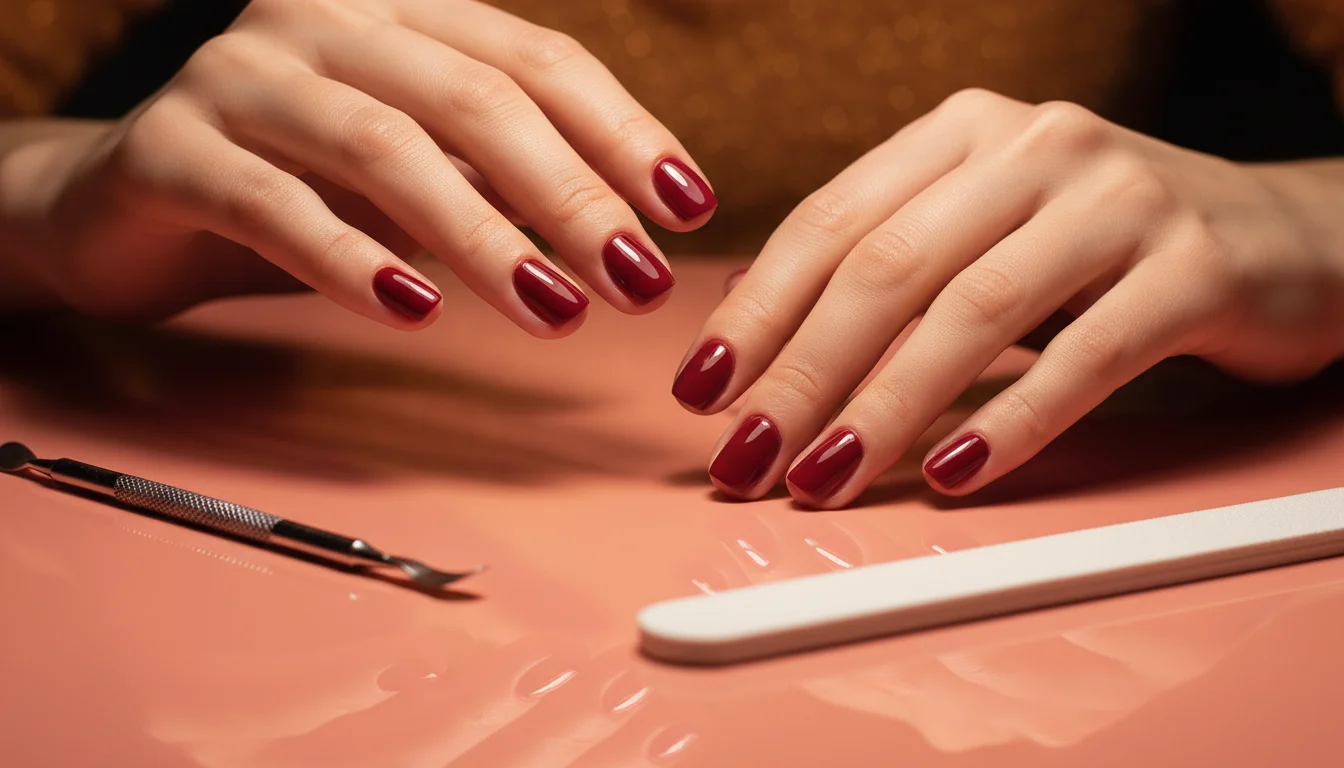
Two manicure methods. Same polish, same prep, same hands. One uses a soak bowl. The other skips water entirely.
I have been running both versions on clients for roughly two years now, ever since a Ukrainian-trained tech I share station space with on Tuesdays showed me her cuticle oil technique. She looked at my soak bowl the way you look at a fax machine. Politely confused. That interaction rewired how I think about prep, and the wear results have been consistent enough that I stopped offering the traditional soak to returning clients six months ago.
The conversation around waterless manicures has moved past novelty. Varnish Lane in DC built an entire brand around the concept. Glosslab opened multiple locations in Manhattan with no water service at all. In LA, I am seeing more and more solo techs quietly retire their bowls. The shift is real, but most comparisons I read online flatten it into “dry is better.” The answer is more specific than that.
What is a waterless manicure vs a traditional manicure
A traditional manicure soaks nails in warm water, sometimes with soap or essential oils, for three to five minutes. The water softens cuticles, making them easier to push back and trim. The process feels ritual, familiar, spa-like. Clients associate it with relaxation.
A waterless manicure replaces the soak with cuticle remover solution or cuticle oil applied directly to each nail bed. The tech works the product in, pushes cuticles with a metal or wooden tool, and cleans the nail plate before polish. No bowl, no towels, no drain.
| Feature | Traditional Soak | Waterless / Dry |
|---|---|---|
| Cuticle softening | Warm water soak (3-5 min) | Cuticle oil or remover solution |
| Average service time | 45-60 minutes | 30-45 minutes |
| Polish longevity (regular) | 5-7 days typical | 8-12 days typical |
| Polish longevity (gel) | 2-3 weeks | 3-4 weeks |
| Infection risk | Higher (shared water) | Lower (no shared water) |
| Water use per service | 10-15 gallons | Zero |
| Client experience | Spa-like, familiar | Efficient, modern |
Why water costs you wear time
The science is straightforward. Water causes the nail plate to expand. When nails soak for several minutes, they absorb moisture and swell slightly. Polish applied to a swollen nail adheres to a surface that will shrink as it dries. That contraction creates micro-gaps between the polish and the nail. Within a few days, those gaps become chips.
Deborah Lippmann’s team has documented this effect directly: polish applied to dry, non-expanded nails bonds more tightly and resists chipping measurably longer. My own tracking confirms it. I started logging chip dates for clients in late 2024. Regular polish on dry-prepped nails averaged 9.5 days before first chip. Soak-prepped nails averaged 6.2 days. Gel showed a similar gap, roughly a week longer on dry prep.
Sanitation benefits of waterless manicures
Every state board nail tech knows the foot bath sanitation rules. Soak bowls carry similar risks at smaller scale. NAILS Magazine reported that eliminating shared water removes one of the primary vectors for bacterial and fungal cross-contamination between clients. For solo techs renting suites, this also means less time between appointments spent sanitizing bowls. I gained back roughly ten minutes per client when I stopped using water. Over a full day, that is an extra appointment slot.
💡 The sustainability angle
A single waterless pedicure saves 10-15 gallons of water compared to a traditional service. For a salon doing 20 pedicures a day, that is up to 300 gallons daily. Fast Company covered the growing movement of waterless salons as part of broader sustainability shifts in the beauty industry. The water savings alone are significant, but the reduced need for chemical sanitizers compounds the environmental benefit.
Where the traditional soak still wins
I would be dishonest if I said dry prep is universally better. It is not. Clients with extremely thick, overgrown cuticles still respond better to a warm soak. The water does soften tissue in a way that cuticle remover alone sometimes cannot replicate, especially on clients who have not had a manicure in months. For maintenance clients on a two-week cycle, dry prep handles their cuticles without issue. For the client who walks in after six months of neglect, water still has a role.
There is also the experience factor. Some clients come for the ritual. The warm water, the essential oils, the slow pace. Removing the soak removes a sensory touchpoint that certain clients value more than wear time. A regular of mine, a therapist who books every other Friday, told me the soak is the only five minutes in her week where nobody asks her a question. I brought the bowl back for her. She stays.
Which manicure method is right for your salon
If your clientele skews toward maintenance appointments every two to three weeks, dry prep will give them better results with less overhead for you. If you are running a high-volume salon where turnover speed matters, cutting ten minutes per service adds up fast. If sustainability is part of your brand, waterless is an obvious fit.
If your clients are occasional visitors who come in for the experience as much as the result, the soak still makes sense. The answer is not one or the other. It is knowing which client sits in front of you.
My honest recommendation: learn the dry technique if you have not already. Offer both. Track your own chip dates for a month. The numbers will tell you what I already know, but you should see them from your own chair.
Switching to waterless prep also cuts service time, which means more revenue per hour. If you are rethinking your service menu, see which of your services actually earn their chair time. And if clients ask why the soak is gone, a clear service pricing page helps set expectations before they sit down.