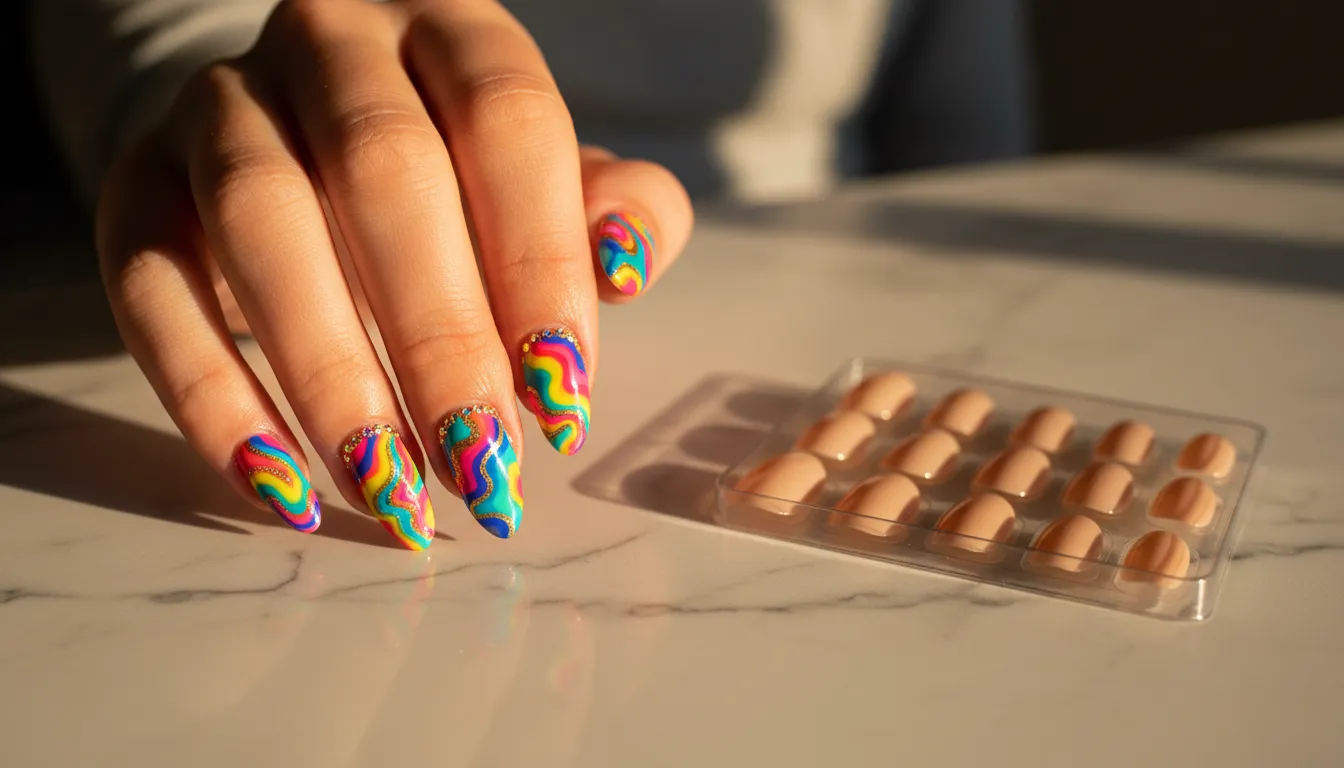
Press-ons are not killing your salon. Panic pricing is.
I hear some version of this fear every week now, usually from techs on Instagram reposting the same TikTok data about how press-on nails are “disrupting” professional services. A client showed me one of those videos last Tuesday while I was sculpting her set. She was wearing $65 worth of builder gel and hand-painted florals matched to a dress she bought for a wedding. She laughed about it. I did too.
That number looks aggressive until you put it next to the nail salon market at $13.9 billion in 2025, growing at 8.2% annually. The press-on segment is growing at 6.5%. The thing supposedly replacing us is growing slower than we are. Those two numbers together tell a story nobody running the panic headlines wants to tell: both markets are expanding because they serve fundamentally different needs.
Which salon clients press-on nails actually replace
The clients leaving salons for press-ons are leaving over price and convenience. NBC News reported that “recession nails,” the trend of switching from salon visits to DIY manicures, has driven press-on searches up over 350% year-over-year. A full year of monthly salon visits runs $540 to $720. A pack of press-ons costs $15. For someone who just wants clean, solid-color nails for a work week, the math is obvious. And they should make that choice. That client was never going to book a $55 overlay with nail art. She was booking a $25 basic manicure, sitting in your chair for 30 minutes, and generating the lowest margin on your menu.
Press-ons are absorbing the commodity end of the market. Quick color, short wear, disposable. That lane belongs to them now, and fighting for it means dropping your prices into a range where you physically cannot make a living.
Why salon nail services still win on quality
What I keep seeing at my own table in Silver Lake: the clients who stay are spending more. They are booking builder gel overlays, adding custom art, coming back every three weeks because what they want is something a $12 press-on physically cannot deliver. Custom shape work. A design matched to a reference photo they spent twenty minutes curating on Pinterest. A set that lasts a month without lifting. The relationship with their tech. Grand View Research notes that prolonged press-on usage weakens natural nails in 42% of users, which limits how often people can rely on them. That durability ceiling is permanent. Salon work does not have one.
The sorting is already happening
Gel manicures in major metros now range from $50 to $120. Press-ons average $15. There is no middle. Clients have already split into two lanes, and the profitable one belongs to techs who lean into craft, not techs who try to match convenience pricing.
Why dropping nail prices is the wrong response
What worries me is when nail techs respond to press-on headlines by competing on the wrong axis. Dropping prices. Rushing appointments to fit more people in. Cutting corners on product quality to shave costs. Every one of those moves pushes you closer to the lane press-ons already own and further from the one where salons have a permanent edge. Zenoti’s 2026 pricing guide shows that high-end salons charging $65 to $150 for gel services are growing fastest. The premium positioning works because the gap between a press-on and a skilled tech’s work is visible, tactile, and lasting.
The press-on boom did not shrink your market. It clarified it. The clients who were always price-sensitive found a cheaper option, and the clients who value craft now have an even sharper reason to book with someone who can deliver what a box from Target cannot. Your job is to be undeniably on the craft side of that line, and to price like you know it.
If you are not sure whether your current prices reflect the value you deliver, start with how to raise salon prices without losing clients. And if you want to understand the real cost structure behind every service on your menu, know your numbers first.
Stop competing with a product that costs less than lunch.