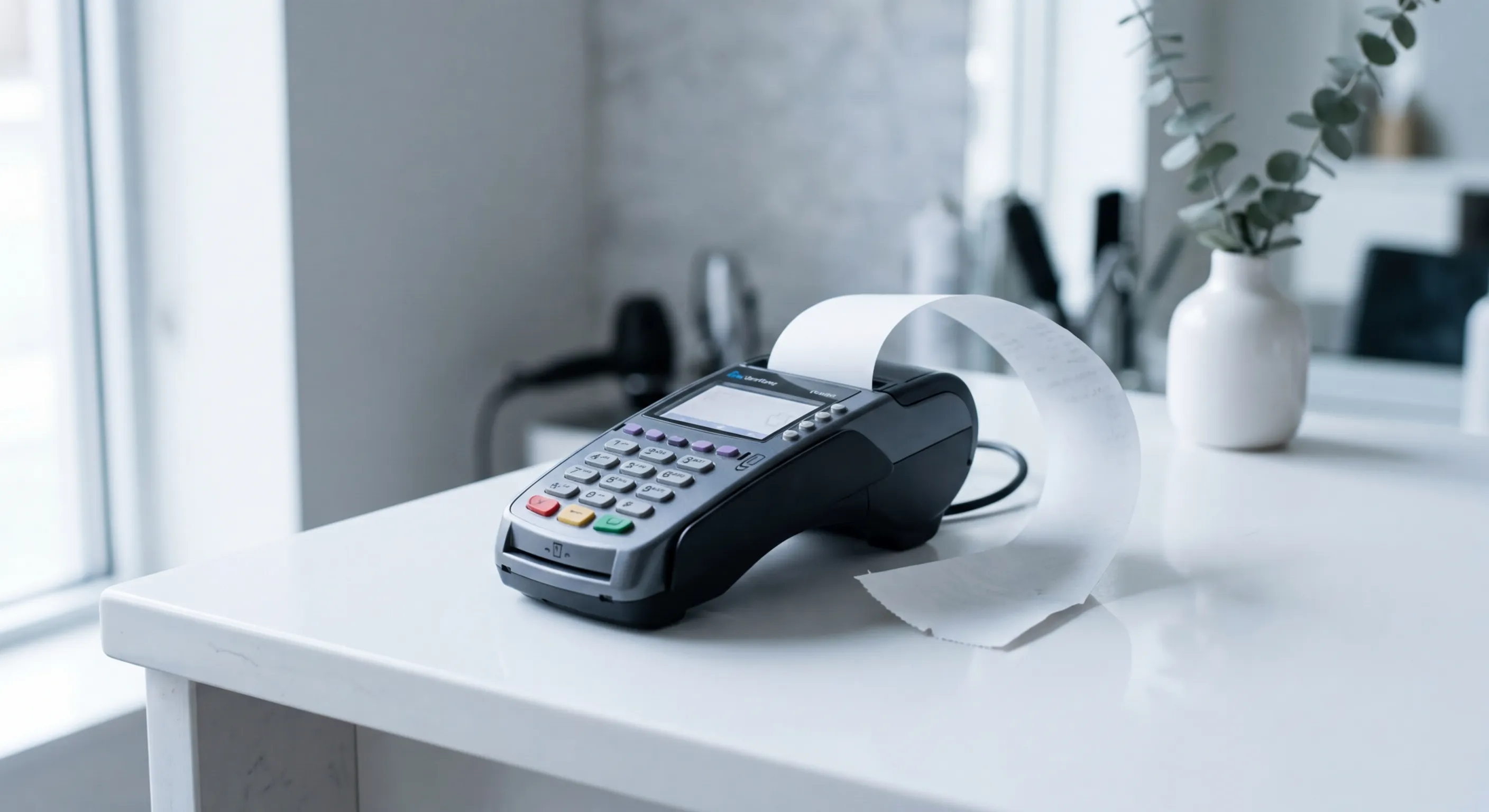
How Salon Credit Card Processing Fees Add Up
A salon collecting $20,000 per month in credit card payments at an effective rate of 2% loses $400 per month. That is $4,800 per year. At 3%, the number jumps to $7,200.
Most salon owners have never audited their processing statement. The rates they signed up with are rarely the rates they pay today. Processors add line items over time: PCI compliance fees, batch fees, statement fees, rate increases buried in fine print. A NerdWallet analysis puts the typical range at 1.5% to 3.5% per transaction. A Summit Salon Business Center report found that many salons pay closer to the high end without realizing it.
The math scales fast. Credit cards now account for 60% to 75% of salon transactions, according to data from Zenoti. Cash-heavy businesses have smaller exposure. Card-heavy businesses absorb more.
Why This Number Matters More Than Most Owners Think
At an average salon profit margin of 8.2%, a salon generating $245,000 in annual revenue keeps roughly $20,000 in profit. If $5,000 of that goes to processing fees, that is 25% of total profit eaten by a line item most owners never negotiate.
Compare that to product cost, which salon owners scrutinize constantly. Processing fees often exceed back bar cost for a solo stylist, yet they sit unopened in a monthly statement envelope.
🧮 Your processing fee check
Pull your last three processing statements. Find the line labeled “total fees” or “total processing charges.” Divide that number by your total card volume for the same month. If the result is above 2.8%, you are overpaying. If you cannot find the number, that is a problem on its own.
The One Thing to Do This Month
Call your processor and ask for your effective rate. Not the advertised rate. The effective rate: total fees divided by total volume. If it is above 2.5%, get two competing quotes. Processors will often match a lower offer to keep an existing account.
Switching processors is not the only option. Negotiating the current contract, eliminating junk fees, or moving to a flat-rate processor like Square or Stripe can close the gap. The point is not which processor wins. The point is that most salon owners have never asked the question.
That $4,800 is not a cost of doing business. It is a cost of not reading your statement.
For more on finding the hidden numbers that shape your bottom line, see Know Your Numbers Before You Set Prices and Salon Break-Even Client Count.