According to PwC, 86% of buyers will pay more for a better experience, and customers spend up to 16% more when the experience feels premium. Most salon owners hear that and think about candles, music, or better products. I heard it and looked at my service menu.
Our menu had fifteen services on it. Every single one was a label and a price. “Women’s Haircut, $95.” “Partial Highlights, $195.” “Balayage, $295.” It read like a receipt before the client had even sat down. There was nothing on that page that told anyone what the experience would feel like, what the outcome would be, or why one option was worth more than the other.
I spent an afternoon rewriting every description on the menu. Did not change a single price. Did not add a single service. Just changed the words. Within six weeks, my average ticket had gone up $41, and more clients were choosing premium options they had been skipping for months.
The words next to your prices are doing more work than you think. Or they are doing none at all.
Why flat salon service descriptions cost you money
Most service menus are built the same way. The owner lists what they offer, picks a price, and moves on. “Single Process Color, $145.” The client looks at that and sees two pieces of information: a thing and a number. There is nothing to evaluate except whether the number feels too high.
That is the problem. When a description gives clients nothing to hold onto, price becomes the only thing they judge. A Booksy analysis of service menu design found that clients are 20-30% more likely to book add-on services when menus are visually clear, structured, and highlight what makes premium options different. The structure does the selling.
A sparse description forces the client to build the value story in her own head. Sometimes she gets it right. More often, she defaults to the cheaper option because the expensive one did not give her a reason to choose it.
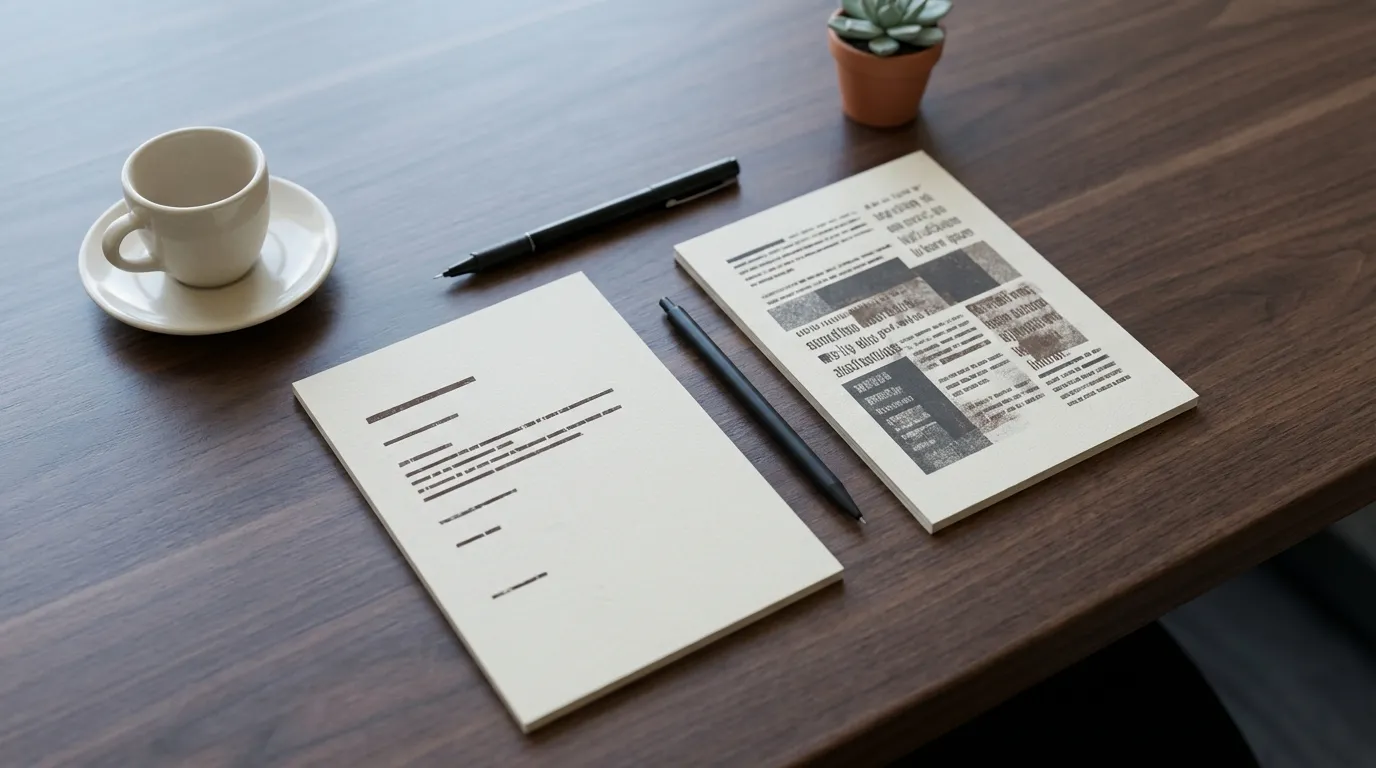
How I rewrote our salon menu descriptions
I started with our three core services: the precision cut, the color service, and balayage. I did not touch the names yet. I focused only on what appeared below each one.
The rule I gave myself was simple: every description had to answer the question “what will I feel when I leave?” before it answered “what will you do to my hair?” The client already knows what a haircut is. She does not need me to explain the concept. She needs to understand why mine is different.
Here is what our cut listing looked like before and after:
| Service | Menu Description |
|---|---|
| Precision Cut | $95 |
| Single Process Color | $145 |
| Full Balayage | $295 |
| Deep Conditioning | $35 add-on |
| Blowout | $55 |
| Service | Menu Description |
|---|---|
| The Signature Cut | Begins with a seated consultation to discuss your shape, lifestyle, and growth goals. Includes scalp treatment, precision cut, and a finished style you can recreate at home. 60 min. $95 |
| Custom Color | A single-process application matched to your skin tone and natural base, with a gloss finish for added shine and longevity. Includes post-color conditioning. 90 min. $145 |
| Hand-Painted Balayage | Freehand color placement designed for natural dimension and a soft grow-out. Consultation, custom formula, toning, and a finishing style. Allow 3 hrs for your first visit. $295 |
| Restorative Treatment | A bond-repair and deep moisture ritual added to any color or cut service. Your hair leaves softer and stronger, not just styled. 15 min. $35 |
| Styled Blowout | A wash, conditioning treatment, and heat-styled finish. Choose sleek, volume, or natural texture. 45 min. $55 |
The left tab is what we had for two years. The right tab is what I wrote in one afternoon sitting at my kitchen table with a pen and a printout. Same services. Same prices. Different conversation with the client.
What changed after the rewrite
Three things happened in the first month.
First, balayage bookings went up. Not because the price dropped or because I posted about it on Instagram. The description told the client what to expect (“allow 3 hrs for your first visit”), which removed uncertainty. People do not avoid expensive services because they cannot afford them. They avoid them because they do not understand what they are agreeing to.
Second, the $35 deep conditioning add-on went from something I had to pitch in the chair to something clients chose on their own during booking. Calling it a “restorative treatment” and describing the outcome (“softer and stronger, not just styled”) made it feel like part of the experience, not an upsell.
Third, I stopped getting price objections on the $295 balayage. The old listing gave clients one data point: the number. The new listing gave them seven: the technique, the consultation, the custom formula, the toning, the finishing style, the time commitment, and the price. By the time they reached $295, they had already built a mental picture of the appointment. The number was the last thing they processed, not the first.
✅ Write the outcome before the process
Restaurants learned this years ago. “Pan-seared salmon with roasted fennel and a lemon butter reduction” outsells “salmon with vegetables” at the same price. The description is doing the work that a price alone cannot. Your service menu should do the same: lead with what the client gets, not what you do.
The three principles behind salon menu descriptions that work
After testing different versions with my team, I found three patterns that consistently moved the needle.
Name the experience, not the task. “Deep Conditioning” is a task. “Restorative Treatment” is an experience. “Women’s Haircut” is a task. “The Signature Cut” is an experience. The name sets the frame before the client reads a single word of description. If you have already restructured your menu price order, naming is the next lever.
Include time and context. Clients booking online cannot ask you how long something takes. When they see “allow 3 hrs for your first visit,” they can plan their day. When they see “15 min add-on,” they know it will not derail their schedule. Removing logistical uncertainty removes a reason to say no.
Describe the result in sensory language. “Shine and longevity.” “Softer and stronger.” “Natural dimension and a soft grow-out.” These are not technical terms. They are feelings. The client reads them and pictures the version of herself that walks out of your salon. That picture is worth more than the price next to it.
The fear most salon owners have about this
I know what you are thinking, because I thought it too. “If I write longer descriptions, clients will think I’m trying too hard. It will feel salesy.”
It did not feel salesy. It felt professional. A restaurant with a two-line description of its signature dish does not feel pushy. It feels like a place that cares about what it serves. Your menu is the same. A description that says “consultation, custom formula, toning, and a finishing style” tells the client you have a process. A blank space next to a price tells her you did not think about it.
The clients who book based on price alone were never going to become your best clients anyway. The ones who read descriptions and choose the premium option are the ones who rebook, tip well, and refer friends. Your menu descriptions are a filter. Write them for the client you want, not the one you are afraid of losing.
If you want to make sure the prices behind those descriptions actually hold up, run them through the service pricing calculator. The words sell the experience. The math makes sure the experience sustains your business.
What our menu became
I rewrote the rest of the descriptions over the following week. Our menu went from a one-page list to a two-page document that reads more like a tasting menu at a restaurant than an invoice from a contractor. Every service has a name, a two-sentence description, a time estimate, and a price. The price comes last.
A client told me a few weeks later that she had been coming to us for eight months and never knew we offered a scalp treatment. It had been on the menu the whole time. She just never saw it, because there was nothing to see. A label and a number, buried in a list of other labels and numbers.
Your services deserve better than that. So do the clients trying to choose between them. One afternoon. A pen and a printout. The same prices, different words. That is where the $41 started.