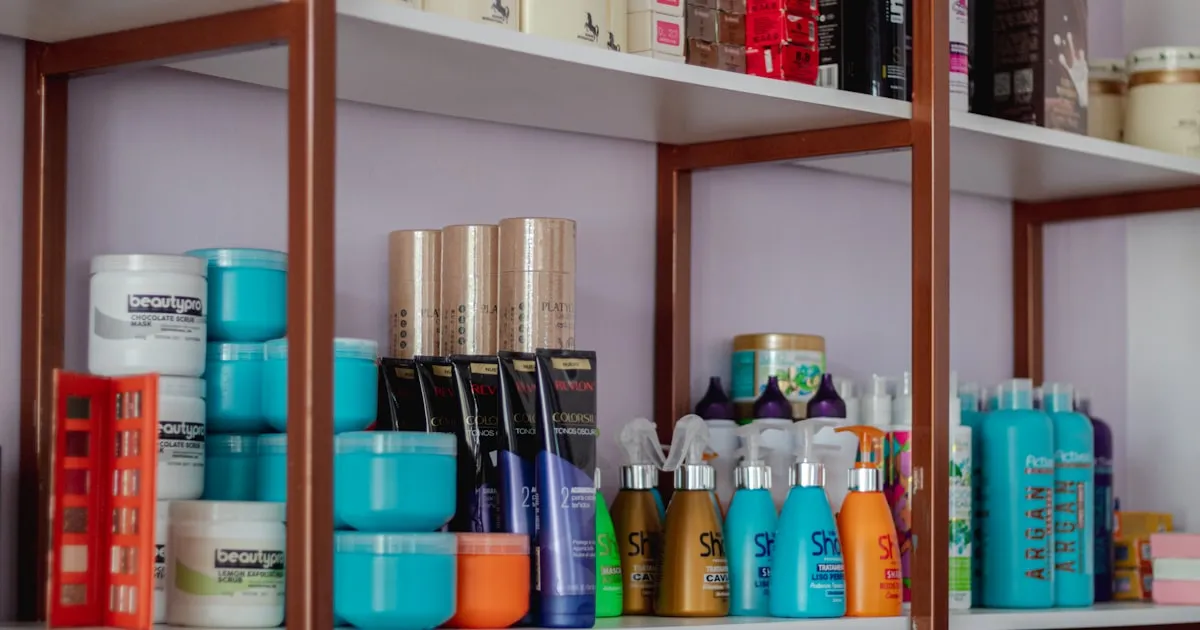
The first time I did a real inventory audit, I found 11 bottles of a toner shade we stopped using six months earlier. They were pushed to the back of the closet behind a box of foils. Total value: about $180. That same audit turned up $2,300 in product that was either expired, unused, or duplicated across three storage spots because nobody kept track of what we already had.
Two hours of counting. $2,300 identified. I’ve done quarterly audits ever since.
Why most salons skip this
Running a four-chair salon means you’re behind the chair six or seven hours a day. Inventory feels like paperwork, and paperwork loses to clients every time. So product gets ordered when someone notices we’re low, received by whoever is free, and shoved on the nearest shelf. No count. No system. No visibility into what’s actually there.
MioSalon’s inventory research found this is the norm, not the exception. Salons lose money through overstocking slow-moving products, inconsistent usage across stylists, and products expiring before they’re used. The losses are invisible because they happen in small amounts, spread across hundreds of products over months. If you’ve never tracked your back-bar cost per service, an audit is the fastest way to see where the money is going.
Suplery’s cost analysis estimates that salons adopting structured inventory management save an average of $5,000 per year, with some recovering significantly more. That number comes from three sources: reduced waste, fewer emergency orders (which always cost more), and better cash flow from not sitting on stock you don’t need.
How to do a salon inventory audit step by step
I block two hours on a Sunday afternoon. I bring a clipboard, a pen, and my inventory spreadsheet from last quarter. The process has five steps.
Step one: pull everything out. Every product from every storage location goes onto one table. The closet, under-station drawers, shampoo area, color bar. If it’s consumable, it goes on the table. This alone is revealing. I’ve found duplicate orders, products stashed in personal stations that should be shared, and items I forgot I bought.
Step two: sort by category. Color and developer. Shampoo and conditioner. Treatments. Styling products. Retail inventory. Tools and disposables (foils, gloves, capes). Each category gets its own section of the table.
Step three: check dates and condition. Anything expired gets pulled. Anything with less than 10% remaining gets noted for reorder. ProBeauty’s inventory guidelines recommend implementing first-in-first-out (FIFO) rotation during every audit to prevent expiration losses.
Step four: count and record. I count every unit and log it against what I had last quarter and what I ordered in between. The formula is simple: last quarter’s count, plus orders received, minus what I have now, equals what we used. If usage doesn’t align with services performed, something is off.
Step five: flag and act. Dead stock goes on clearance or gets returned if the distributor allows it. Overstocked items get paused from the order list. Understocked essentials get reordered with a buffer.
✅ The 90-day rule for retail
If a retail product hasn’t sold in 90 days, it probably won’t. Discount it, bundle it, or return it. Every dollar sitting on that shelf is a dollar you could spend on inventory that moves. Your retail shelf should only carry products that turn over consistently. Suplery’s analysis recommends monthly sell-through reviews, but quarterly is a realistic minimum for small salons.
What my first year of audits uncovered
I ran four audits in my first year. Each one got faster as the closet got more organized. Here’s what each quarter turned up.
Waste and dead stock found per quarterly audit
The first audit was the worst because years of disorganization had compounded. By Q4, the closet was tighter. The numbers didn’t surprise me anymore because I was catching problems monthly instead of discovering them quarterly.
Total waste identified in year one: roughly $4,190. Total time spent on audits: about eight hours. That’s over $500 per hour in recovered value. No service I offer pays that well.
Set up par levels and a reorder system
Auditing is the diagnostic. The ordering system is the fix. After my first audit, I changed how we buy product.
One person orders. Always. Before, any stylist could text the distributor rep. We’d end up with double orders, impulse buys, and no record of what came in. Now I’m the only one who places orders. Requests go on a shared list, and I order on the same day each month.
Par levels for every product. A par level is the minimum quantity you keep on hand. When you hit it, you reorder. My shampoo par is six bottles. Developer is four liters. Color tubes vary by shade, but the high-rotation shades (my top 15 colors make up about 80% of usage) have pars of three tubes. Everything else is one.
Monthly spend tracking. I log every order with date, supplier, items, and total cost. At the end of the month, I compare total supply spend against total service revenue. Vagaro’s salon budget calculator recommends keeping combined back-bar and supply costs between 8 and 12% of service revenue. I run at about 10% now. Before the audits, I was at 16%. If you want to go deeper on what your costs should look like, knowing your numbers before setting prices is essential.
| Expense category | Before audits | Current |
|---|---|---|
| Monthly supply spend | ~$3,800 | ~$2,500 |
| Supply cost as % of service revenue | 16% | 10% |
| Emergency/rush orders per quarter | 4-5 | 0-1 |
| Expired product found per quarter | $300-500 | Under $50 |
Shrinkage is real, even in a small salon
Product loss isn’t always about waste. The National Retail Federation reports that 29% of retail shrinkage comes from internal sources, including over-use and inconsistent tracking. In a salon, that translates to a stylist who uses three pumps of finishing serum instead of one, or a color that gets mixed and never gets used because the client changed their mind.
I’m not policing my team. But I am measuring. When I see that we went through 14 bottles of shampoo in a month that historically needs 10, I ask what changed. Usually there’s a simple answer: a new stylist who uses more product, or a week of extra walk-ins. Sometimes there isn’t. The point is knowing the number so you can ask the question.
Start this Sunday
You don’t need inventory software to start. A spreadsheet with columns for product name, category, quantity on hand, and date works fine. Zolmi’s inventory guide recommends picking one consistent day each week for a quick visual check of top-moving items, with a full count monthly or quarterly.
My first audit took two hours and found $2,300 in waste. My most recent one took 45 minutes and found $310. The closet is cleaner. The ordering is predictable. The cash that used to sit in expired toner bottles now goes toward marketing, equipment, or my own paycheck.
Two hours. A clipboard. Every product on one table. Count it, question it, fix it. The supply closet is the least glamorous part of running a salon, and one of the most expensive to ignore.