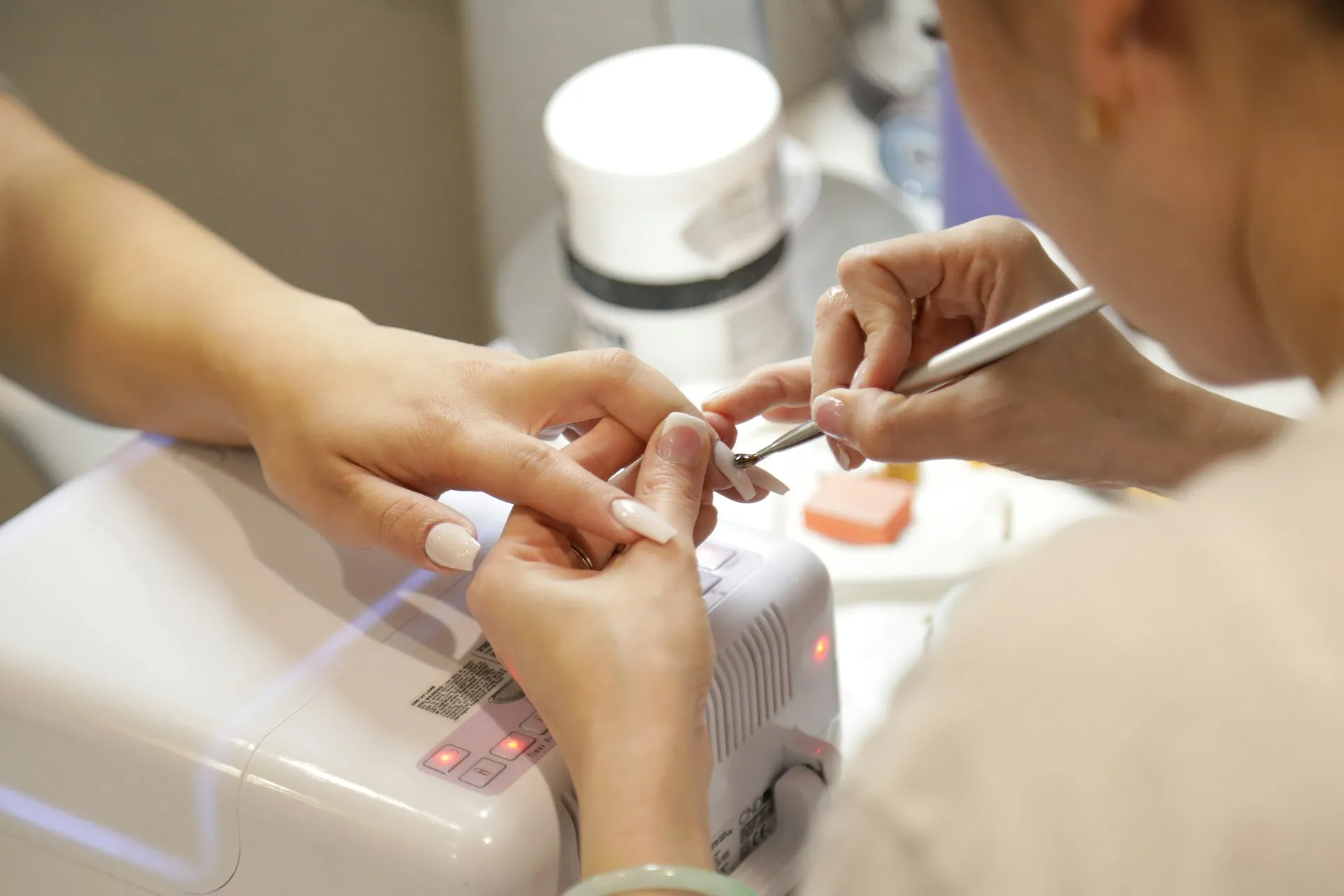
Gel-X vs sculpted gel extensions. My clients have been asking which one they should book, so here’s what I’ve learned after offering both for a year at my station in LA.
I started sculpting gel extensions on forms five years ago. When Apres Gel-X tips blew up on TikTok and half my DMs became “do you do Gel-X?”, I bought a starter kit, practiced on my own nails for two weeks, and added it to the menu in spring 2025. Since then I’ve done roughly 400 sets of each. The two methods look similar in photos. They feel different in my hands, they perform differently on clients, and they produce very different numbers on my books.
What each method actually involves
Sculpted gel extensions are built by hand. You fit a paper or reusable form under the free edge of the natural nail, then apply hard gel or builder gel in layers, sculpting the shape, apex, and length directly. Each nail is custom. The form comes off, you file and refine, and the result is a fully bespoke extension bonded to the nail plate. No pre-made component touches the client’s nail.
Gel-X is a tip system. You select a pre-shaped soft gel extension tip from a sizing kit, apply extend gel to the natural nail and the inside of the tip, press it on, and cure. The shape and length come pre-formed. Your job is selecting the right fit, prepping properly, and ensuring a clean seal.
Both produce gel nail extensions. The difference is where the skill lives. With sculpted sets, the skill is in the building. With Gel-X, the skill is in the prep and the fit.
Side by side
| Feature | Sculpted Gel Extensions | Gel-X Tips |
|---|---|---|
| Application time (full set) | 75-90 minutes | 45-60 minutes |
| Customization | Fully bespoke per nail | Pre-shaped, limited by tip inventory |
| Removal | Filed off (hard gel) or soaked (builder) | Acetone soak-off, 15-20 min |
| Fill appointments | Yes, every 2-3 weeks | Usually full removal and new set |
| Material cost per set | $3-5 in gel and forms | $8-15 in tips and extend gel |
| Typical salon price (LA) | $85-145 | $65-125 |
| Durability | 3-4+ weeks with fills | 2-4 weeks, varies with prep |
| Skill floor | High (months of practice) | Moderate (days to weeks) |
Where the revenue math splits
The numbers tell two different business stories. A sculpted full set at my station runs $120 and takes about 80 minutes including prep and finishing. That’s $90 per hour. A Gel-X set runs $85 and takes about 50 minutes. That’s $102 per hour.
Faster per appointment, lower price, higher hourly yield. That math surprised me. I assumed sculpted sets were more profitable because the ticket was higher. They weren’t, at least not on a per-hour basis.
But the story doesn’t end at the first appointment. Sculpted gel clients come back for fills every two to three weeks. A fill takes 45 minutes and I charge $65. That’s a recurring visit with lower material cost and strong per-hour revenue. Gel-X clients, by contrast, typically need a full removal and new set because the tip system doesn’t accommodate traditional fills the way sculpted gel does. Some techs are doing Gel-X fills with builder gel over the regrowth area, but the consensus in the tech community is mixed on longevity.
The result: sculpted gel clients generate more total revenue over a six-month period because of the fill cycle. Gel-X clients pay less per visit but come less predictably. Both can work. The question is whether your business model favors throughput or retention.
Durability on real clients
I tracked this informally over the past year by asking clients at their next appointment how the set held up. Sculpted hard gel extensions lasted longer on average. Most clients reported three to four weeks of solid wear before the growth became noticeable enough to want a fill. Lifting was rare when prep was thorough.
Gel-X results varied more. Some clients got a clean three weeks. Others had a tip pop off within ten days, usually on a thumb or index finger. Common causes of Gel-X lifting include oily nail beds, improper dehydration, and sizing that doesn’t perfectly match the nail’s curvature. The pre-shaped tip can’t be adjusted to fit every nail plate the way a sculpted extension can, and that gap is where failures happen.
That said, the clients who did experience lifting were almost always the ones with naturally oily nail beds or active lifestyles involving a lot of water exposure. For the average office worker booking a set for an event, Gel-X performed well. The durability gap was real but narrower than I expected.
Who each method actually serves
After a year, my read is this. Gel-X is the better fit for clients who want extensions for a specific occasion, prefer soak-off removal, change their style frequently, or are booking nail extensions for the first time. The lower barrier to entry, both in price and in appointment time, makes it a good gateway service. The nail extension gel market hit $1.2 billion in 2024 and is growing at 8% annually, driven significantly by tip systems that make extensions accessible to a wider client base.
Sculpted gel extensions serve the client who wants a long-term nail relationship. She books every two to three weeks, she has a shape she likes, she wants her nails to feel like her nails. The customization matters to her. She doesn’t want a pre-formed tip; she wants something built for her hands. These clients are also more likely to add art, since a sculpted base gives you a more stable canvas for 3D elements and detailed design work.
I offer both and I plan to keep offering both. If your schedule runs tight and you want to fit more clients into the day, Gel-X lets you do that without sacrificing quality. If you’ve invested years into your sculpting skills and your client base values custom work, sculpted sets will remain the higher-retention, higher-lifetime-value service. The two methods compete less than people think. They serve different clients, different moments, different relationships with nails. The right answer depends on who’s sitting in your chair.