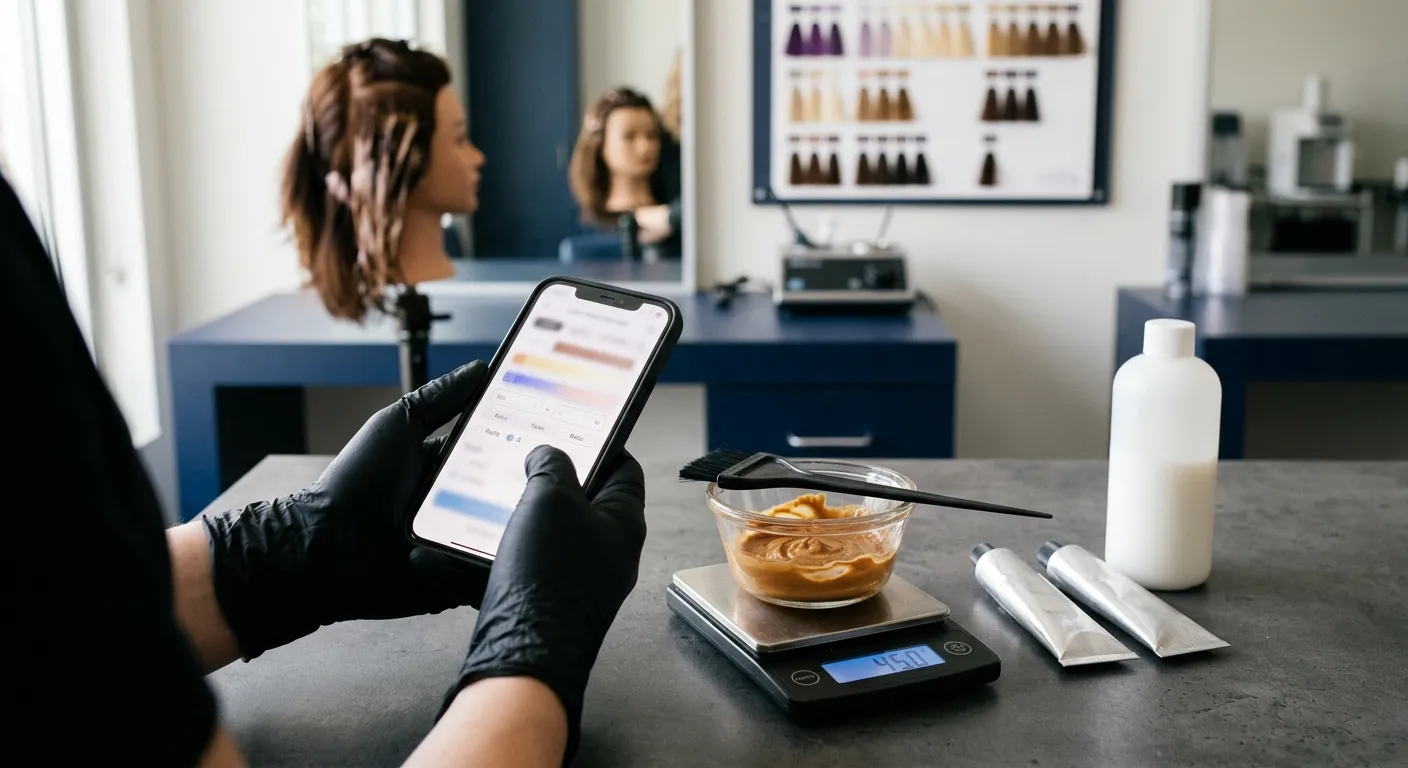
Every Tuesday in my color theory lab I watch the same failure. A student needs two ounces of color at a 1:2 ratio with a 20 volume developer. They squeeze the tube, pour the developer next to it, and hope. The bowl comes out short or muddy. They remix, and a half ounce of tube color goes down the drain.
A hair color mixing calculator is the fix for that exact scene. I have been using the Lutily color mixing calculator in class and at my Brooklyn chair. My verdict is narrower than the marketing: it does not replace color theory, and it will not save a bad formula. It removes the arithmetic errors that waste product and produce inconsistent results. For a salon that trains new assistants, that is the difference between guessing and repeating.
Color Mixing Ratios: Where the Guesswork Starts
The ratio is the first thing students ignore. Standard permanent color mixes 1:1, one part color to one part developer. Extra coverage formulas run 1:1.5. High-lift colors and lighteners run 1:2, according to the mixing reference guides that power most color calculators. In practice, a student halfway through a busy Saturday rounds 1:1.5 down to 1:1 without noticing. That is where repeatability dies: the same formula gives different results when the ratio drifts. I see it at my chair when a client arrives unhappy after a substitute stylist used “the same formula” with a looser hand.
What a Hair Color Formula Calculator Actually Does
The category has been full of basic math tools. Most take a ratio and a batch size and return grams. The Lutily version goes further. It takes current hair level, target level and tone, length and thickness, developer volume, mixing ratio, and gray coverage, and returns exact color and developer amounts, a processing time recommendation, color theory notes, and a cost per application estimate when product prices are entered. In class the difference is immediate. A student who plans a 1:2 bowl of permanent color gets flagged before they pour, and fixes it while the product is still in the tube. Catch the error at the calculator, not in the bowl.
How Much Developer to Use for Hair Color
Developer volume is the second place the guesswork lives. Developer reference guides break it down by lift: 10 volume lifts about one level, 20 about two, 30 about three, 40 about four. Standard permanent color pairs a 1:1 ratio with a 20 volume for up to two levels of lift. High-lift work pairs a 1:2 ratio with a 30 or 40 volume. Most students can tell you 20 volume is the standard. Fewer check the bottle before they pour. Reaching for a 40 when the formula calls for a 20 is how you get orange, brassy results and a correction appointment two weeks later. The Lutily calculator includes a developer decision tree that answers the question most free online calculators skip: which volume to reach for.
Salon Color Waste: What Guesswork Costs
The waste math makes this a business decision. SalonScale reports that about 20% of backbar product used in a session goes to waste, roughly $3,870 a year for a typical salon.
The same team found that salons waste 20 to 40% of the color in each bowl through overmixing, and the industry generates an estimated 42,000 pounds of hair color waste a day. Overmixing is a measurement problem. You cannot hit a repeatable amount without measuring. The cost-per-minute breakdown of color services connects directly: every ounce thrown away is still charged to the client at full ticket.
Color Formulation for New Stylists
The training case is the strongest. A new assistant does not learn ratios by being told about them. They learn by checking their work against a number they can trust. Put a calculator at the mixing station and the assistant verifies every bowl in week one instead of month three. The consistency payoff outweighs the waste payoff. The techniques my students keep asking about, color melting most of all, all depend on formulation discipline. A melt with a wrong ratio is a stripe. A root retouch with too much lift is a band. The calculator does not do the technique. It keeps the foundation repeatable so the technique has a chance.
The Verdict
If you are a solo stylist who weighs every formula and keeps a color book, you already do what the calculator does. You do not need it. If you run a salon with multiple chairs, new assistants, or anyone who still eyeballs a bowl, this is the cheapest consistency tool on the backbar.
| Method | Repeatability | Training value | Waste control | Color guidance |
|---|---|---|---|---|
| Eyeballing the bowl | Low | None | Low | None |
| Scale and color book | High | Slow to teach | High | None |
| Basic online calculator | Medium | Some | Medium | None |
| Lutily color mixing calculator | High | High | High | Built in |
The table shows the real gap. Eyeballing leaves no record and no consistency. A scale and color book is disciplined but slow to teach. Free online calculators handle the ratio math and stop there. The Lutily calculator adds color theory notes, developer guidance, processing time, and a correction helper for brass and orange tones. The line that matters on the tool page is the last: keep the formula for every client so you never guess twice.
What I wish it did differently: brand-specific correction data. Every color line handles neutralization differently. I will be watching that as my students work through their first corrections.
I will keep the calculator at the teaching station next semester and keep weighing bowls at my own chair. The two are not in conflict. The scale measures what you pour. The calculator makes sure what you pour is what you meant. When the bowl matches the card every time, the guesswork is gone.