Korean nail art is the fastest-growing aesthetic shift in my chair right now. Three years ago, clients brought me screenshots of Hailey Bieber’s glazed donut nails. Now they bring me screenshots from Seoul nail studios, saved off TikTok and Pinterest, asking for syrup finishes, 3D florals, and sets where every finger tells a different story. The reference photos have changed, and that change carries real revenue implications for anyone paying attention.
Pinterest reports a 125% increase in searches for mismatched nail designs and notes that trends are growing 4.4x faster than they were seven years ago. The K-beauty nail wave is at the center of that acceleration. Bustle identified eight distinct K-beauty nail trends expected to dominate 2026, from syrup watercolor nails to omakase sets. This movement isn’t niche. It’s restructuring what clients expect when they sit down.
What K-beauty nail art actually looks like in practice
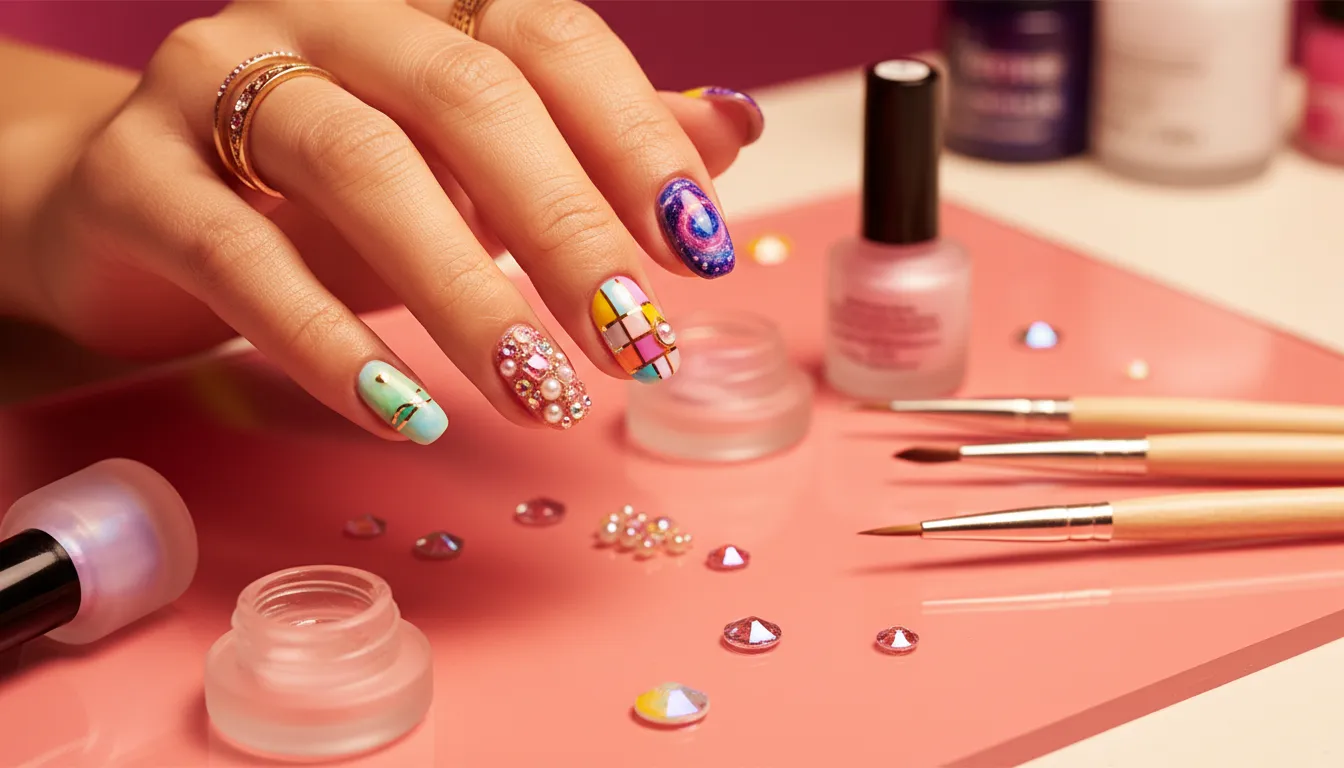
The defining feature of Korean nail aesthetics is intentional maximalism with a soft touch. Where American nail art has historically leaned toward uniform sets (ten identical nails, same design, same finish), Korean-style work embraces variation. Each nail can carry a different design, texture, or technique while still reading as a cohesive set. That takes skill. And time.
The specific techniques driving demand right now include syrup nails (a translucent, jelly-like gradient that shifts from color to clear, giving a glossy “liquid candy” effect), 3D charms and micro-sculptures (tiny florals, pearls, bows built up with gel or resin), and hand-painted watercolor work that mimics the look of ink diffusing through wet paper. Marie Claire’s spring 2026 nail report highlights textured waves and sculptural florals as lead techniques, both rooted in Korean studio aesthetics.
Then there’s omakase nails. Borrowed from the Japanese sushi concept where the chef decides the menu, this approach hands full creative control to the nail artist. The client sits down, describes a mood or color palette, and lets the tech design a custom set on the spot. No two fingers match. No two clients get the same set. It’s the opposite of a gel color change, and it’s exactly the kind of service that rewards experienced techs who have invested in their artistry.
Nail art salon pricing for K-beauty sets
Korean-style nail art takes longer per set. A basic gel manicure runs 45 to 60 minutes. A full K-beauty art set, with 3D elements and hand-painted details on every nail, can run 90 minutes to two hours. That changes the revenue equation, but the direction is favorable. Custom nail art commands $15 to $30 per nail design, and 3D accents typically add $5 to $20+ per service on top of the base.
Compare that to a standard gel manicure averaging $35 to $60. The per-hour revenue can stay competitive or even improve if you price the artistry correctly. A NAILS Magazine pricing guide recommends a time-based approach: $1 per minute of art work, so a set that takes 30 extra minutes of design adds $30. That keeps margins honest without undervaluing the craft.
Revenue per appointment type
Those numbers represent approximate revenue per hour. The full art set doesn’t just charge more. It earns more per hour than a basic gel, even with the extra time, because the markup on artistic labor outpaces the markup on product application.
✅ Pricing nail art by time
Track how long your art sets actually take across ten appointments. Divide your target hourly rate by 60, multiply by the average extra minutes, and you have your art upcharge. If your target is $90/hour and art adds 40 minutes, the upcharge should be at least $60.
Why this shift favors independent techs
The K-beauty nail movement is skill-driven in a way that benefits independent nail techs and small salons over volume-based shops. Mass-market nail salons compete on speed and low price. Korean-style art competes on artistry, customization, and the client relationship. You can’t rush a hand-painted watercolor set or assembly-line an omakase appointment. That’s a moat.
Grand View Research valued the global nail salon market at $13.9 billion in 2025, growing at 8.2% annually, with premium art services and gel extensions as the fastest-growing segments, adding 30 to 40% of salon revenue. The growth isn’t in basic services. It’s in the kind of high-touch, high-skill work that Korean aesthetics demand.
I see this at my own table. The clients who book Korean-style art are more engaged during the appointment. They take photos afterward. They tag me. They rebook at higher frequency than my basic gel clients because they want the next design in the series. The average ticket is higher, the rebooking rate is higher, and the referral rate is higher. If you’ve been thinking about where to invest your continuing education hours, 3D and hand-painted techniques are worth the registration fee.
Adding omakase nails and syrup nails to your menu
You don’t need to overhaul your entire station. The core products for K-beauty nail art include building gels for 3D sculpture, fine-tip brushes for hand-painting, translucent jelly gels for syrup effects, and a small collection of charms and micro-embellishments. The initial product investment is $200 to $400, depending on the brands you choose.
The bigger investment is practice time. Syrup nail gradients require a specific layering technique that takes a few sessions to dial in. 3D florals built with gel need steady hands and a sense of proportion. Omakase confidence takes longer still because you need a broad enough repertoire to freestyle ten different designs that work together. But each technique you add expands your service menu and justifies a higher price tier.
Instagram and TikTok are useful reference libraries here. Korean nail artists in Seoul, particularly accounts posting from Gangnam and Hongdae studios, tend to be two to six months ahead of what US clients start requesting. Following a handful of those accounts gives you a preview of the requests headed your way.
Where this goes from here
The K-beauty nail wave could plateau at the high-end, art-forward end of the market. Or it could keep filtering into mainstream requests the way cat eye nails did, starting as a specialist technique and spreading until half the appointment book includes some version of it. I don’t know which yet.
What I do know: clients are walking in with more complex reference photos than they were a year ago. They’re willing to pay more for sets that feel individually designed rather than chosen off a menu. And the techs who can deliver that level of custom work are building the kind of client loyalty that a basic service menu cannot generate. The shift in expectations is already here. The question is whether your menu reflects it.