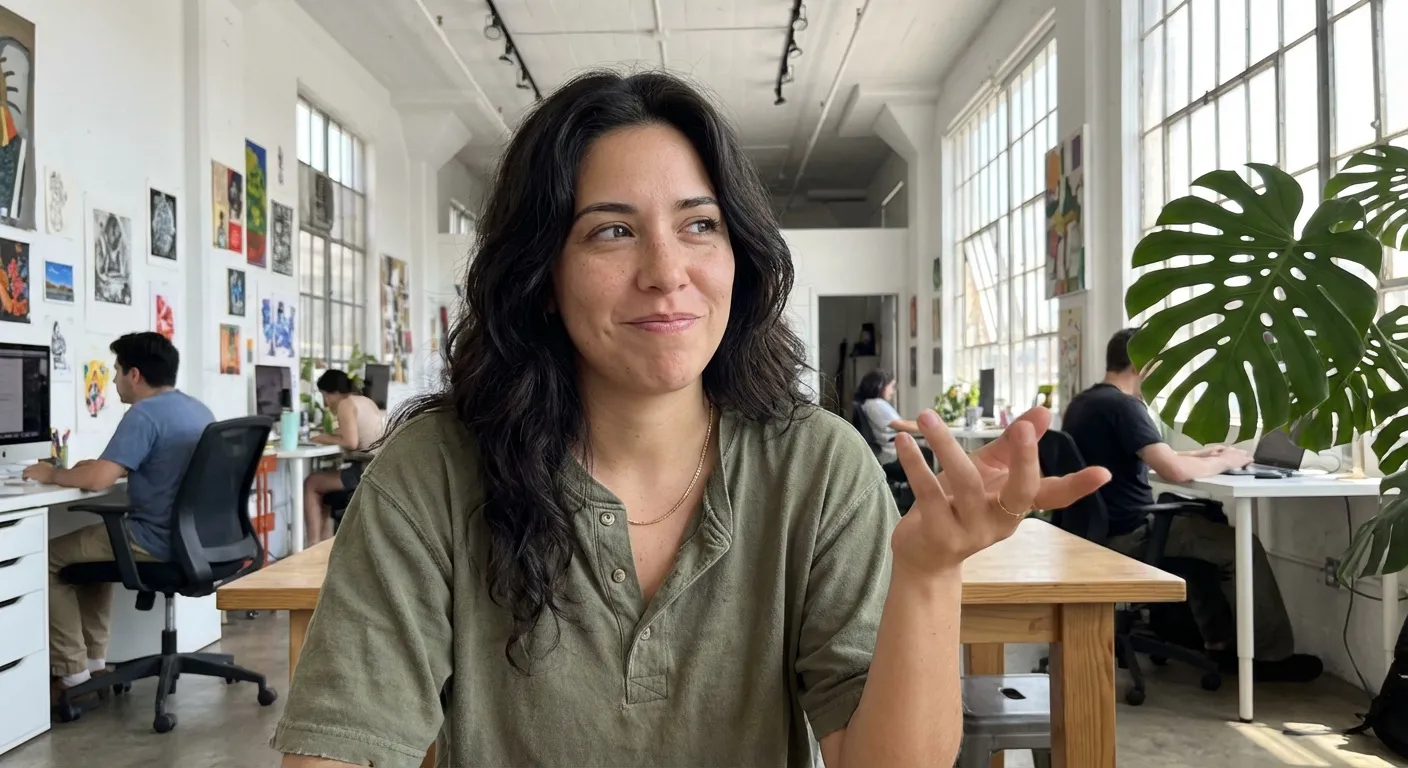
A client sat in my chair last week and realized she’d left her wallet in the car. Five years ago, that meant an awkward pause while she ran to the parking lot. This time she tapped her phone against my card reader and we were done in three seconds. She didn’t even look up from her Instagram.
That moment keeps replaying across the industry. The way people pay for salon services has changed faster than most salon owners realize, and the shift carries consequences beyond convenience. It touches tips, checkout speed, no-shows, and how clients choose where to book.
How many salon payments are contactless now
Mastercard reported in Q3 2024 that contactless payments now represent 70% of all in-person transactions on its network. Not online purchases. In-person, face-to-face transactions where someone taps a card or phone instead of swiping, inserting, or handing over cash.
The broader picture is even more dramatic. Cash usage globally dropped from 44% of in-store spending a decade ago to just 15% in 2024. In the U.S. specifically, cash now accounts for roughly 16% of all transactions, according to the Federal Reserve’s 2024 consumer payments survey.
For salons, these aren’t abstract retail statistics. Every client walking through your door carries a phone that can pay. Increasingly, that phone is all they carry.
How contactless payments increase salon tips
Here’s where it gets interesting for anyone behind the chair. Digital tipping tends to be more generous than cash tipping. GlossGenius analyzed data from tens of thousands of salon professionals on its platform and found that businesses using their card readers saw a 14% boost in tips on average compared to cash transactions.
The psychology is straightforward. When a client pays cash, she decides the tip amount from whatever bills she has in her wallet. When a screen presents three buttons showing 20%, 25%, and 30%, the default anchors higher. The social pressure of tapping a percentage in front of you adds weight. And the friction of calculating a tip disappears.
How payment method affects tipping behavior
A 2023 Cornell University study confirmed the pattern across service industries: digital tipping systems increased tip amounts by 10 to 15% compared to cash or paper receipts. For a stylist earning $800 a week in tips, that’s an extra $80 to $120 per week just from switching how the payment happens. Over a year, that’s $4,000 to $6,000 in additional income without changing a single service.
Checkout speed matters more than you think
A tap transaction completes in under five seconds. A cash transaction requires counting, making change, and often an awkward exchange while you’re trying to sanitize your station for the next client. Chip card insertions take 10 to 15 seconds. Swipes are faster but increasingly rare as banks phase out magnetic stripes.
The real cost of slow checkout isn’t the seconds themselves. It’s the bottleneck at the front desk during peak hours. If you’re a solo pro, every minute spent on payment is a minute your next client waits. If you run a multi-chair salon, a slow checkout flow creates a line that makes people anxious.
✅ The $0 upgrade most salons miss
Square, GlossGenius, and Fresha all offer tap-to-pay functionality through your phone. No separate card reader required. Square’s Tap to Pay on iPhone feature costs nothing beyond the standard processing fee of 2.6% + 10 cents per transaction. If you already use one of these platforms, you likely already have contactless capability and just haven’t turned it on.
The cash-only salon is disappearing
Some salon owners still prefer cash. Fewer transactions to reconcile. No processing fees. Tips go straight into the stylist’s pocket without a paper trail.
But clients are voting with their wallets, and those wallets are increasingly digital. A 2024 Capital One Shopping study found that 86.9% of U.S. transactions are now cashless. The projection for 2027 is 94.1%. The pool of clients who carry cash and prefer to use it is shrinking every quarter.
I’ve watched this play out in my own client base. Two years ago, maybe a quarter of my clients paid with Apple Pay or Google Pay. Now it’s closer to half. The rest use chip cards. I had one cash payment last month. One.
The math on processing fees often scares small operators. A 2.6% fee on a $75 service is $1.95. On a $50 manicure, it’s $1.30. That feels like money leaving the register. But if digital payment prompts increase your average tip by 14%, and if accepting cards prevents even one client per month from going to a competitor who does, the fee pays for itself several times over. Understanding which services actually make you money helps you see processing fees in the context of overall profitability rather than as isolated costs.
Deposits and prepayment change the no-show equation
Contactless payment infrastructure does more than handle checkout. It enables deposits at booking, prepayment for services, and stored cards on file. All of which directly reduce no-shows.
Salons using booking software with integrated payment collection report no-show rates dropping from the industry average of 15 to 30% down to 3 to 5% when deposits or prepayment are required. The client who has already tapped her card for a $25 deposit is far less likely to ghost you than one who made a phone call and has nothing on the line. The full cost of that problem is broken down in every no-show costs more than you think.
This is the less obvious benefit of going contactless. The payment infrastructure that lets a client tap at checkout is the same infrastructure that lets you collect a deposit at booking, charge a cancellation fee automatically, and keep a card on file for repeat visits. The technology is one system. The benefits stack.
The future of salon payments
The contactless payment market was valued at $15.98 billion in 2024 and is projected to hit $71.85 billion by 2034, growing at roughly 16% annually. The salon management software market follows a parallel curve, expanding from $1.12 billion in 2024 to a projected $1.8 billion by 2029, with payment integration listed as a primary growth driver.
Biometric payment is already in pilot programs. Mastercard launched a face-and-palm payment system that lets customers pay by smiling at a terminal. It sounds like science fiction, but so did paying with your phone five years ago.
For salon owners, the takeaway is practical. The client experience around payment has shifted from “how do I pay” to “I shouldn’t have to think about paying.” The salon that makes checkout invisible keeps the client focused on the service, the rebooking, the retail product she might grab on the way out. If you are not already prompting clients to rebook before they leave, a seamless checkout flow creates the perfect moment to ask. The salon that fumbles with a cash register or an old chip reader loses that moment.
I keep my card reader next to my station now, not at a front desk I don’t have. The client taps before she stands up. Tips are higher, checkout is faster, and nobody has to run to the parking lot for their wallet anymore. Small change. Real money.